
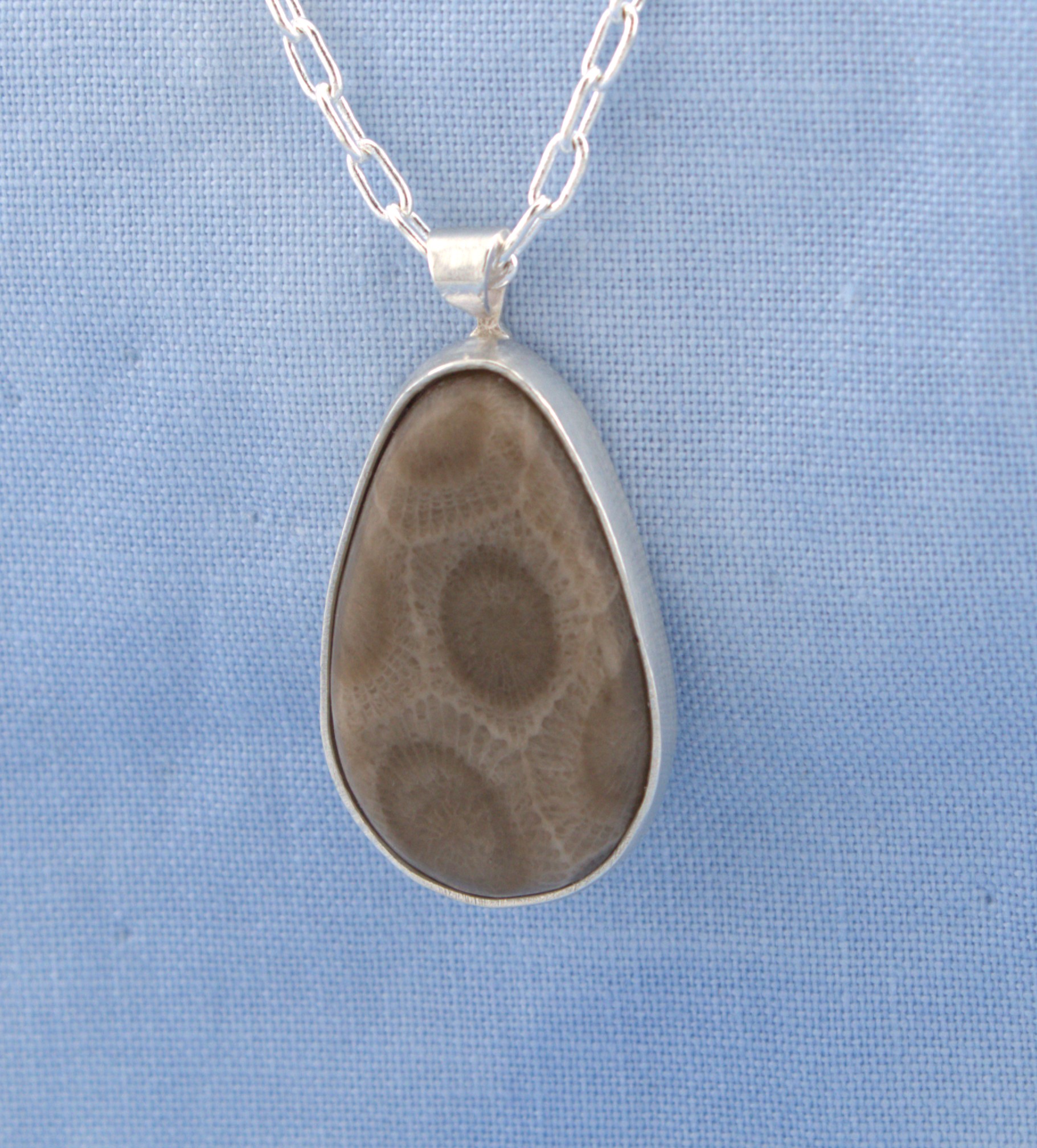
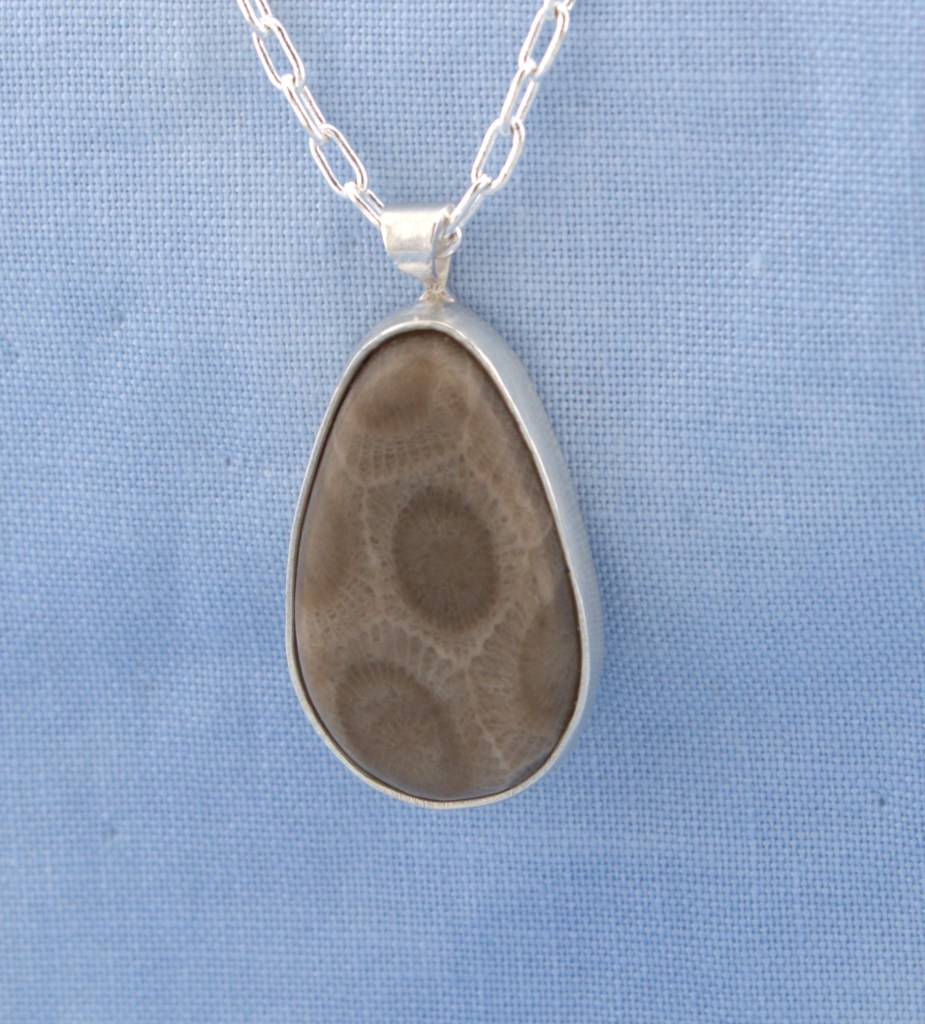
Petoskey Stones are petrified coral found in Michigan. They are the official state stone of Michigan and are found near the city of Petoskey. Set in Sterling Silver.


Where to Find Petoskey Stones in Michigan | Michigan
Petoskey stones are fossilized coral from the Devonian period, found along the shores of Michigan, especially the northern coast. You can find them by looking for their distinctive hexagonal pattern, which is most visible when the stone is wet. Therefore, the best times to hunt are after a storm or early morning at dawn or dusk. Popular spots include Petoskey State Park, Fisherman’s Island State Park, and various beaches around Charlevoix. They can also be found from Traverse City northwards along the coast.
Formed from fossilized coral that became a rock millions of years ago, then was broken up and rounded by glaciers and lake currents. First, during the Devonian period about 350 million years ago, the coral polyps died and their skeletons were fossilized, replaced by minerals. Later, glaciers scoured these fossil-bearing bedrock. They chipped off pieces and deposited them in what is now northern Michigan. Finally, the constant movement of glaciers and the action of waves on the shores of the Great Lakes smoothed and rounded these fragments. This created the finished stones seen today.
- Fossilization (350 million years ago): Colonial coral, similar to modern coral reefs, thrived in a shallow, ancient sea. As the coral died, its body was filled with sediment. Over millions of years, its calcium carbonate skeleton was replaced by minerals like calcite and silica, turning it into a fossilized stone.
- Glacial Plucking: Ice sheets, moving across the land millions of years later, acted like a giant abrasive, scraping and plucking these fossilized coral colonies from the bedrock.
- Glacial and Wave Polishing: As the glaciers moved, they ground the stones against each other and other rocks, smoothing their rough edges. After the glaciers retreated, the powerful waves and currents of the Great Lakes continued the process. They further rounded and polished the stones and deposited them along the shorelines.