
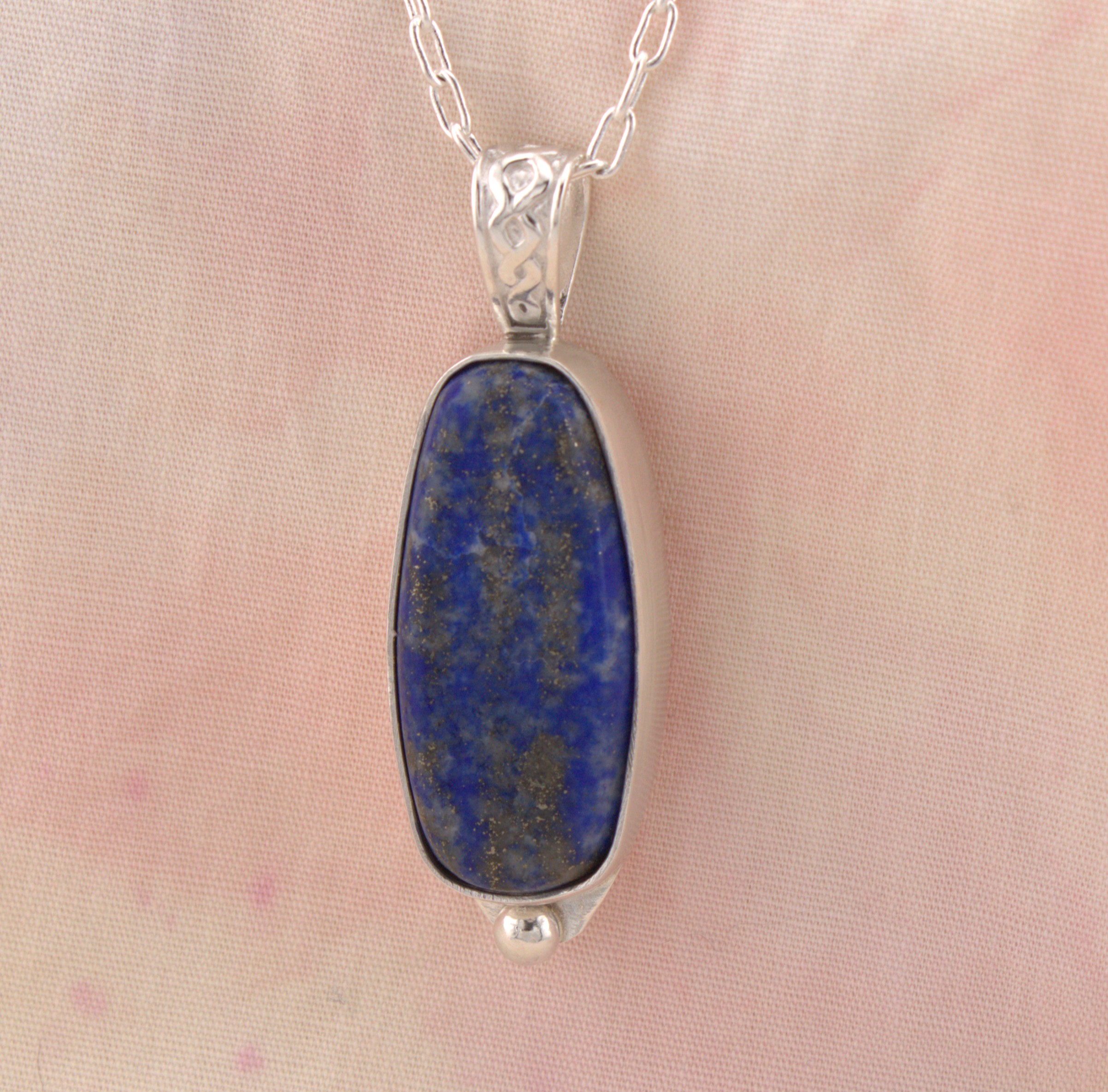
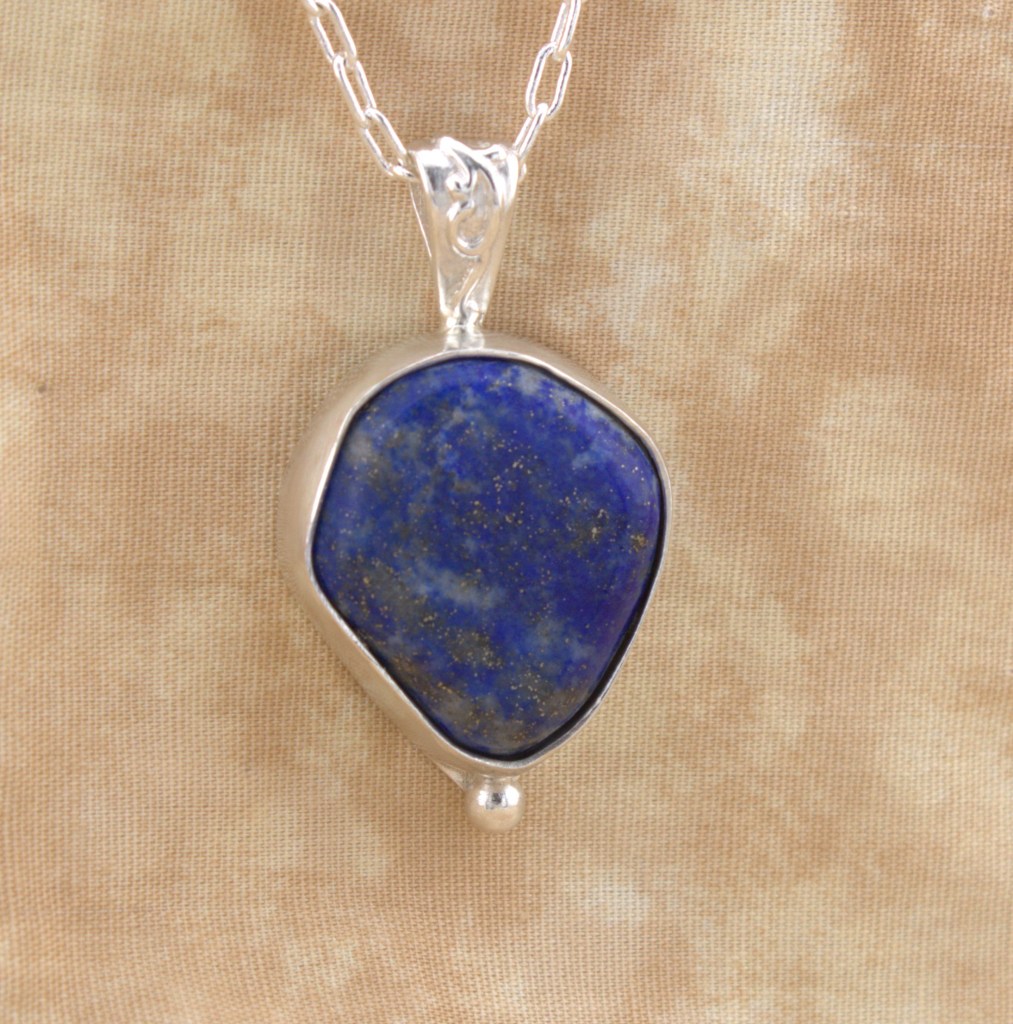
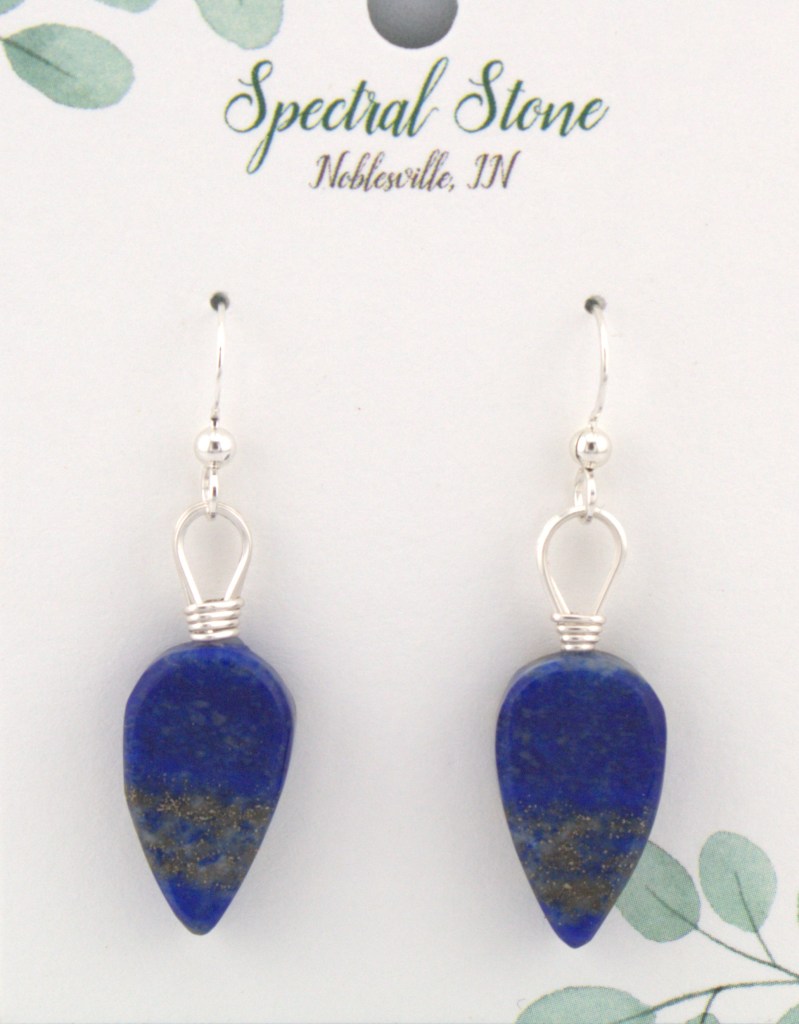
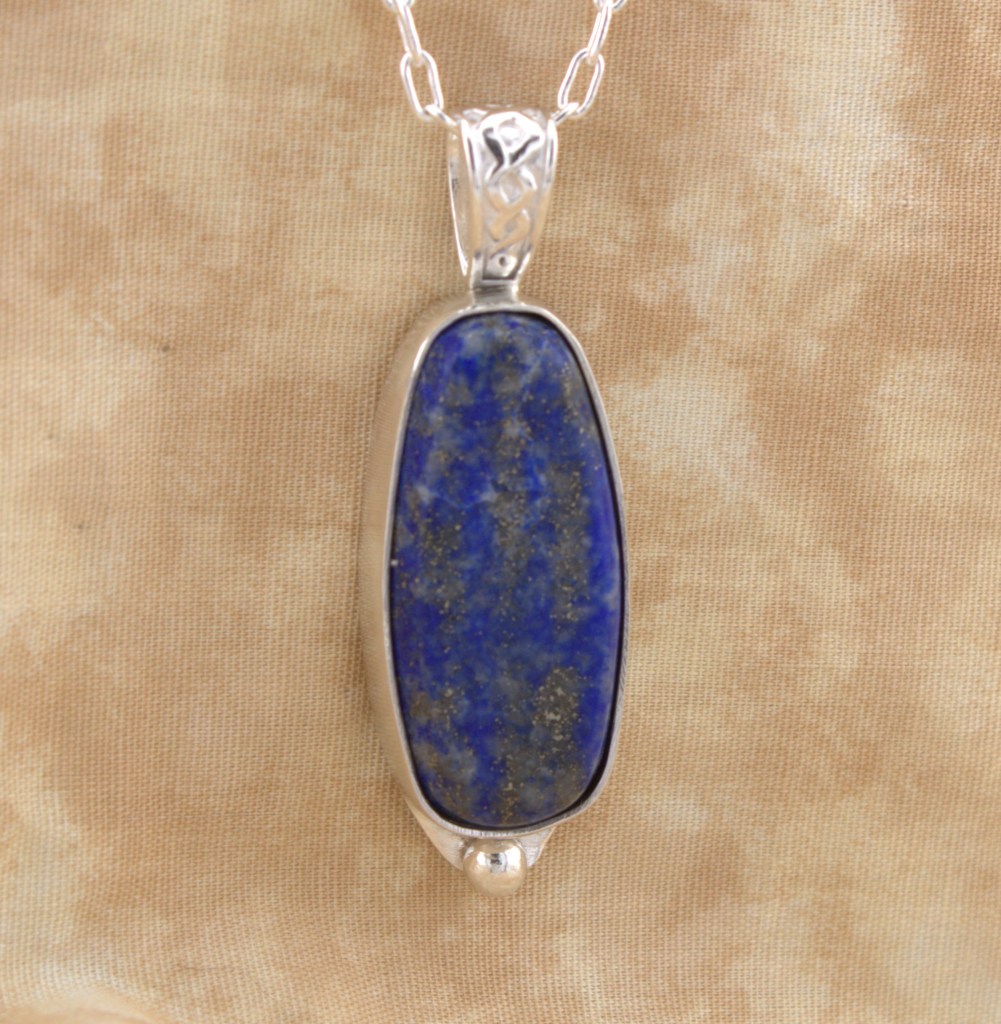
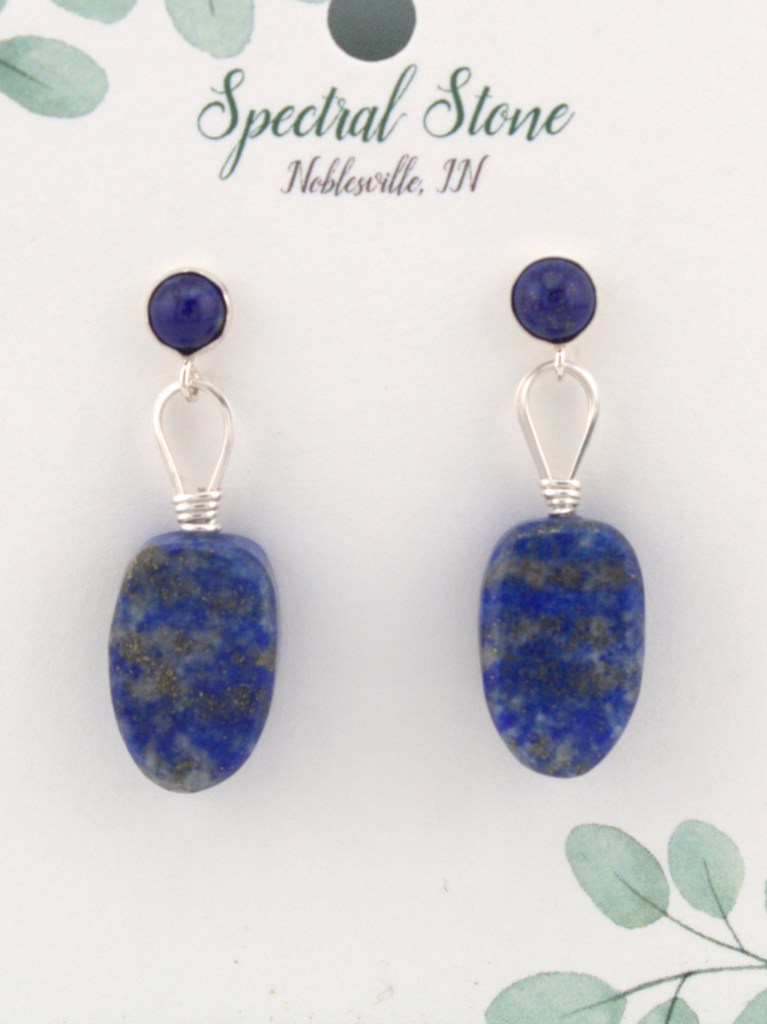
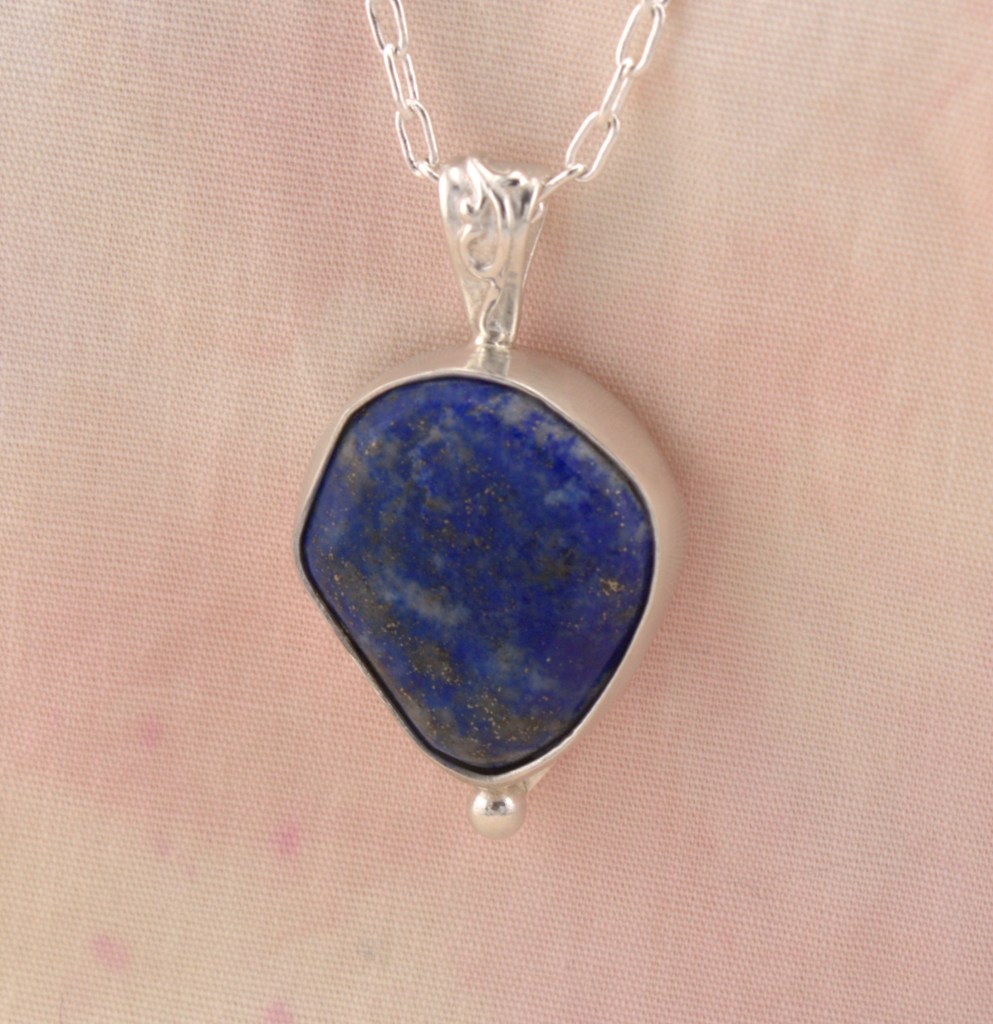
Lapis Lazuli pendants and earrings in Sterling Silver.

Lapis lazuli has a long history. It dates back over 6,500 years to ancient civilizations like Mesopotamia and Egypt. There, it was mined primarily in Afghanistan. Valued for its deep blue color, it was used for jewelry, cosmetics, and religious amulets. Most famously, it was used in the funeral mask of King Tutankhamun. During the Renaissance, the stone was ground into powder. This created the expensive pigment ultramarine, used by artists like Michelangelo and Vermeer.
Ancient history
- Origins: The oldest known commercial gemstone mines are in modern-day Afghanistan. Lapis lazuli has been mined and traded there since the Neolithic age (7th millennium BC) along an ancient route to the Indus Valley.
- Cultural significance:
- Mesopotamia: Used for jewelry, seals, and sculptures by the Sumerians, Babylonians, and Akkadians. They believed it connected them to the heavens.
- Egypt: Highly prized by the elite for jewelry and cosmetic powders. It was also used to create amulets, such as those depicting the goddess Maat. Moreover, it was a key component of the funerary mask of King Tutankhamun.
Medieval and Renaissance history
- Trade and art: Throughout the Middle Ages, lapis lazuli was imported to Europe. It was ground into ultramarine pigment, a highly valued and expensive blue color used in art.
- Renaissance use: Artists like Michelangelo used ultramarine for frescoes in the Sistine Chapel. It was also used by Vermeer and Titian.