

Tabasco Geodes are the smallest in the world, found in central Mexico near the town of Tabasco. Sterling Silver ear wires.
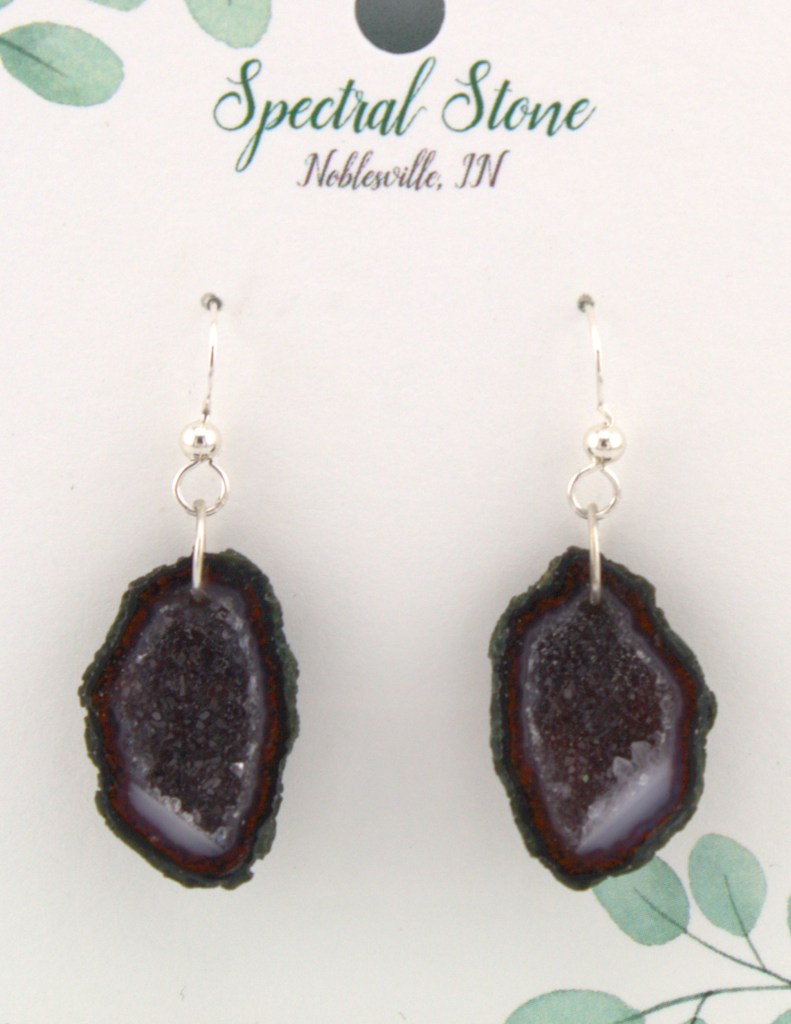


Geodes are hollow, spherical rocks containing inward-growing crystal linings, often quartz, amethyst, or calcite. They are formed over millions of years within volcanic or sedimentary pockets. These “nature’s mystery boxes” appear ordinary on the outside but contain vibrant crystals inside. They range from walnut-sized to several feet in diameter.
- Formation: They typically start as gas bubbles in volcanic rock or as cavities in sedimentary rock (formed by decayed organic matter or mud). Over time, mineral-rich groundwater seeps into these hollows. As a result, silica and other minerals are deposited, which slowly crystallize.
- Internal Structure: While the exterior is dull and rough, the interior is often filled with a druse of tiny quartz crystals, banded agate, or rare, vibrant minerals like celestite or rhodochrosite.
- Types & Composition: The most common geodes are quartz or agate. However, many, particularly in the US Midwest, are filled with white calcite, dolomite, or gray quartz.
- Appearance: They are generally spherical or egg-shaped.
- Locations: Found worldwide in deserts, volcanic ash beds, and sedimentary limestone deposits. Notable locations include Iowa, Arizona, Utah, and Nevada in the US.
What are Geodes? | Information, How They Form, Properties – Rare Earth Gallery