
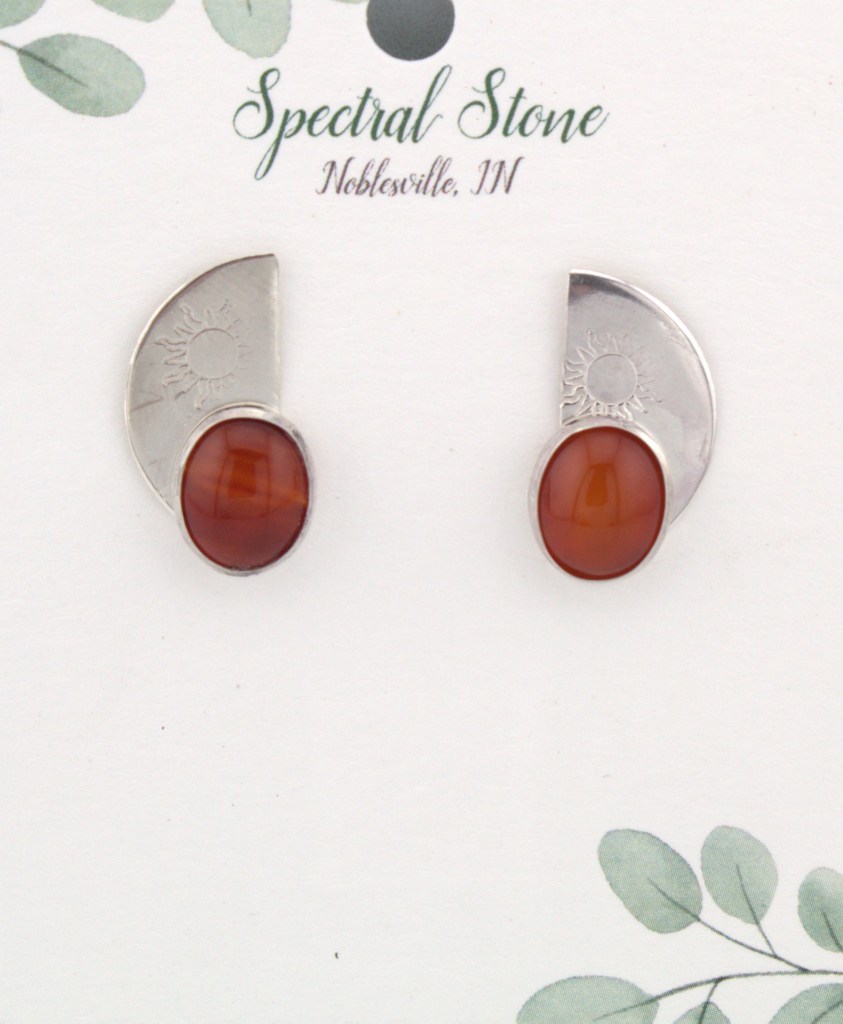
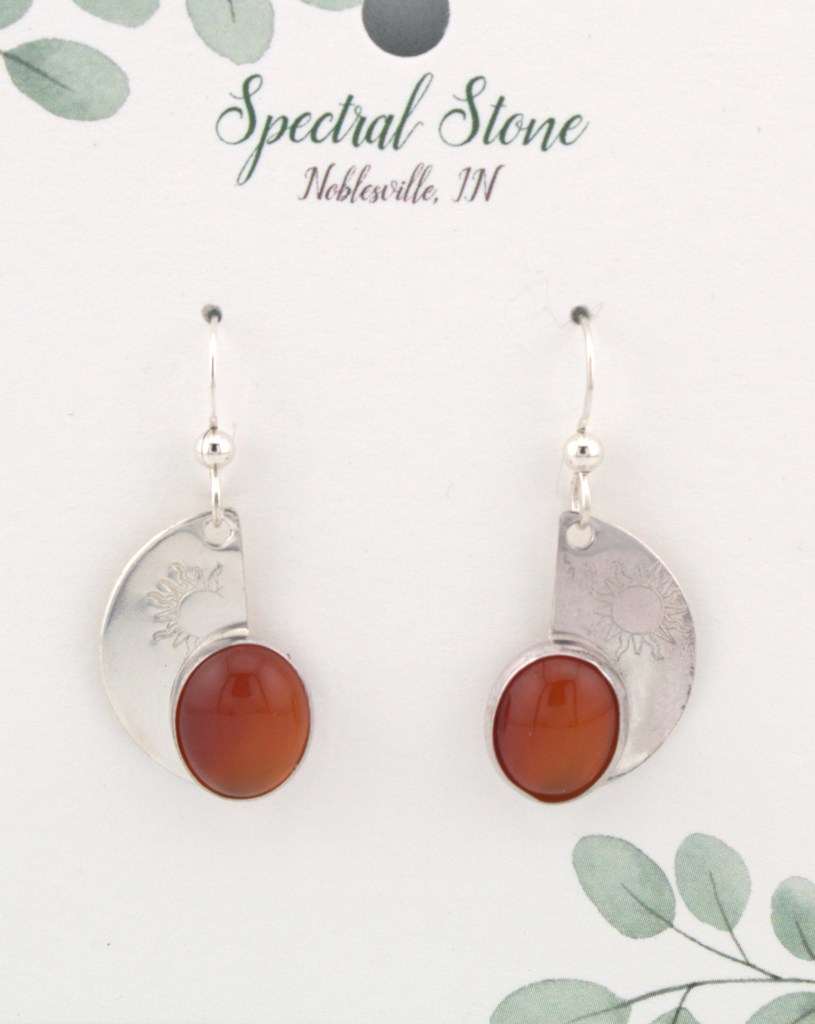
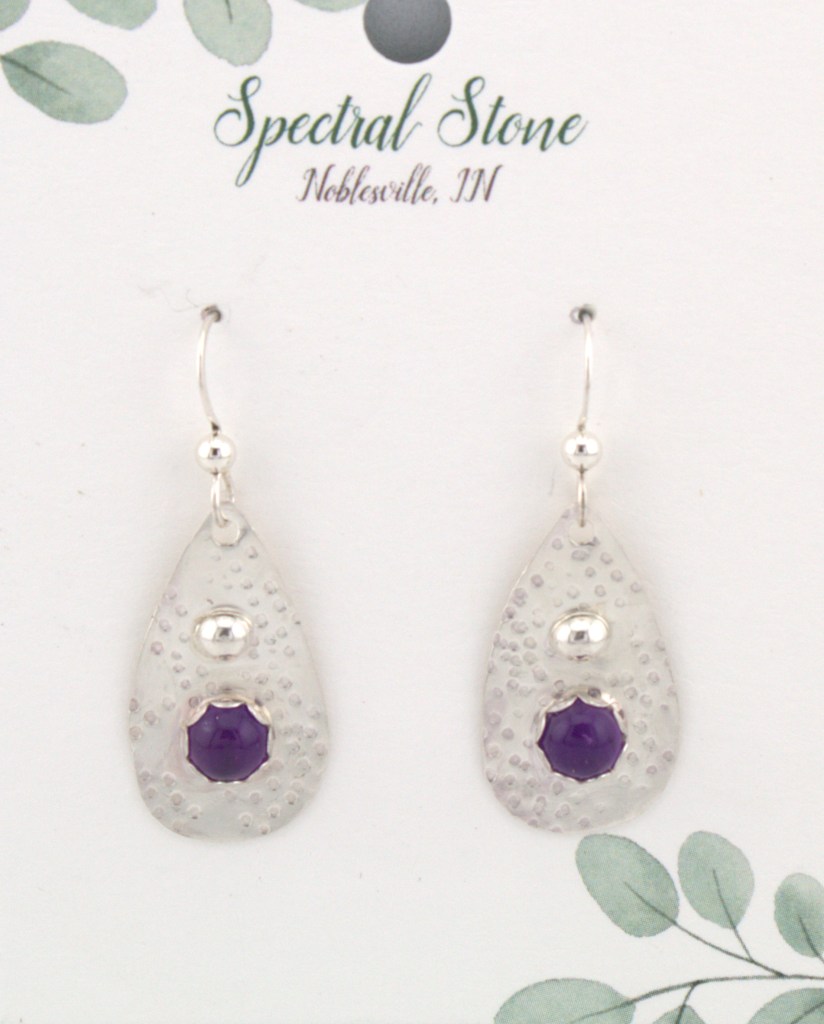
New earrings in Turquoise, Amethyst, Carnelian and Lapis Lazuli. Set in Sterling silver on post or ear wires.


Amethyst
Amethyst’s history spans from the Ancient Greeks and Egyptians to the Middle Ages. It is associated with royalty, spirituality, and protection from intoxication. For millennia, it was a precious stone, reserved for the wealthy and clergy. This lasted until large deposits were found in 19th-century Brazil, making it more accessible. Its enduring popularity stems from its rich purple color and symbolism. It symbolizes mental clarity and royalty. Furthermore, its historical use in religious and protective amulets adds to its significance.
Turquoise
Turquoise history spans at least 7,500 years, with significant cultural use in ancient Egypt, Persia, and the Southwest United States. It was valued for its protective qualities and its association with the sky. The gemstone’s name derives from the French word for “Turkish stone.” This refers to its 13th-century introduction to Europe via Turkish traders. However, it was originally sourced from Persia (Iran) and the Sinai Peninsula.
Carnelian
Carnelian, a vibrant orange variety of chalcedony, has a rich history dating back to the Bronze Age. It was used by ancient cultures like the Egyptians, Sumerians, Greeks, and Romans. It was mainly used for protective amulets, symbolic seals, and status. Believed to grant courage, it promotes spiritual growth and ensures safe passage into the afterlife. Carnelian was a popular gemstone in the Indus Valley Civilization and the Roman Empire. It was even included in ancient religious texts and the High Priest’s breastplate in biblical times.
Lapis Lazuli
Lapis lazuli has a history of over 6,500 years, beginning in ancient Afghanistan and spreading to civilizations like Mesopotamia, Egypt, and the Indus Valley Civilization. These civilizations valued it for its deep blue color and spiritual symbolism. It was used in jewelry and adornments, including King Tut’s funeral mask.