
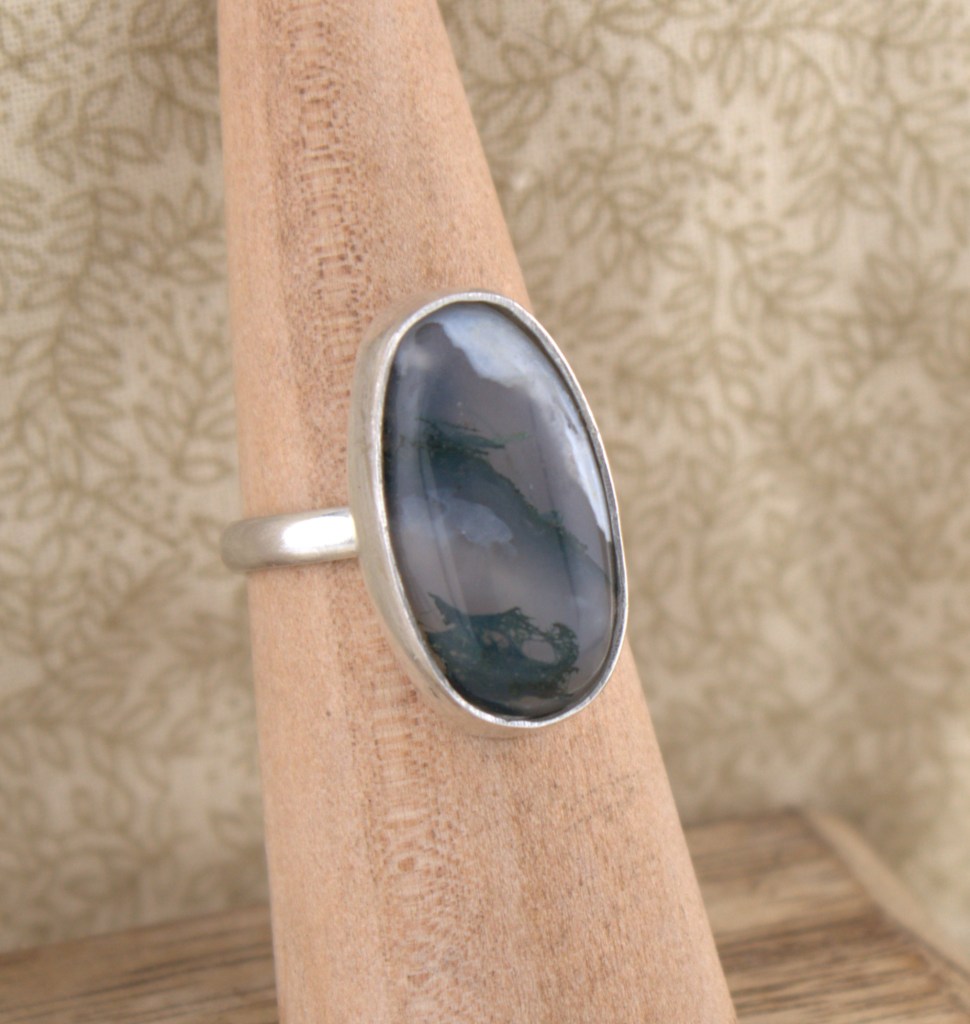
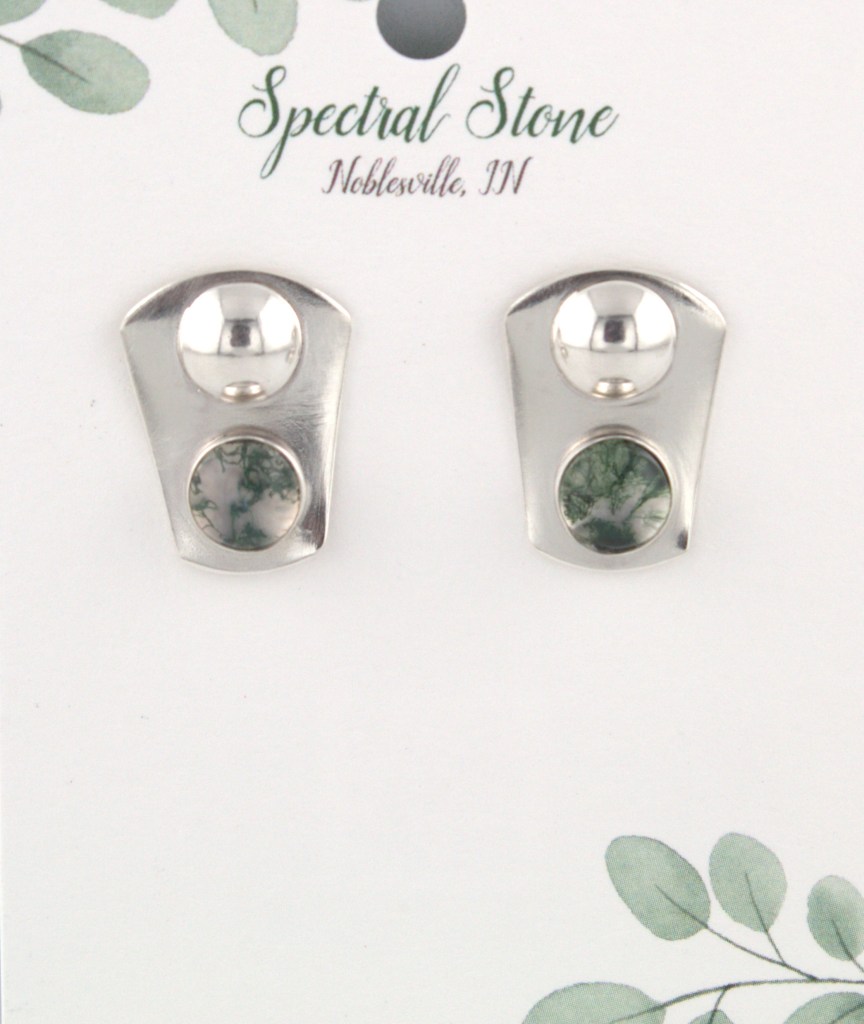
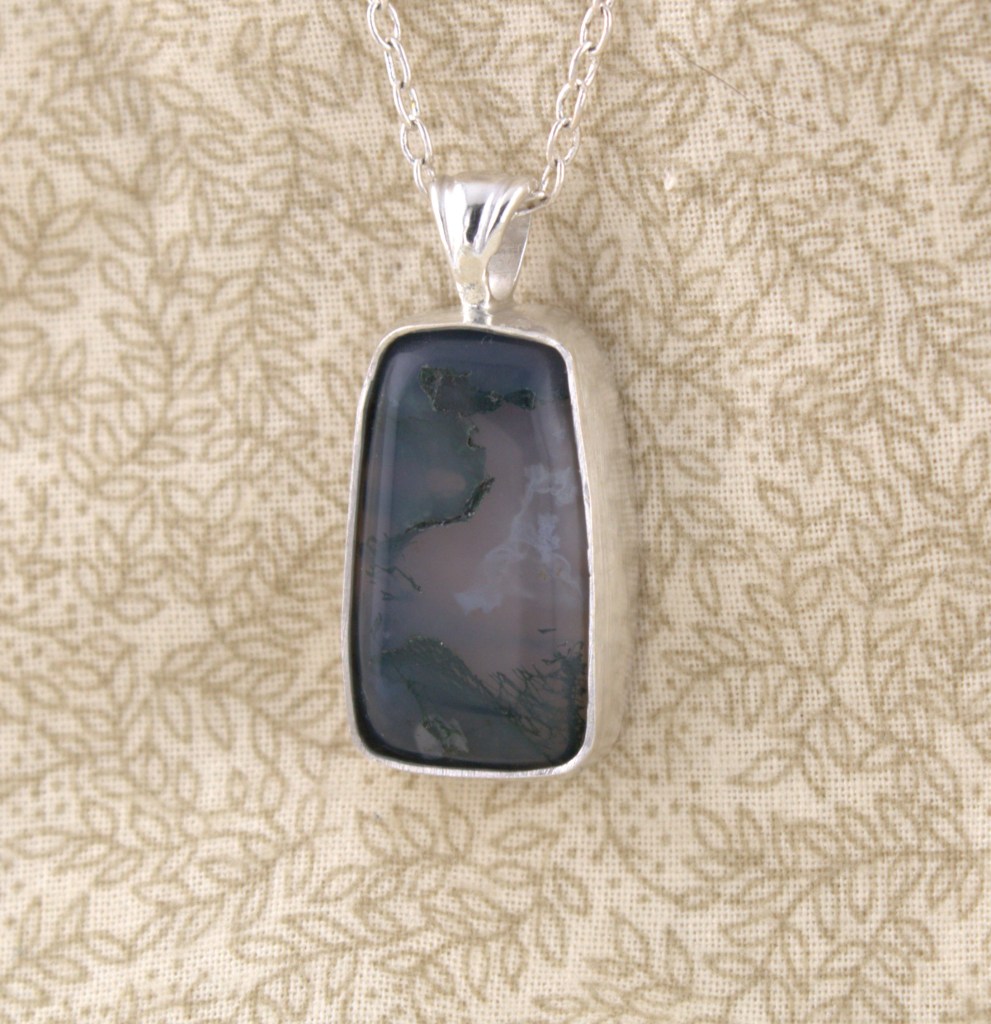
Despite its name, moss agate does not contain organic matter and is usually formed from weathered volcanic rocks. The colors are formed due to trace amounts of metal present as an impurity, such as chrome or iron. Set in Sterling Silver.
- Ancient Civilizations: Moss Agate has been used by ancient civilizations for its believed healing and protective properties. It was often worn as an amulet or talisman to ward off negative energies and bring good fortune.
- Medieval Europe: During the Middle Ages, Moss Agate was used in Europe to promote agricultural prosperity. It was placed in fields and gardens to encourage healthy plant growth and bountiful harvests.
- Native American and Indigenous Cultures: Native American cultures revered Moss Agate for its connection to nature and the earth. It was used in rituals and ceremonies to communicate with spirits and enhance the connection between humans and the natural world.
- Lapidary and Jewelry: Throughout history, Moss Agate has been used to create intricate and beautiful jewelry pieces, including pendants, rings, and beads. Its distinctive appearance and calming colors make it a popular choice for both casual and more elaborate jewelry designs.
- Metaphysical and Spiritual Uses: In the realm of metaphysical and alternative healing practices, Moss Agate is often considered a stone of abundance, growth, and stability. It is believed to bring balance and harmony to the emotional and physical aspects of life. Moss Agate is also thought to enhance one’s connection with nature and aid in grounding and centering.
- Art and Craftsmanship: Moss Agate’s intricate patterns and colors have inspired artisans and craftsmen to create unique and intricate works of art, such as sculptures, mosaics, and decorative objects.