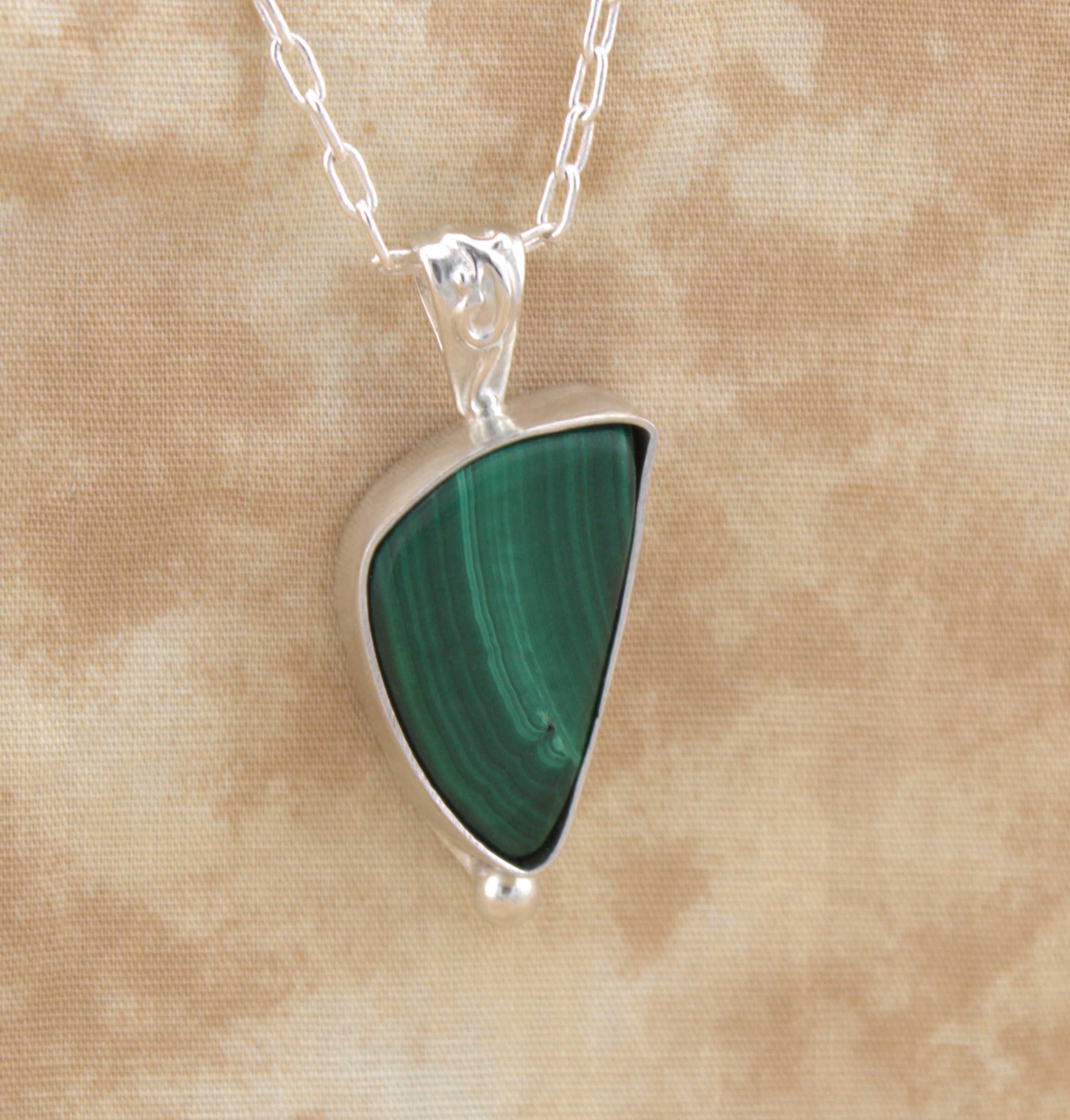
Majestic Malachite pendants and earrings set in Sterling Silver.
Malachite has a rich history dating back to antiquity, where it was used by ancient Egyptians as far back as 6000 BC for cosmetics and pigments, even for the eyes of Queen Cleopatra. It was prized for its symbolic association with new life, fertility, and the afterlife, which they called the “Field of Malachite”. Later, ancient Greeks and Romans used it for jewelry, amulets, and decorative objects, associating it with protection from evil and the goddess Juno. Historically, it was also one of the first ores used for smelting copper.
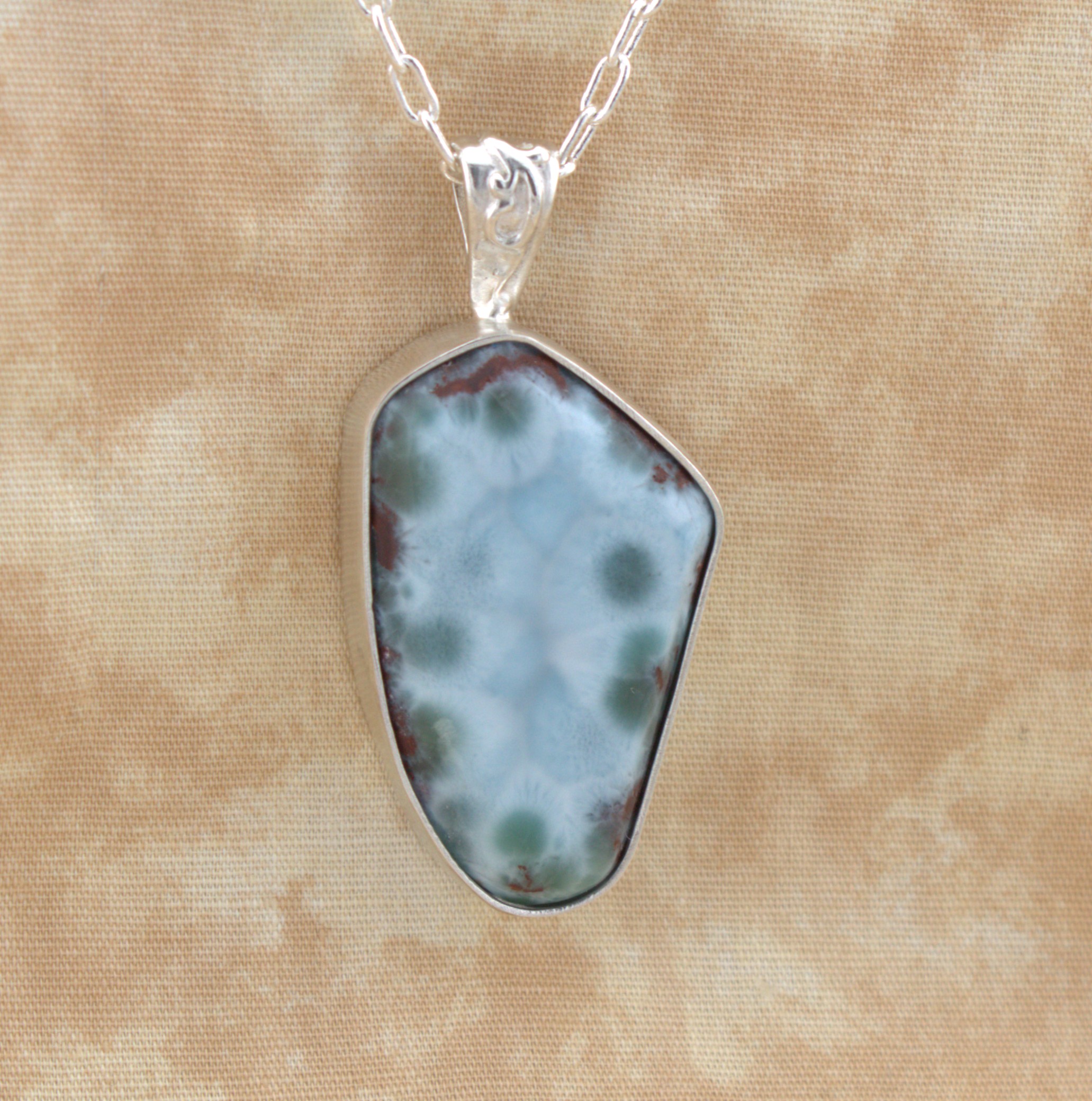
Lovely Larimar pendants and ring in Sterling Silver.
Larimar is a rare blue variety of the mineral pectolite, known for its sea and sky-like colors, found only in a volcanic mountain in the Dominican Republic. First officially discovered in 1974, its unique blue hue comes from copper, and it exhibits varied patterns like swirls, dots, and clouds. The semi-soft stone is used primarily for jewelry and decorative objects, but it requires careful handling and cleaning to preserve its beauty, as prolonged exposure to light can cause its color to lighten.
Origins and Discovery
Unique Location: Larimar is a rare gem found exclusively in the Dominican Republic, in a single mountainside region.
Discovery: It was officially discovered in 1974 by local jeweler Miguel Méndez, who traced the stone to its source in a volcanic mountain formation.
Name: The name “Larimar” combines his daughter’s name, Larissa, and the Spanish word for sea, “mar”.
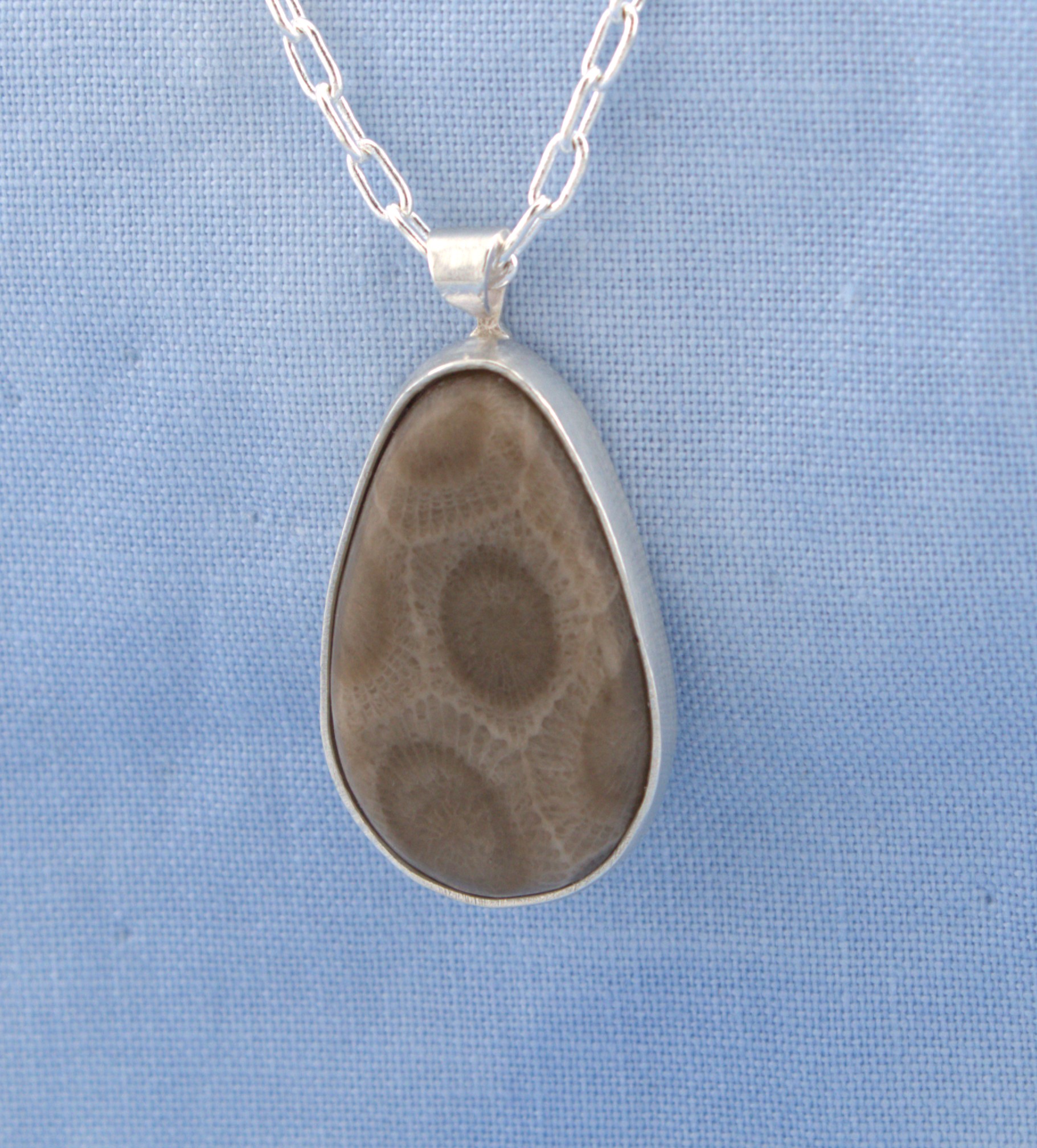
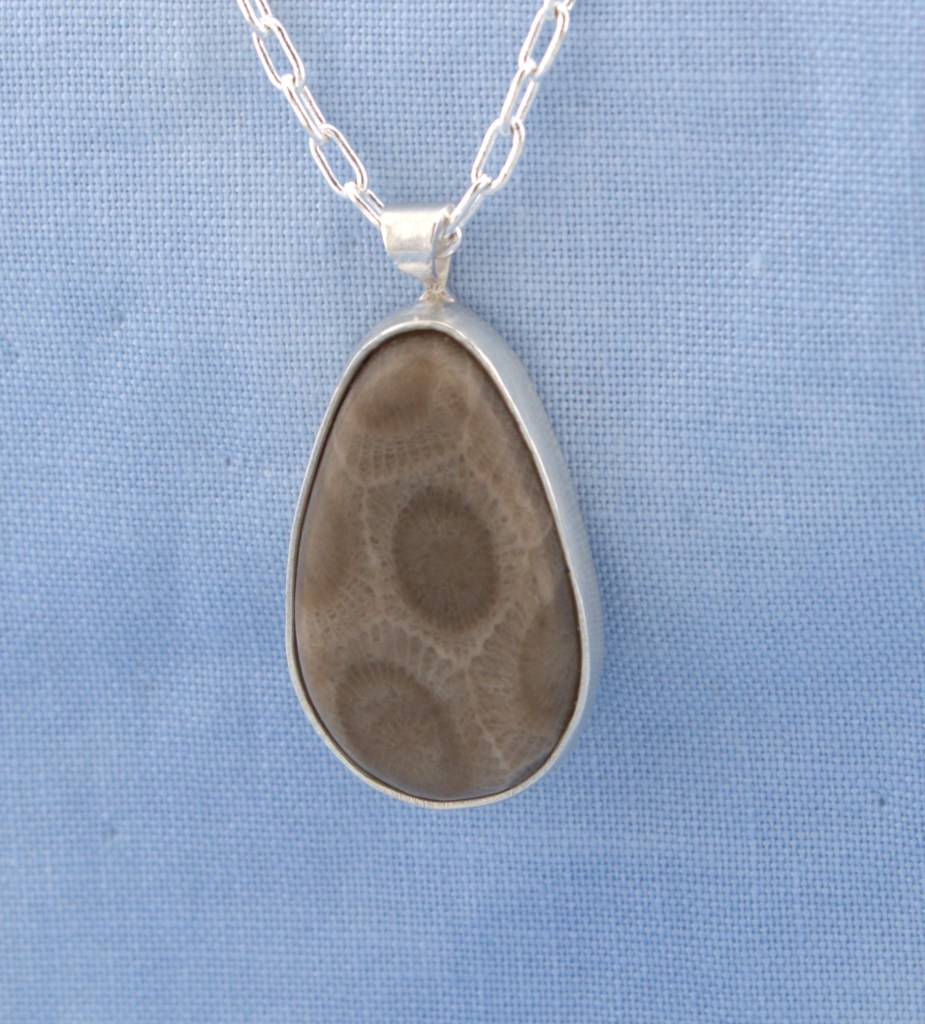
Petoskey Stones are petrified coral found in Michigan. They are the official state stone of Michigan and are found near the city of Petoskey. Set in Sterling Silver.
Petoskey stones are fossilized coral from the Devonian period, found along the shores of Michigan, especially the northern coast. You can find them by looking for their distinctive hexagonal pattern, which is most visible when the stone is wet. Therefore, the best times to hunt are after a storm or early morning at dawn or dusk. Popular spots include Petoskey State Park, Fisherman’s Island State Park, and various beaches around Charlevoix. They can also be found from Traverse City northwards along the coast.
Formed from fossilized coral that became a rock millions of years ago, then was broken up and rounded by glaciers and lake currents. First, during the Devonian period about 350 million years ago, the coral polyps died and their skeletons were fossilized, replaced by minerals. Later, glaciers scoured these fossil-bearing bedrock. They chipped off pieces and deposited them in what is now northern Michigan. Finally, the constant movement of glaciers and the action of waves on the shores of the Great Lakes smoothed and rounded these fragments. This created the finished stones seen today.
Fossilization (350 million years ago): Colonial coral, similar to modern coral reefs, thrived in a shallow, ancient sea. As the coral died, its body was filled with sediment. Over millions of years, its calcium carbonate skeleton was replaced by minerals like calcite and silica, turning it into a fossilized stone.
Glacial Plucking: Ice sheets, moving across the land millions of years later, acted like a giant abrasive, scraping and plucking these fossilized coral colonies from the bedrock.
Glacial and Wave Polishing: As the glaciers moved, they ground the stones against each other and other rocks, smoothing their rough edges. After the glaciers retreated, the powerful waves and currents of the Great Lakes continued the process. They further rounded and polished the stones and deposited them along the shorelines.
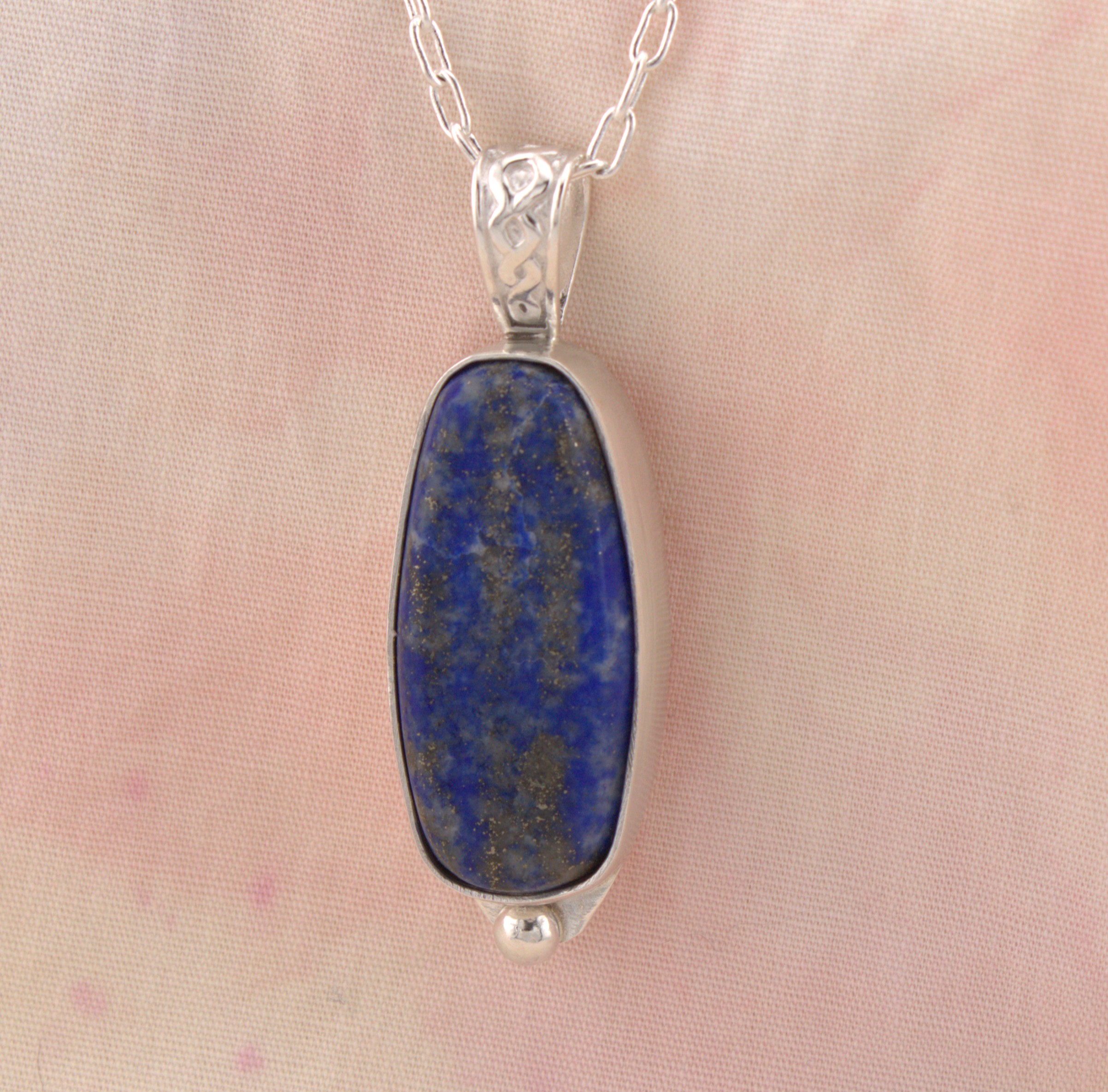
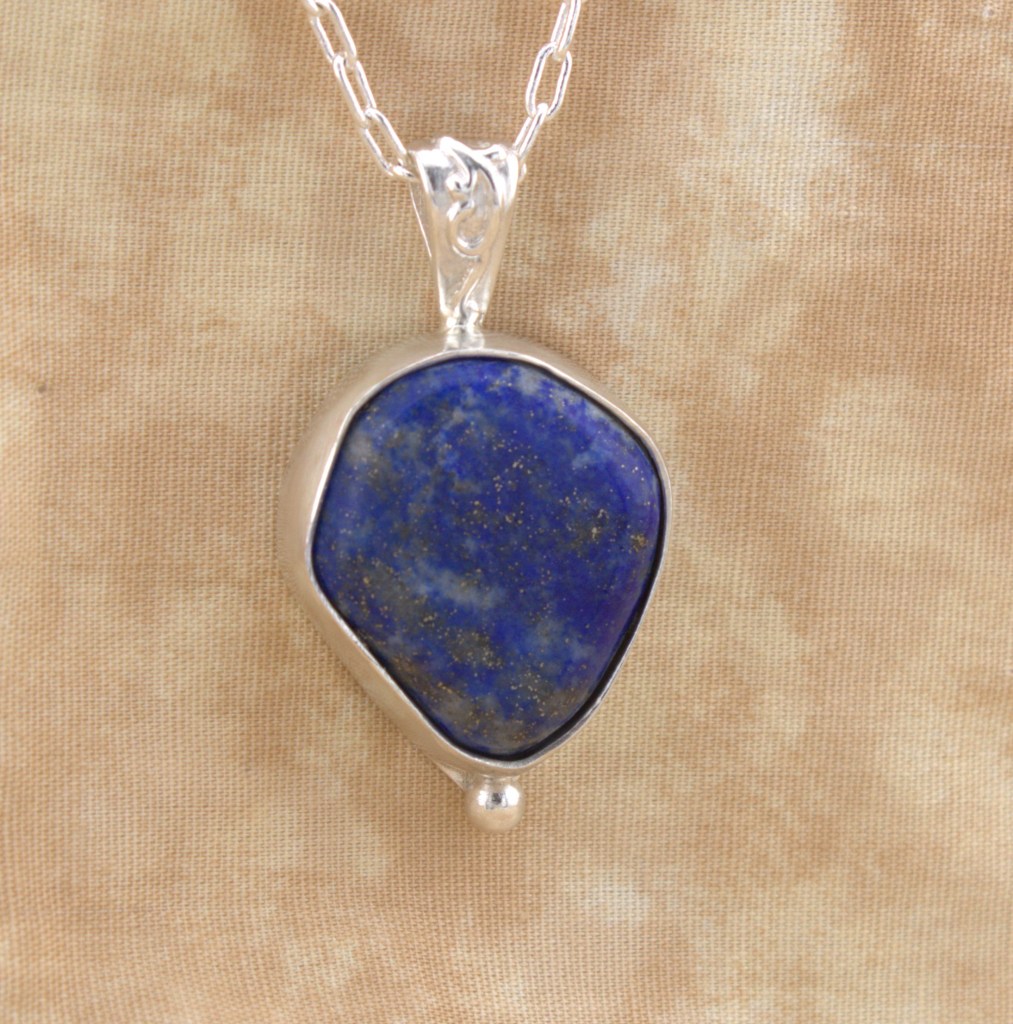
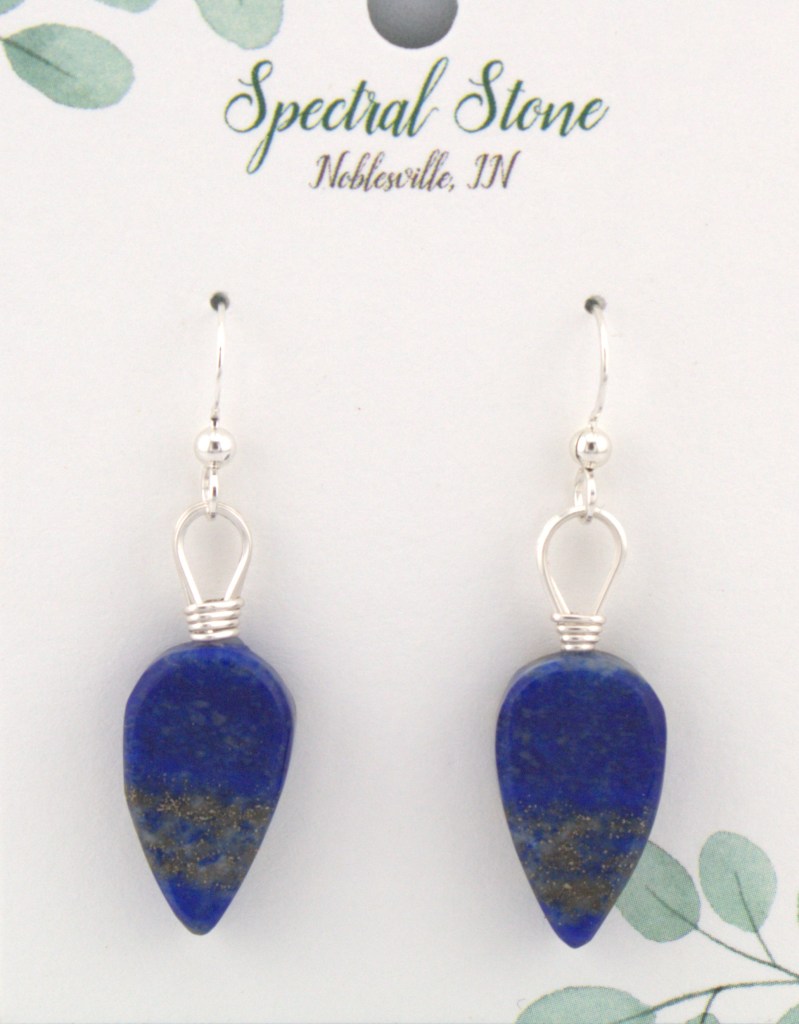
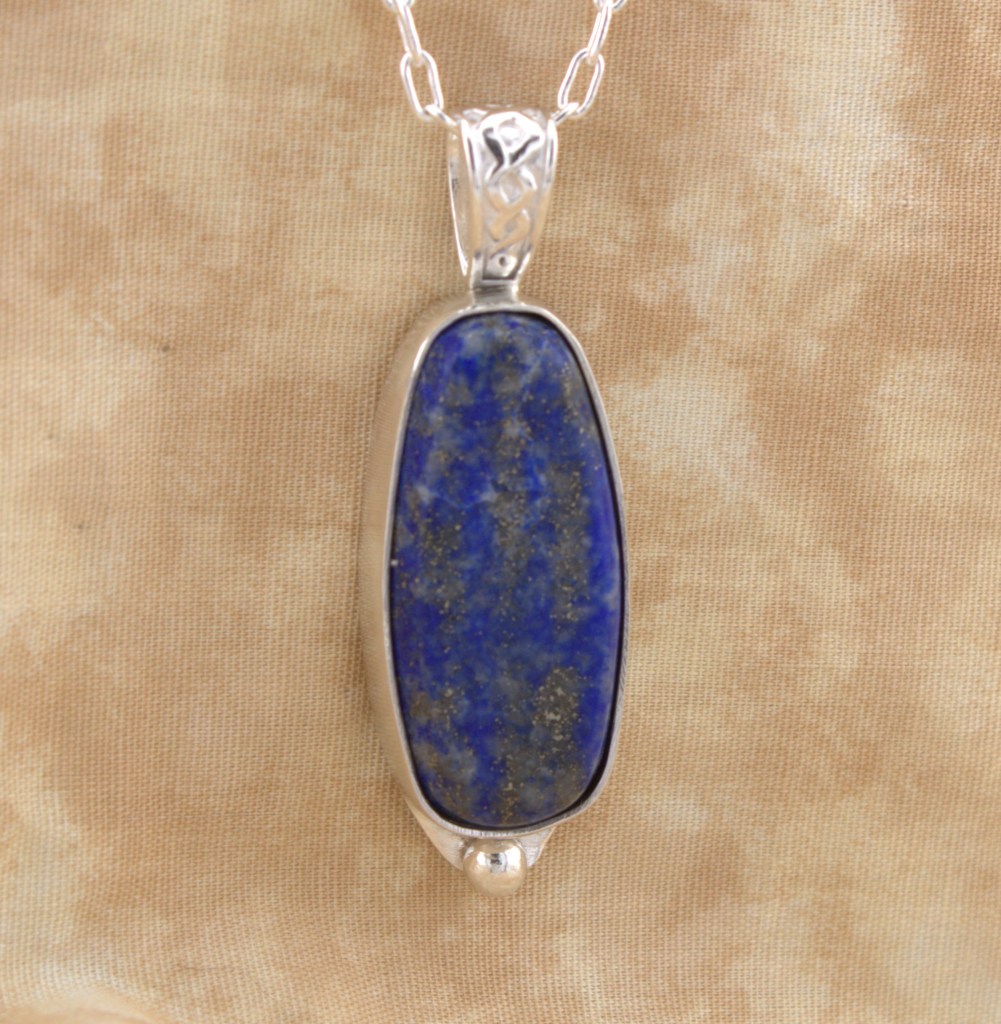
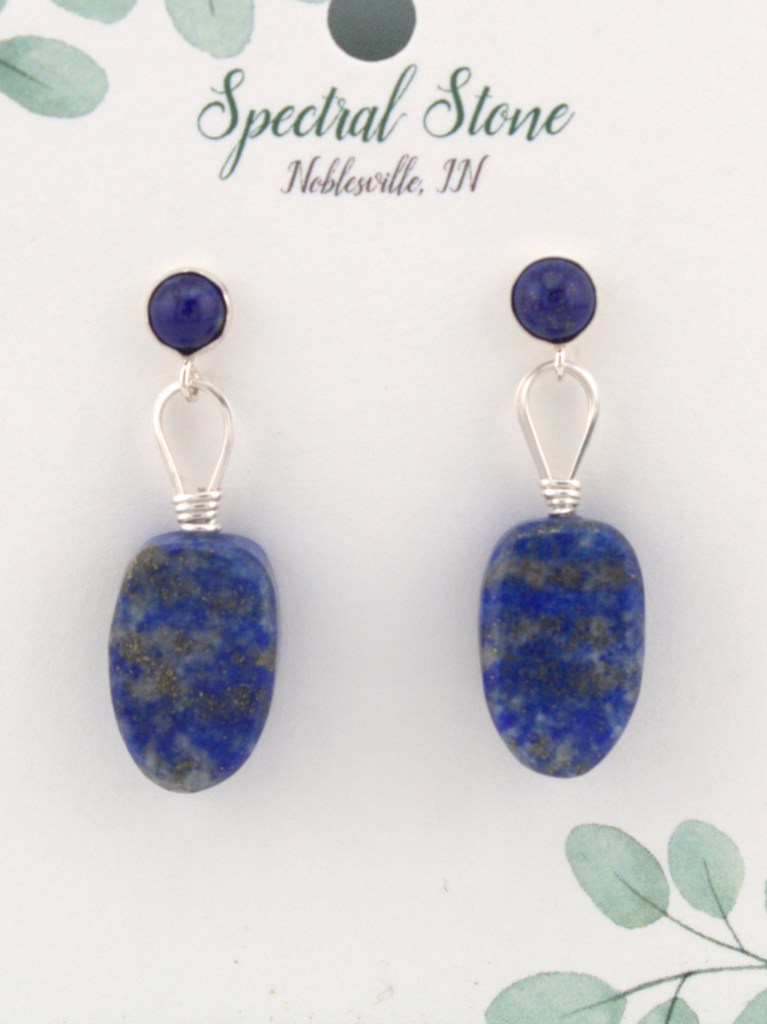
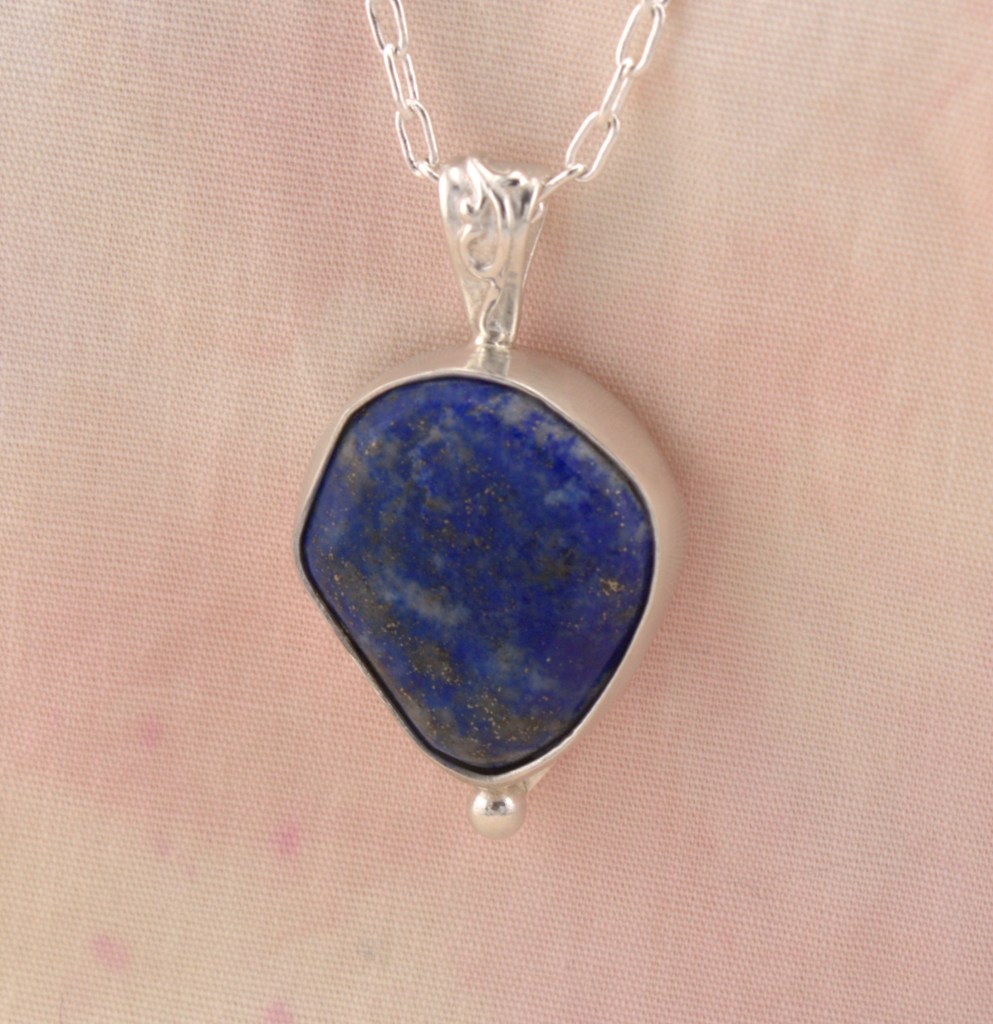
Lapis Lazuli pendants and earrings in Sterling Silver.
Lapis lazuli has a long history. It dates back over 6,500 years to ancient civilizations like Mesopotamia and Egypt. There, it was mined primarily in Afghanistan. Valued for its deep blue color, it was used for jewelry, cosmetics, and religious amulets. Most famously, it was used in the funeral mask of King Tutankhamun. During the Renaissance, the stone was ground into powder. This created the expensive pigment ultramarine, used by artists like Michelangelo and Vermeer.
Ancient history
Origins: The oldest known commercial gemstone mines are in modern-day Afghanistan. Lapis lazuli has been mined and traded there since the Neolithic age (7th millennium BC) along an ancient route to the Indus Valley.
Cultural significance:
Mesopotamia: Used for jewelry, seals, and sculptures by the Sumerians, Babylonians, and Akkadians. They believed it connected them to the heavens.
Egypt: Highly prized by the elite for jewelry and cosmetic powders. It was also used to create amulets, such as those depicting the goddess Maat. Moreover, it was a key component of the funerary mask of King Tutankhamun.
Medieval and Renaissance history
Trade and art:Throughout the Middle Ages, lapis lazuli was imported to Europe. It was ground into ultramarine pigment, a highly valued and expensive blue color used in art.
Renaissance use:Artists like Michelangelo used ultramarine for frescoes in the Sistine Chapel. It was also used by Vermeer and Titian.
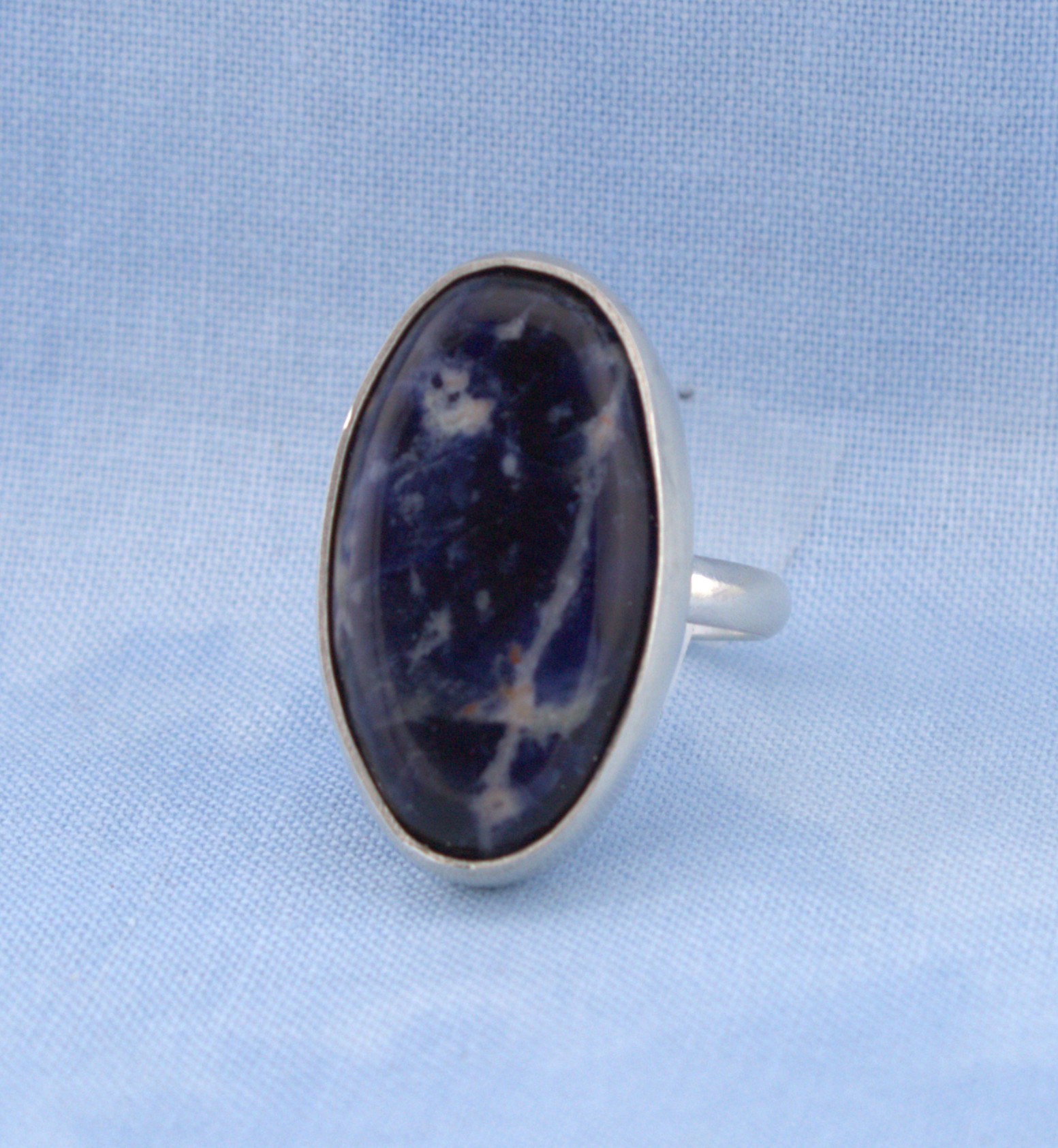
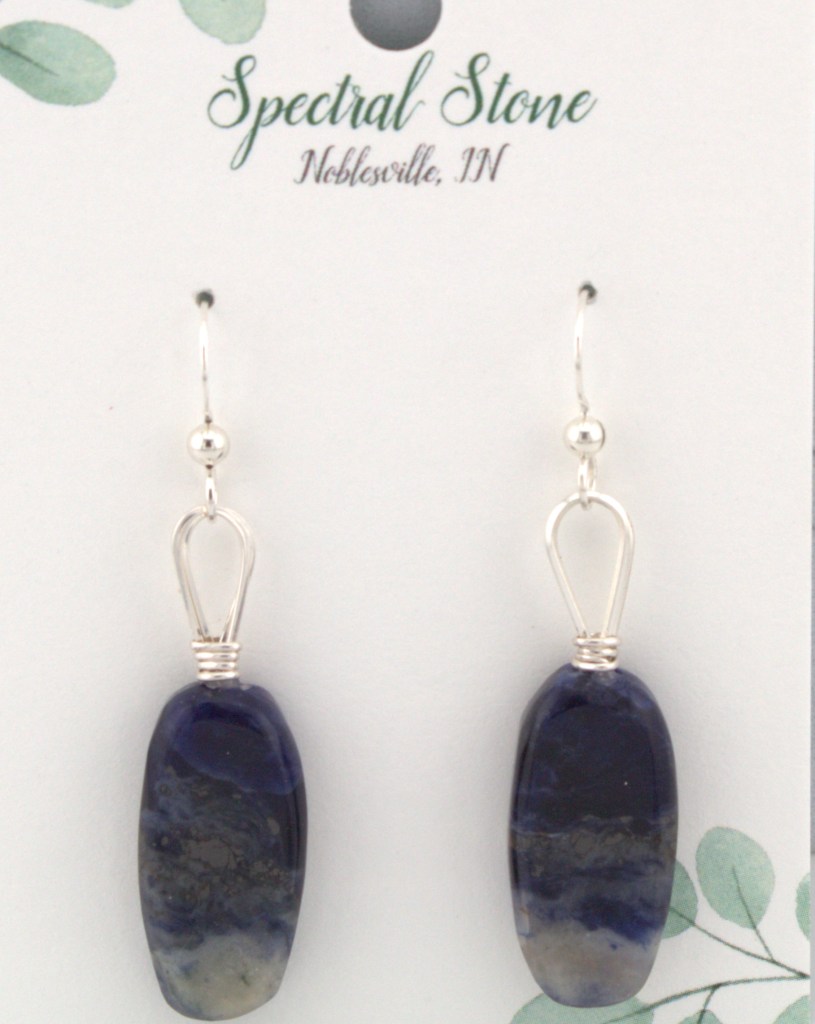
Sodalite in Sterling Silver. A light, relatively hard yet fragile mineral, sodalite is named after its sodium content.
Sodalite’s history includes its discovery in Greenland in 1811. However, it didn’t become a popular ornamental stone until 1891 when large deposits were found in Ontario, Canada. Its name derives from its high sodium content, meaning “sodium stone”. Its popularity surged after the Princess of Wales was gifted the Canadian stone. This led her to order large quantities to decorate her London residence, Marlborough House.
Discovery and Naming: Sodalite was first discovered in Greenland by Scottish mineralogist Thomas Thomson in 1811. The name “sodalite” comes from its high sodium content, combining the Latin “soda” (sodium) and “lithos” (stone).
Popularization: While discovered in 1811, sodalite was not recognized as a valuable ornamental stone until large deposits were found in Ontario, Canada, in 1891.
Royal Connection: The stone’s popularity increased significantly after the Princess of Wales was presented with a sample of the Canadian sodalite. Captivated by its beauty, she ordered 130 tons to be shipped to England. She used it to decorate her London residence, Marlborough House.
“Princess Blue”: The mine in Ontario where the sodalite was discovered was named the Princess Sodalite Mine in 1901 in her honor. The stone from this mine is sometimes called “Princess Blue”.
Modern Use: Today, sodalite is widely used in jewelry and for decorative carvings. It is often confused with lapis lazuli due to its similar blue color.