
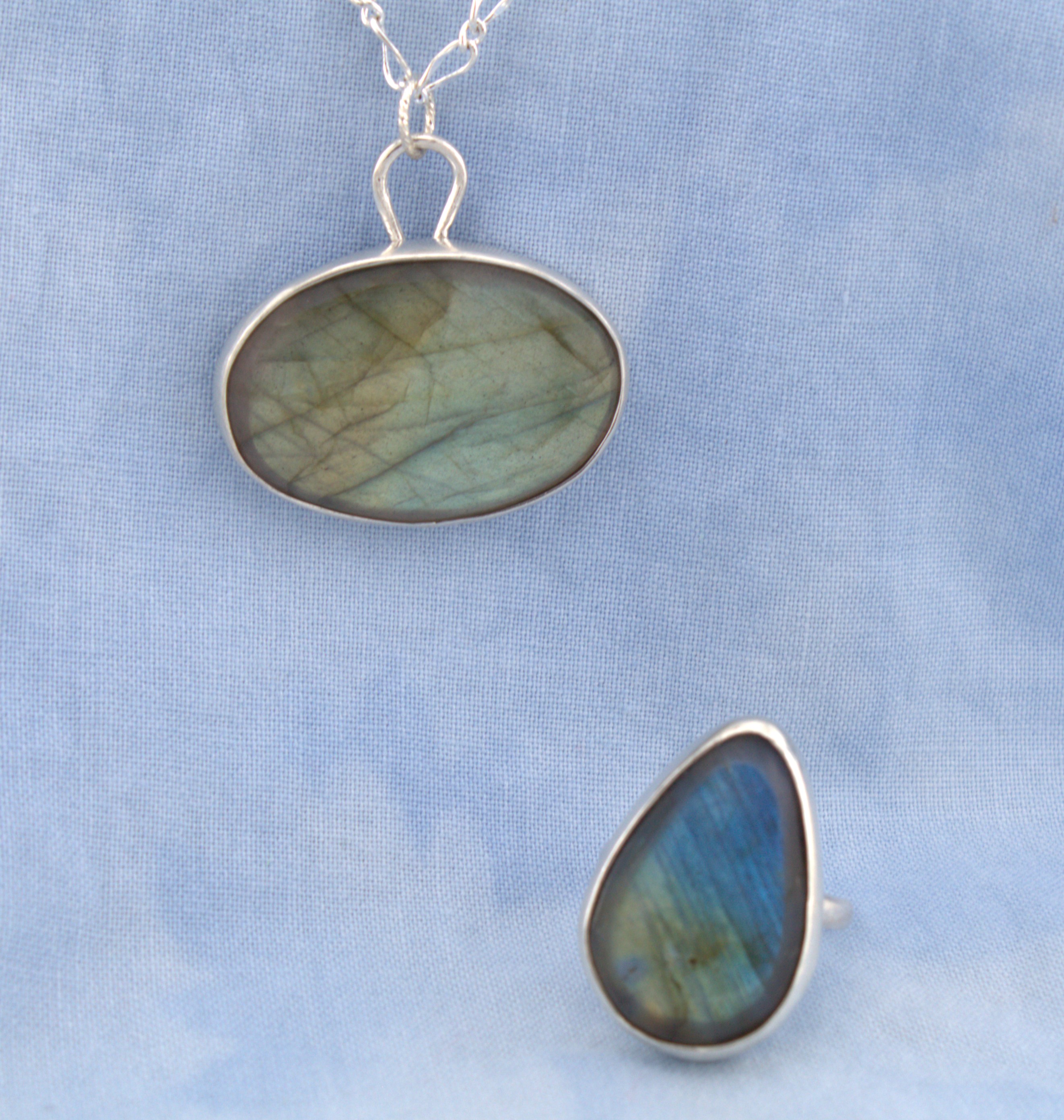
New Labradorite sets of earrings, pendants and ring set in Sterling Silver.

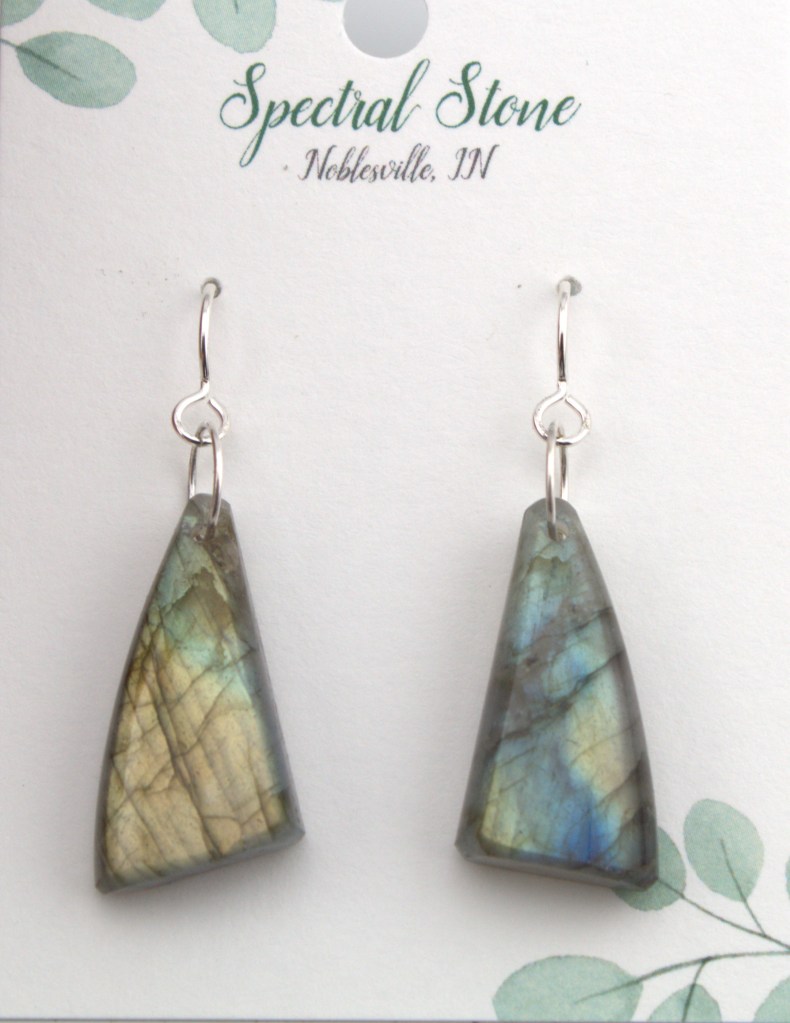
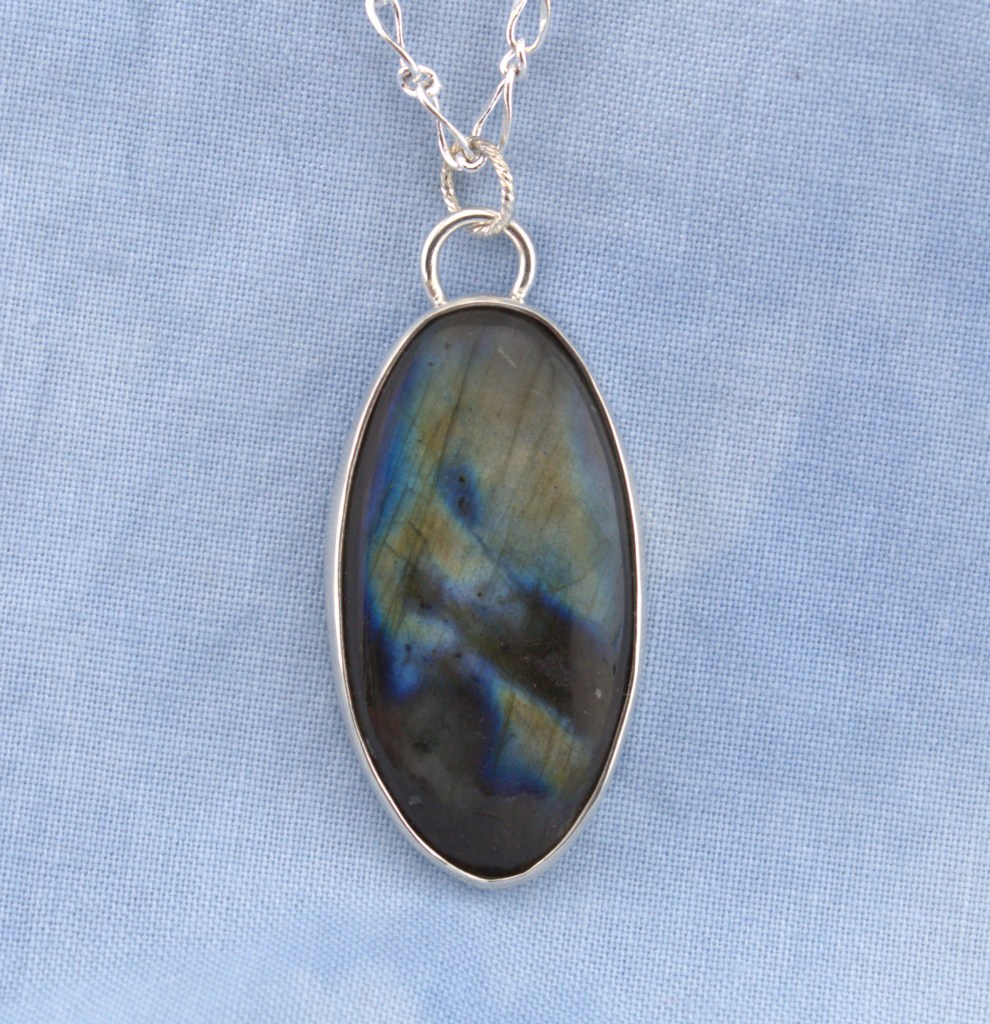

Labradorite was officially discovered in 1770 on Paul’s Island near Nain in Labrador, Canada. Moravian missionaries, who named the iridescent mineral after the region, made the discovery.
ndigenous Use and Folklore
- Inuit Tradition: The local Inuit people knew the stone well before European contact, utilizing it for tools and ornamental items.
- The Northern Lights Legend: According to Inuit folklore, the flashing colors of labradorescence (the optical shimmer caused by light diffracting off internal mineral layers) originated from the Aurora Borealis. A legendary warrior struck the coastal rocks with a spear. Because of this, he freed most of the celestial lights into the sky while leaving some trapped inside the stone.
- Medicinal Uses: The Inuit also ground the stone into a powder to treat various physical ailments and sicknesses
Popularity in Europe and Design
- 18th and 19th Century: After its documentation, European jewelers—especially during the 19th century—grew captivated by its unique play-of-color. They used it widely in statement jewelry inspired by antiquity.
Global Sources: Beyond Canada, significant high-quality deposits were later found in Madagascar, Russia, Mexico, and Finland. In Finland, a distinct, highly vibrant variety is known as spectrolite.