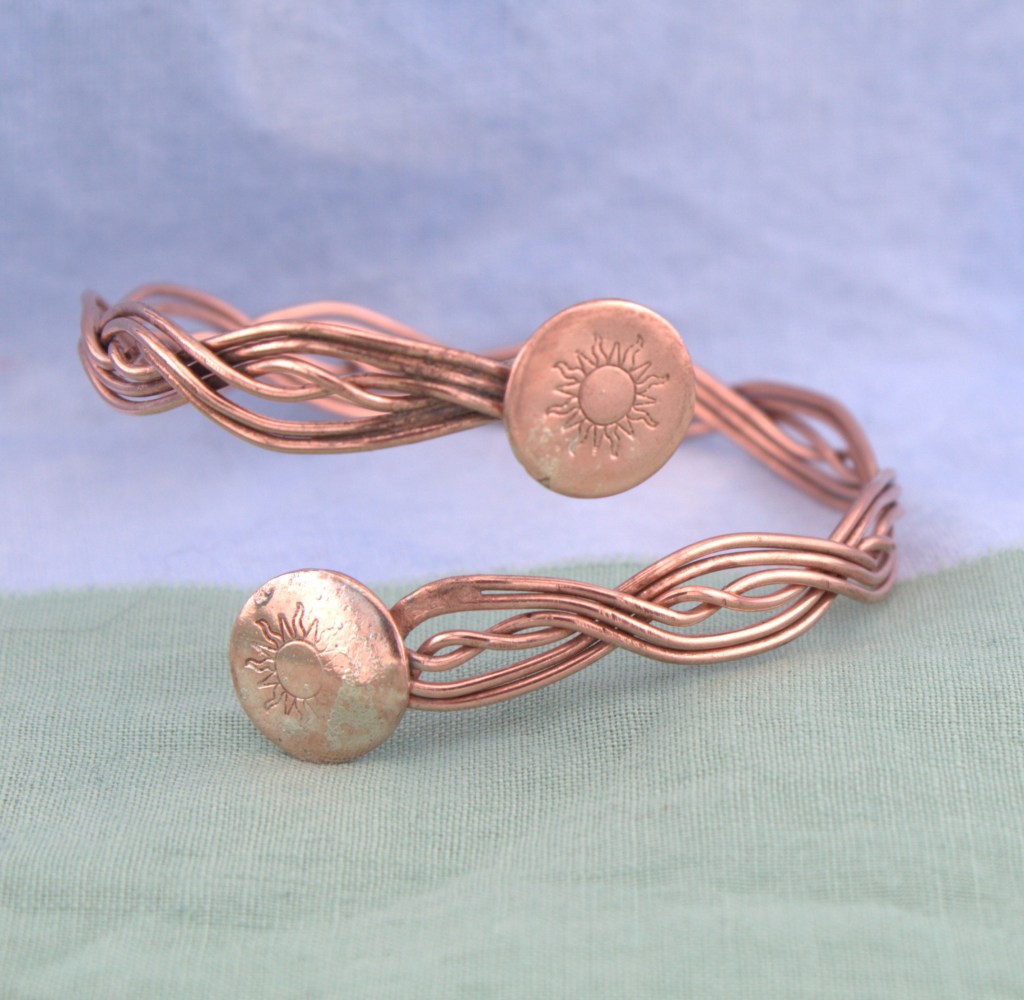
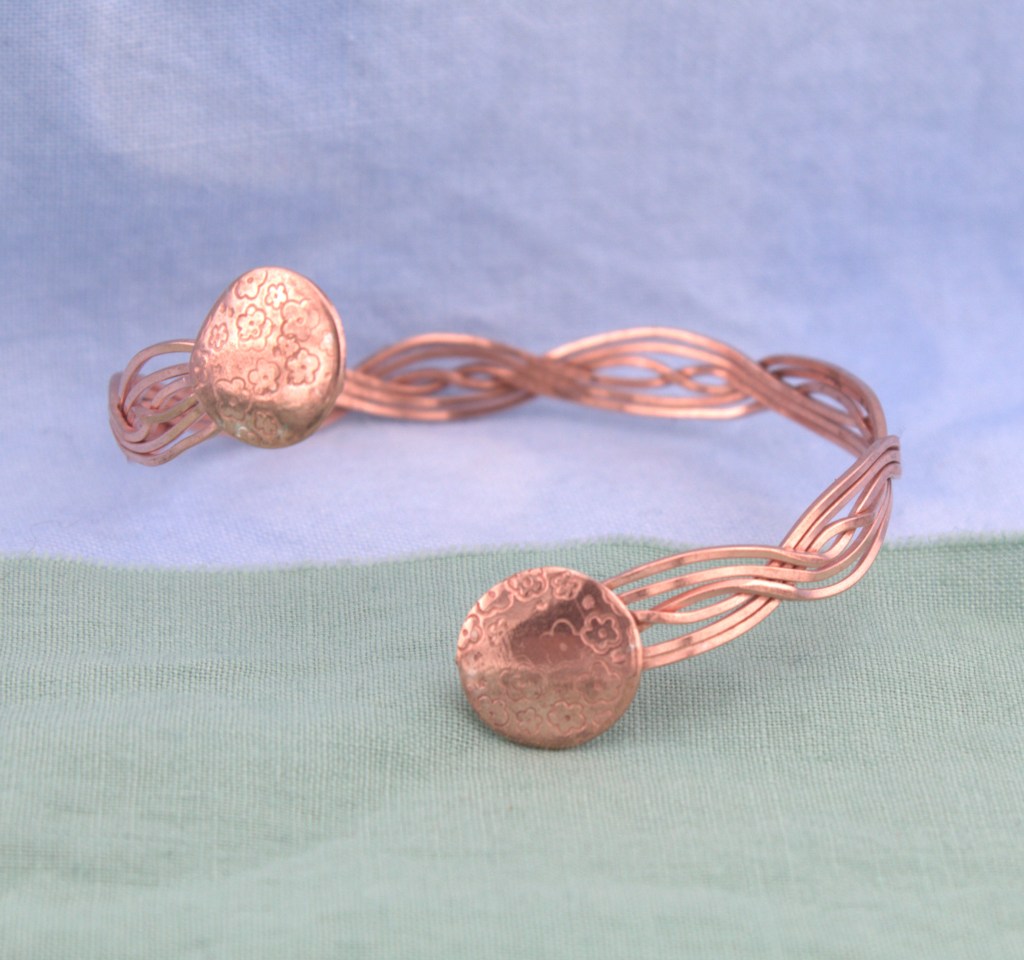
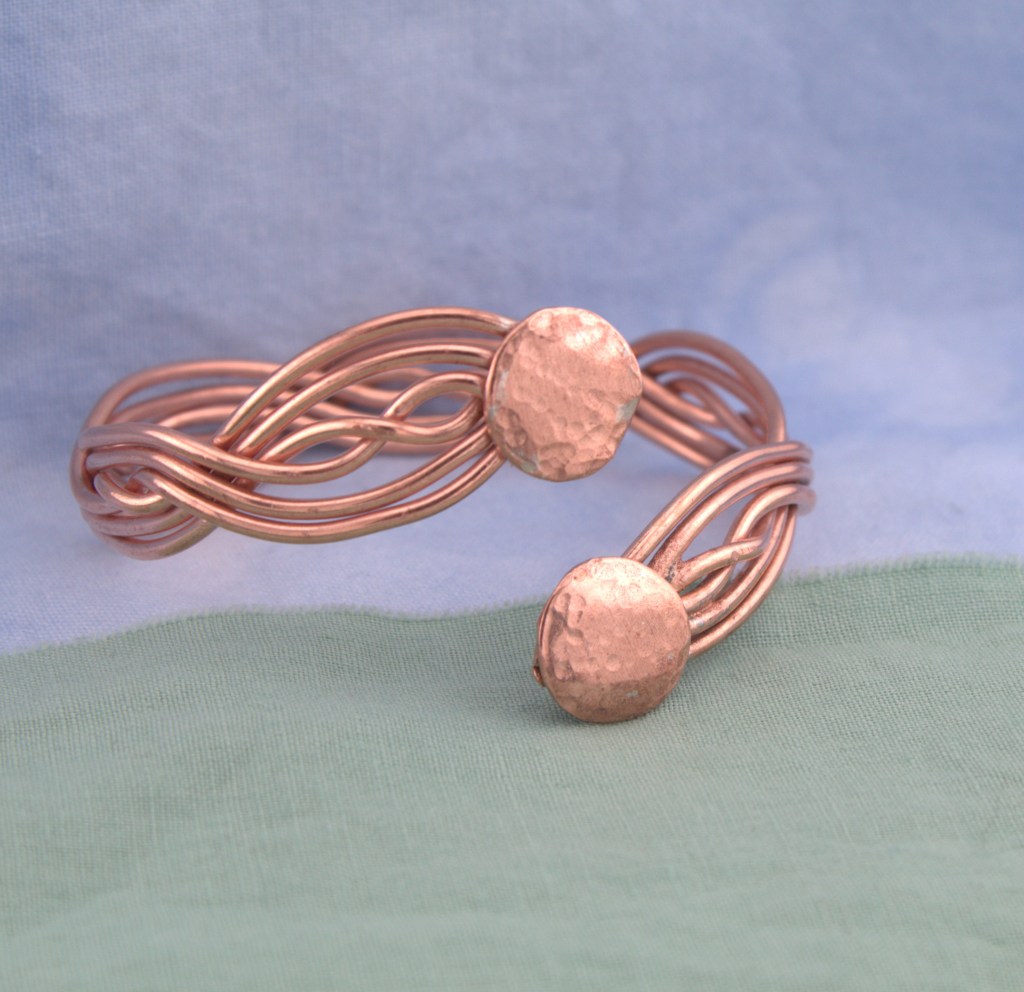
Cool Braided Copper Bracelets! Copper jewelry is a popular, affordable, and durable accessory known for its warm, reddish-brown hue and potential, though scientifically debated, health benefits. It often develops a natural green or brown patina over time. This patina can be cleaned with acidic solutions like lemon juice. Additionally, it may leave green skin stains, which are harmless.
Copper bracelets have a history spanning over 9,000 years, with roots in ancient civilizations including Egypt, Mesopotamia, and the Indus Valley. In these cultures, they were worn for both aesthetic status and believed medicinal/mystical properties. Known as the earliest “ionizing” bracelet, copper was revered for its antimicrobial and anti-inflammatory properties. Moreover, its usage for pain relief was popular in ancient times and saw revivals in the 1920s and 1970s.
Ancient Egypt: Regarded as a sacred metal and associated with the goddess Hathor, Egyptians used copper to sterilize water and heal wounds. Mesopotamia/Sumerian: Used as early as 5000 BC, bracelets were crafted from copper alloy and bronze. They were often made with open-work designs. Celtic Cultures: Open-torque copper bracelets (circa 100-300 AD) were worn in Britain as symbols of strength, identity, and status. The Americas: Native American tribes traded copper beads. Later, copper and brass items were traded extensively with groups like the Iroquois and Sioux.