
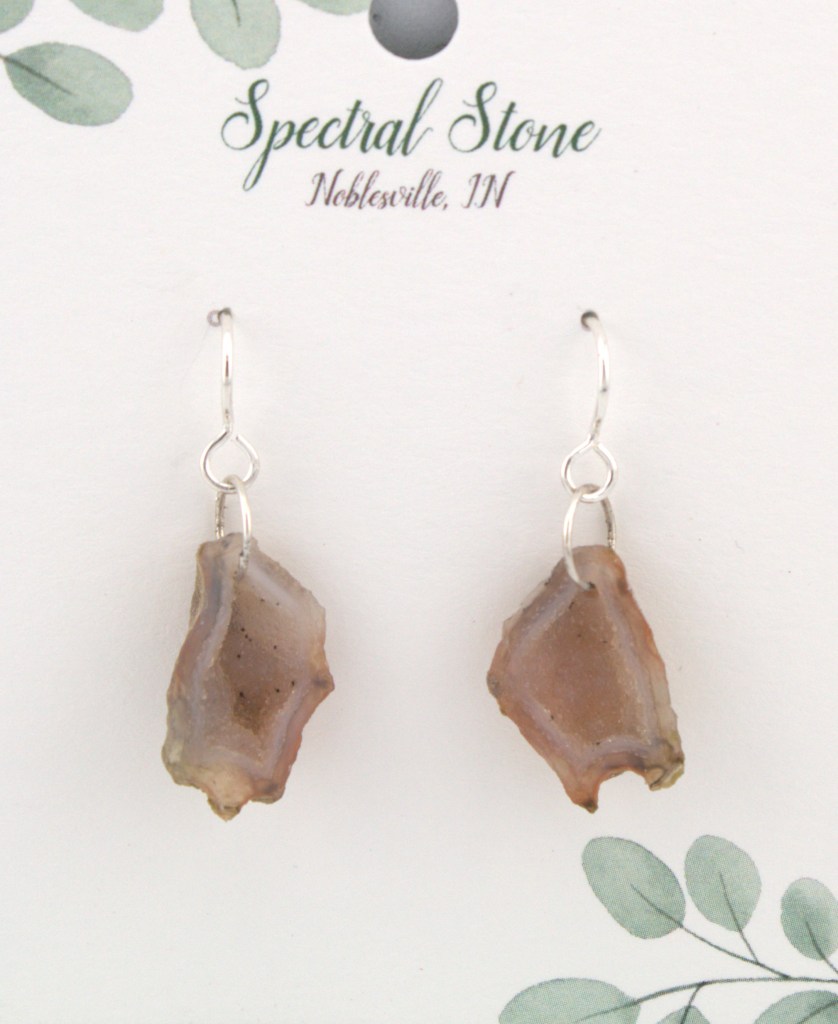
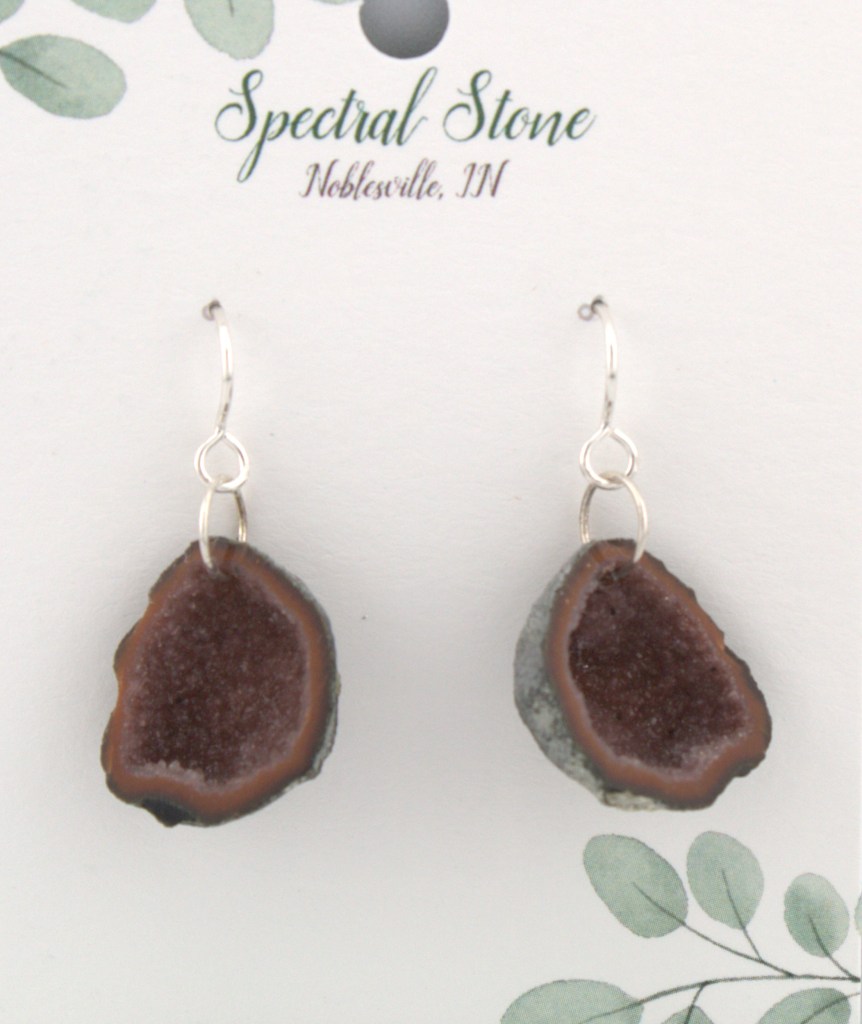
Ammonite and Geode earrings set in Sterling Silver ear wire.
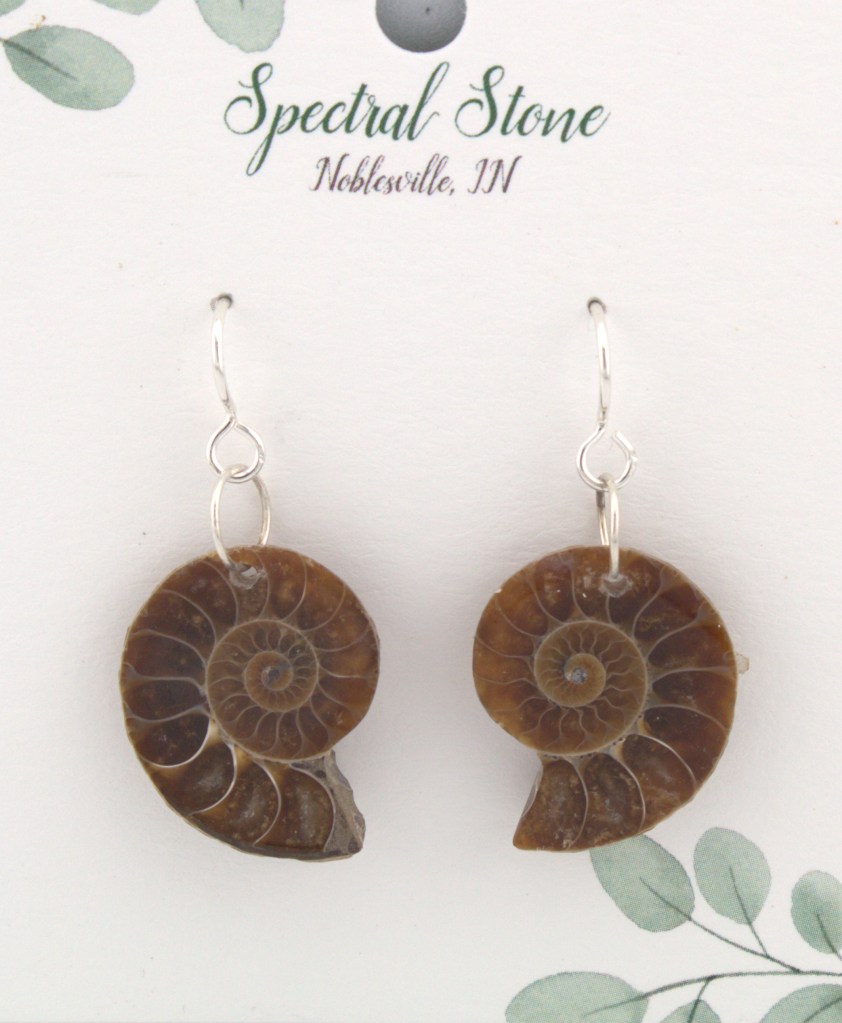

Ammonites were extinct, predatory, free-swimming marine mollusks with chambered, coiled external shells. They were closely related to modern squid and octopuses. They lived from the Paleozoic to the late Cretaceous eras. They became extinct around 66 million years ago with the non-avian dinosaurs, and are now common fossils used to determine the age of rocks. Their fossils, which are sometimes called “snakestones,” can vary in shape. They show intricate internal chamber walls called septa and complex suture lines.
- Cephalopods: Ammonites were a group of cephalopods, which are animals that include modern-day nautiluses, cuttlefish, squid, and octopuses.
- Shells: They possessed a distinctive, multi-chambered external shell, similar to a modern nautilus.
- Chambers and Buoyancy: The shell was divided into chambers by walls called septa. By moving its body between these chambers, and adjusting the air within them, the ammonite controlled its buoyancy. It also managed its position in the water.
- Diet: As predatory creatures, ammonites likely fed on smaller marine animals, such as shrimp, starfish, and fish.
A geode is a hollow rock, typically spherical, with a hard outer shell and an interior cavity lined with mineral crystals. These crystals can be quartz or calcite. Geodes form when a cavity within igneous or sedimentary rock fills with mineral-rich groundwater over thousands of years. Outside, geodes often appear as dull, rounded rocks. However, when cracked open, they reveal a stunning display of colorful, sparkling crystals.