Posted on — Leave a comment

New Larimar Set

Larimar is found in a limited deposit in the Dominican Republic. Its lovely sea-blue color is reminiscent of the Caribbean seas. All pieces are set or cast in Sterling Silver. Thus, every New Larimar Set is a beautiful and unique addition to your collection.

Larimar is a rare blue pectolite found exclusively in the Dominican Republic, discovered in 1916 by Father Miguel Domingo Fuertes Loren and rediscovered in 1974 by Miguel Méndez and Norman Rilling. It was named by Méndez, combining his daughter “Larissa” with “mar” (Spanish for sea). Moreover, this Caribbean stone is prized for its ocean-like blue, appearing in volcanic rock. It is a popular, protected gem in the region. If you are searching for a lovely gift, a New Larimar Set highlights the unique qualities of this gemstone.

  • Initial Discovery (1916): Spanish priest Miguel Domingo Fuertes Loren found the blue stone along the shore of Barahona. However, he was not allowed to explore the mines.
  • Rediscovery (1974): Locals found blue stones (initially called “travelina”) on the beach. Miguel Méndez and U.S. Peace Corps volunteer Norman Rilling followed the river to locate the source, the Los Chupaderos mine. Today, a New Larimar Set often originates from these exact mines.
  • Naming: Miguel Méndez combined his daughter’s name, Larissa, with the Spanish word mar (sea), reflecting the stone’s color.
  • Geology & Significance: It is a rare, blue-colored variety of pectinolite, formed by volcanic activity and found only in one mountain location in Barahona. A New Larimar Set showcases the rarity and volcanic origin of this precious stone.
  • Cultural Status: In 2011, it became the official stone of the Dominican Republic.
  • Legal Status: In 2016, the government restricted the export of raw materials to ensure that only polished stones are exported. This supports local industry.

The story of Larimar – Dominican-Larimar.com

Posted on — Leave a comment

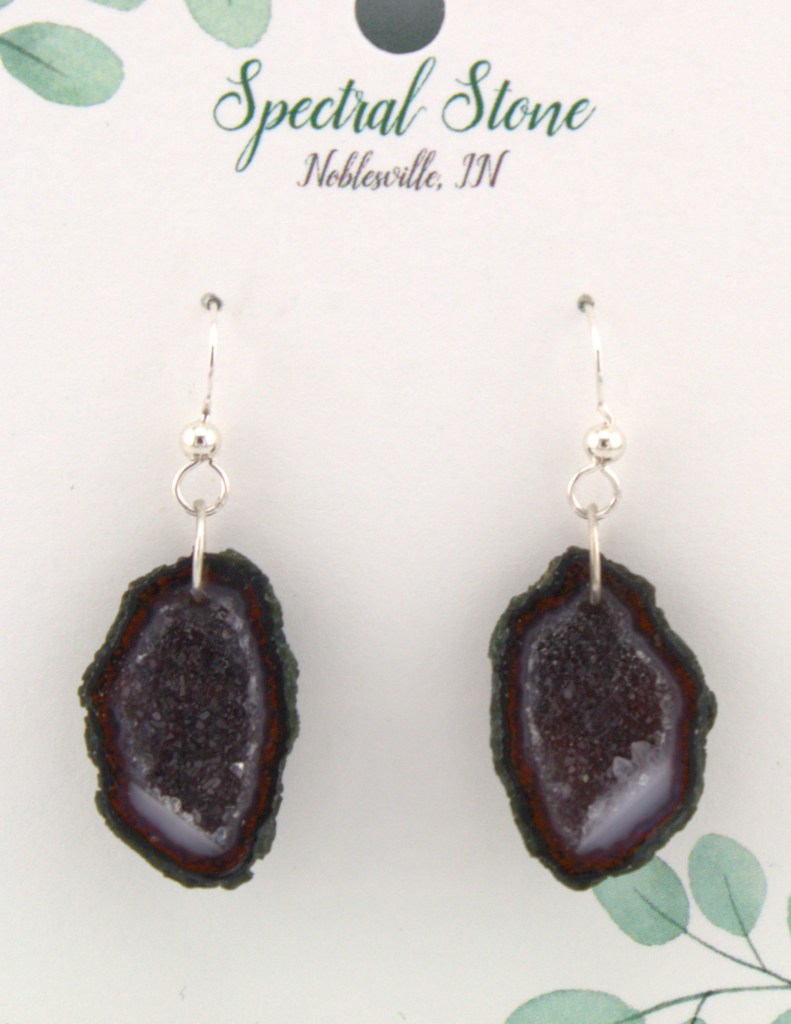
New Tabasco Geodes

tabasco geode earrings

New Tabasco Geodes! Tabasco Geodes are the smallest in the world, found in central Mexico near the town of Tabasco.

Geodes are hollow, spherical rocks containing inward-growing crystal formations (usually quartz or calcite) hidden inside a dull, unassuming exterior. Formed over millions of years within volcanic or sedimentary rock, these “miniature caves” develop as groundwater deposits minerals into cavities.

What are Geodes? | Information, How They Form, Properties – Rare Earth Gallery

Tabasco Geodes Archives | Spectral Stone Lapidary Arts

Posted on — Leave a comment

Tabasco Geode Earrings

tabasco geode earrings

Tabasco Geodes are the smallest in the world, found in central Mexico near the town of Tabasco. Sterling Silver ear wires.

Geodes are hollow, spherical rocks containing inward-growing crystal linings, often quartz, amethyst, or calcite. They are formed over millions of years within volcanic or sedimentary pockets. These “nature’s mystery boxes” appear ordinary on the outside but contain vibrant crystals inside. They range from walnut-sized to several feet in diameter. 

  • Formation: They typically start as gas bubbles in volcanic rock or as cavities in sedimentary rock (formed by decayed organic matter or mud). Over time, mineral-rich groundwater seeps into these hollows. As a result, silica and other minerals are deposited, which slowly crystallize.
  • Internal Structure: While the exterior is dull and rough, the interior is often filled with a druse of tiny quartz crystals, banded agate, or rare, vibrant minerals like celestite or rhodochrosite.
  • Types & Composition: The most common geodes are quartz or agate. However, many, particularly in the US Midwest, are filled with white calcite, dolomite, or gray quartz.
  • Appearance: They are generally spherical or egg-shaped.
  • Locations: Found worldwide in deserts, volcanic ash beds, and sedimentary limestone deposits. Notable locations include Iowa, Arizona, Utah, and Nevada in the US.

What are Geodes? | Information, How They Form, Properties – Rare Earth Gallery

Posted on — Leave a comment

Blue Lace Agate

blue lace agate pendant

Blue lace agate was discovered in Namibia, originally Southwest Africa. Small amounts have also been found in Brazil, China, India and various places in the United States. Set in Sterling Silver.

Approximate size 1 1/8″ x 1/2″ x 3/16″

This gemstone is prized for its soothing and calming energy, making it popular in the world of crystal healing and metaphysics. It is believed to promote communication, tranquility, and emotional healing. Blue Lace Agate is often used for meditation and stress relief.

The unique patterns and gentle colors of Blue Lace Agate make it a favorite in jewelry design. It is commonly cut into cabochons, beads, or carved into decorative shapes for use in necklaces, earrings, bracelets, and other adornments. The stone is also appreciated for its affordability compared to some other gemstones, making it accessible to a wide range of people.

It’s important to note that, like many gemstones, Blue Lace Agate is a product of nature and may vary in color and pattern from one specimen to another. Additionally, while it is a relatively hard stone, it should be handled with care to prevent scratches or damage.

Just a moment…