Posted on Leave a comment

St. James Art Fair

St. James Art Fair

Spectral Stone will be at the St. James Art Fair in Louisville this weekend in the same place by the fountain. Hope to see you!

St. James Court Art Show® was founded on October 12, 1957 by St. James Court Association president, Malcolm Bird. Back in 1957, St James Court Association had an empty treasury and mounting debt for fountain repairs. They had an immediate need to generate funds. The Art Show seemed to be a perfect means to pay the bills and bring residents together.

The Art Show started simply enough. “At first, it was to be an art exhibit only, although open to anyone wishing to enter an exhibit. The pictures were hung on a clothesline extending from tree to tree,” wrote Marguerite Gifford in her 1966 history, St. James Court in Retrospect.

In the early years, music was a part of the Art Show including special programs of chamber music, choral performances, and big band concerts. The Art Show also provided an opportunity to celebrate the history of St. James Court. Plaques were placed on certain houses to honor their notable residents – poets, authors, and mayors.

In 1965, the Art Show’s profit was $700, sufficient to purchase and install twenty gas lights the following year. Ms. Gifford wrote, “They shed a gentle twinkling among the trees and a refined illumination. This gave emphasis to the atmosphere which prevails in the Court.” By 1967, Malcolm’s last year as chair, attendance reached 40,000. According to newspaper coverage, 200 exhibitors offered a “mélange of paintings, antiques, photographs, flowers, painted stones, portrait sketches, ceramic and assorted bric-a-brac.”

The Walking Tour and Cooking Guide of St. James Court declares “Although we are indebted to Malcolm for many things, the Art Show is foremost. This is because we all know without this money-making event we could not have undertaken and completed the expensive projects that have made it possible for us to preserve this landmark (St. James Court).” The momentum of these improvements spurred housing restoration. It also sparked a rebirth of St. James Court and Old Louisville that continues today.
Posted on Leave a comment

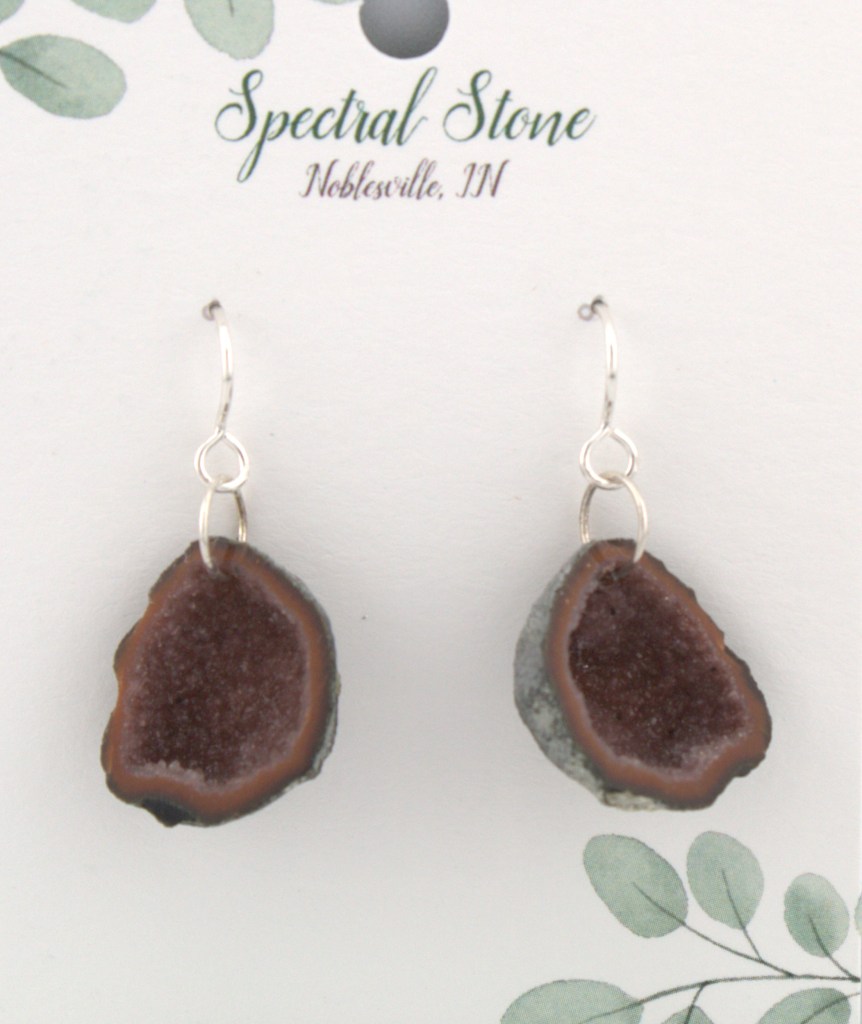
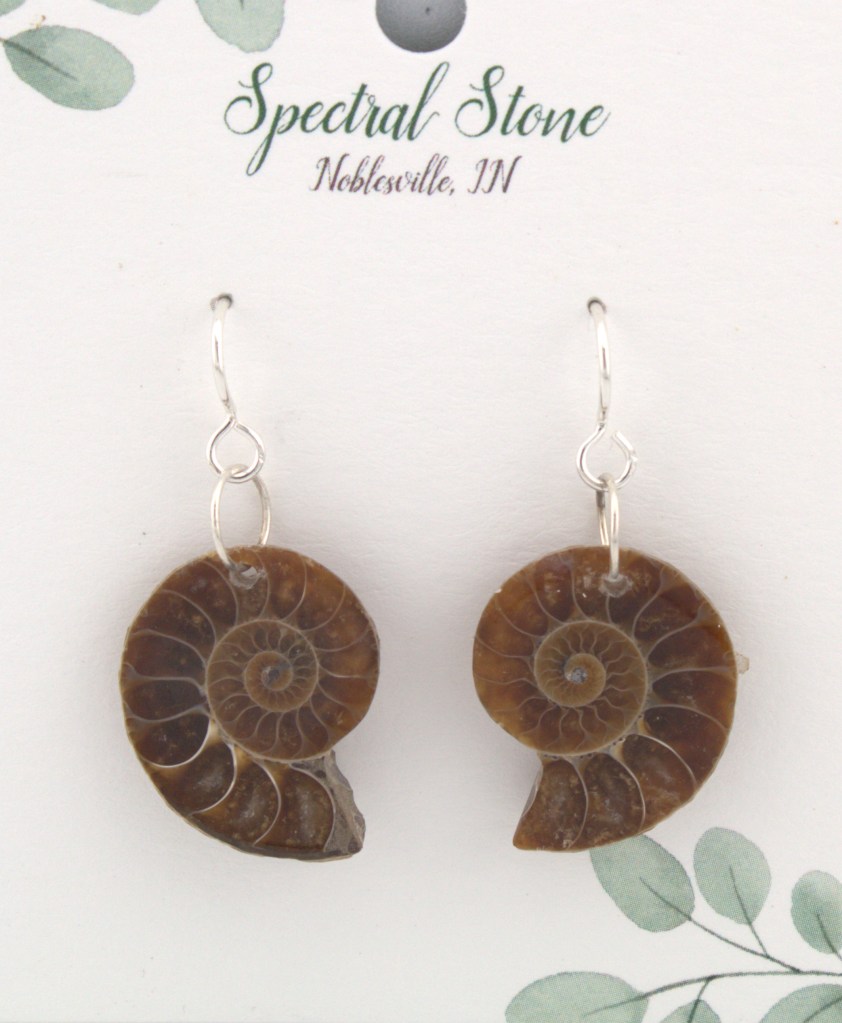
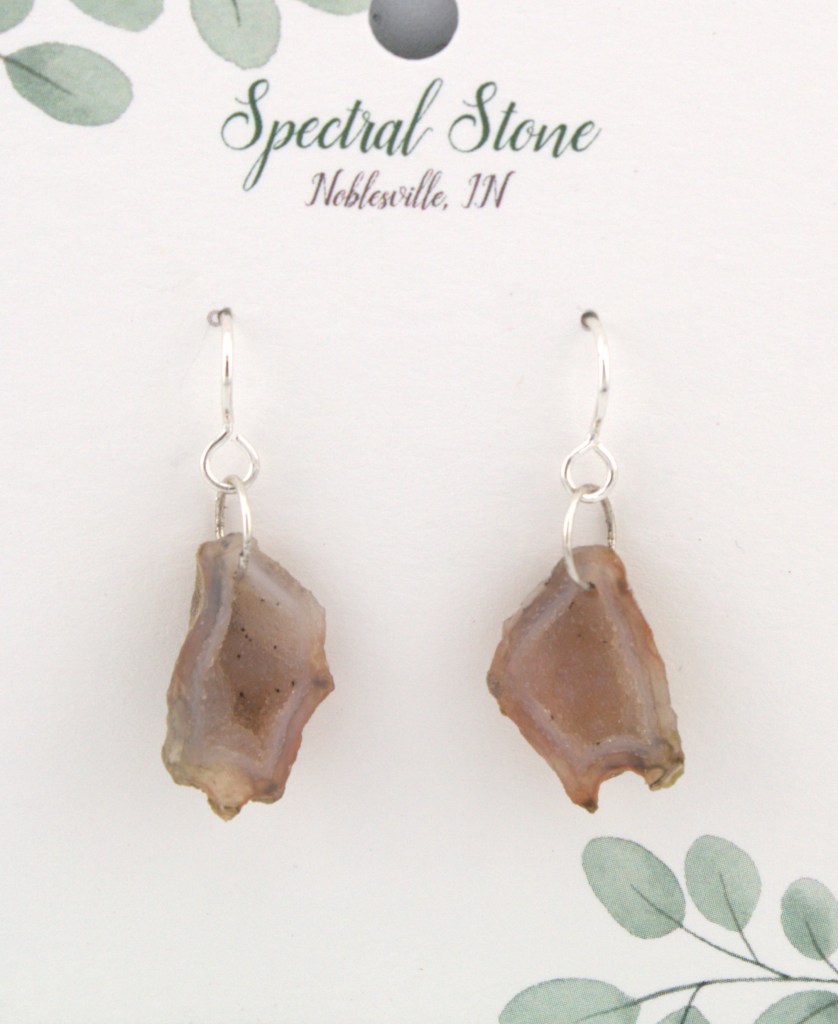
Ammonite and Geode

Ammonite and Geode earrings set in Sterling Silver ear wire.

Ammonites were extinct, predatory, free-swimming marine mollusks with chambered, coiled external shells. They were closely related to modern squid and octopuses. They lived from the Paleozoic to the late Cretaceous eras. They became extinct around 66 million years ago with the non-avian dinosaurs, and are now common fossils used to determine the age of rocks. Their fossils, which are sometimes called “snakestones,” can vary in shape. They show intricate internal chamber walls called septa and complex suture lines

  • Cephalopods: Ammonites were a group of cephalopods, which are animals that include modern-day nautiluses, cuttlefish, squid, and octopuses. 
  • Shells: They possessed a distinctive, multi-chambered external shell, similar to a modern nautilus. 
  • Chambers and Buoyancy: The shell was divided into chambers by walls called septa. By moving its body between these chambers, and adjusting the air within them, the ammonite controlled its buoyancy. It also managed its position in the water. 
  • Diet: As predatory creatures, ammonites likely fed on smaller marine animals, such as shrimp, starfish, and fish. 

A geode is a hollow rock, typically spherical, with a hard outer shell and an interior cavity lined with mineral crystals. These crystals can be quartz or calcite. Geodes form when a cavity within igneous or sedimentary rock fills with mineral-rich groundwater over thousands of years. Outside, geodes often appear as dull, rounded rocks. However, when cracked open, they reveal a stunning display of colorful, sparkling crystals.  

Posted on Leave a comment

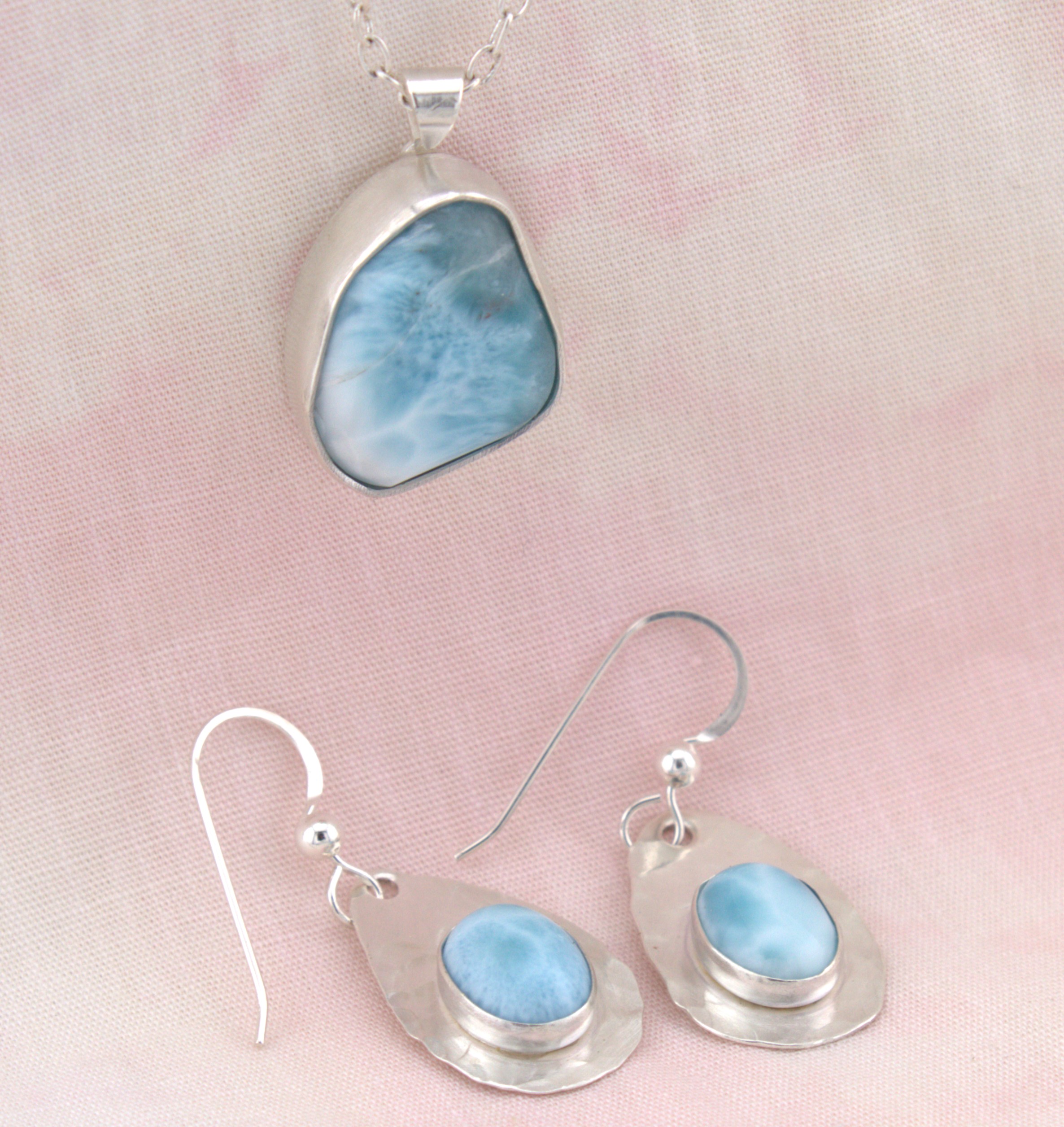
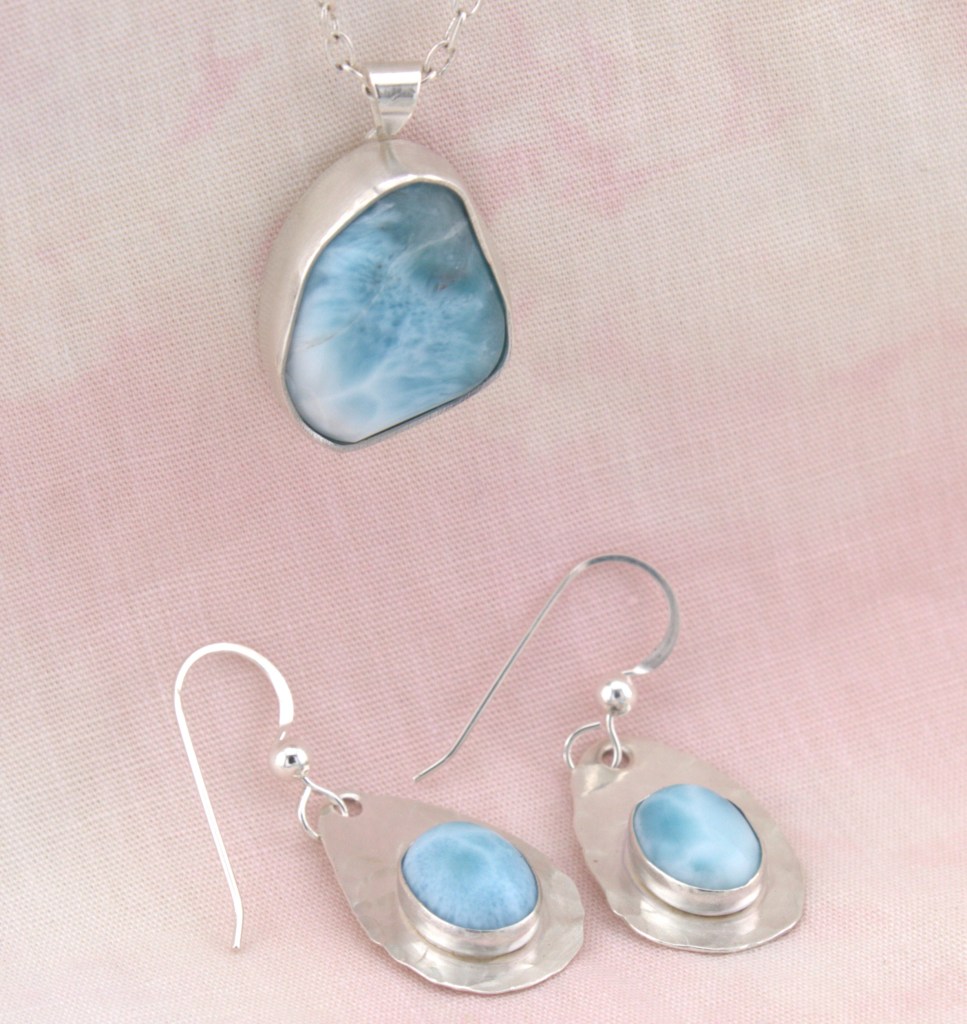
Larimar Pendants and Earrings

Larimar jewelry set

Larimar Pendants and Earrings in Sterling Silver. Larimar is found in a limited deposit in the Dominican Republic. Its lovely sea-blue color is reminiscent of the Caribbean seas. Set in Sterling Silver.

Larimar Pendants and Earrings. Larimar is a rare, blue pectolite variety found only in the Dominican Republic. Its name is derived from the discoverer’s daughter, Larissa, and the Spanish word for sea (“mar”). This semi-precious stone has a smooth, silky texture. It has a hardness of 4.5-5 on the Mohs scale, and is known for its distinctive blue, blue-green, and white patterns. Notably, these include the “turtleback”. Besides its use in jewelry, larimar is associated with inner peace. It also contributes to emotional balance and honest communication. Hence, it promotes a sense of calm and aids in stress and communication-related issues.

  • Origin: Larimar was discovered in the Dominican Republic in 1916. 
  • Naming: Miguel Méndez, the local jeweler who identified the stone, named it “Larimar” in honor of his daughter, Larissa, and the Spanish word for sea, “mar”.

Larimar – Wikipedia

Posted on Leave a comment

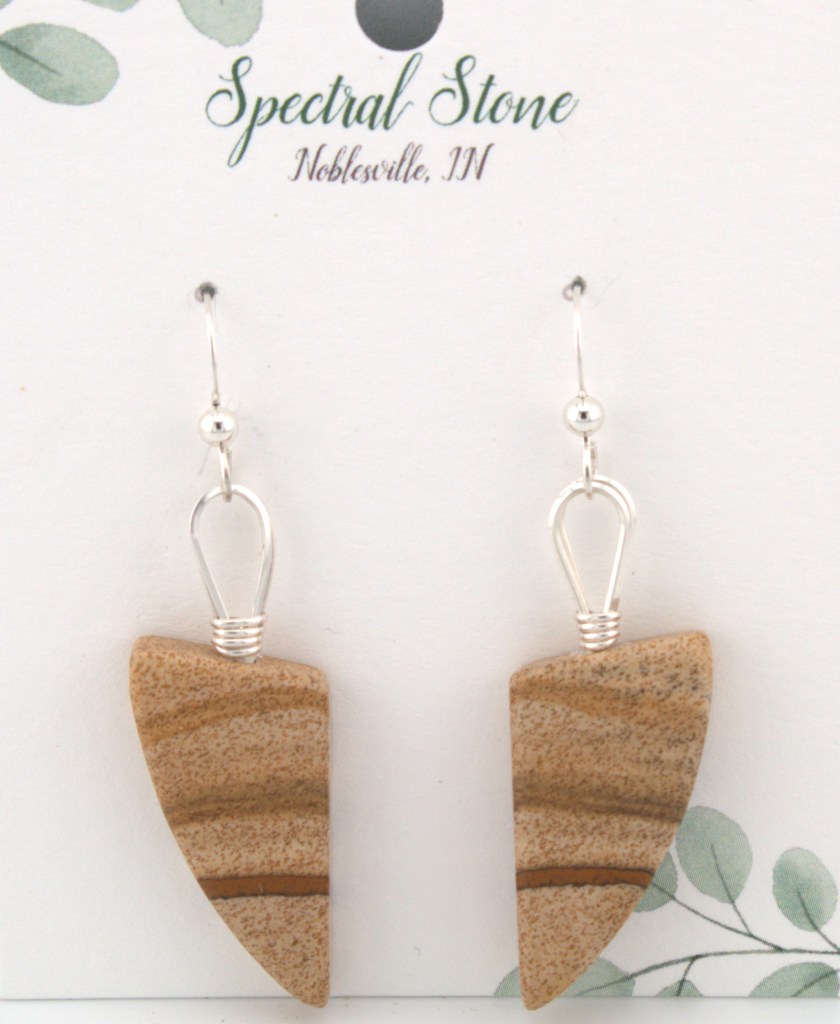
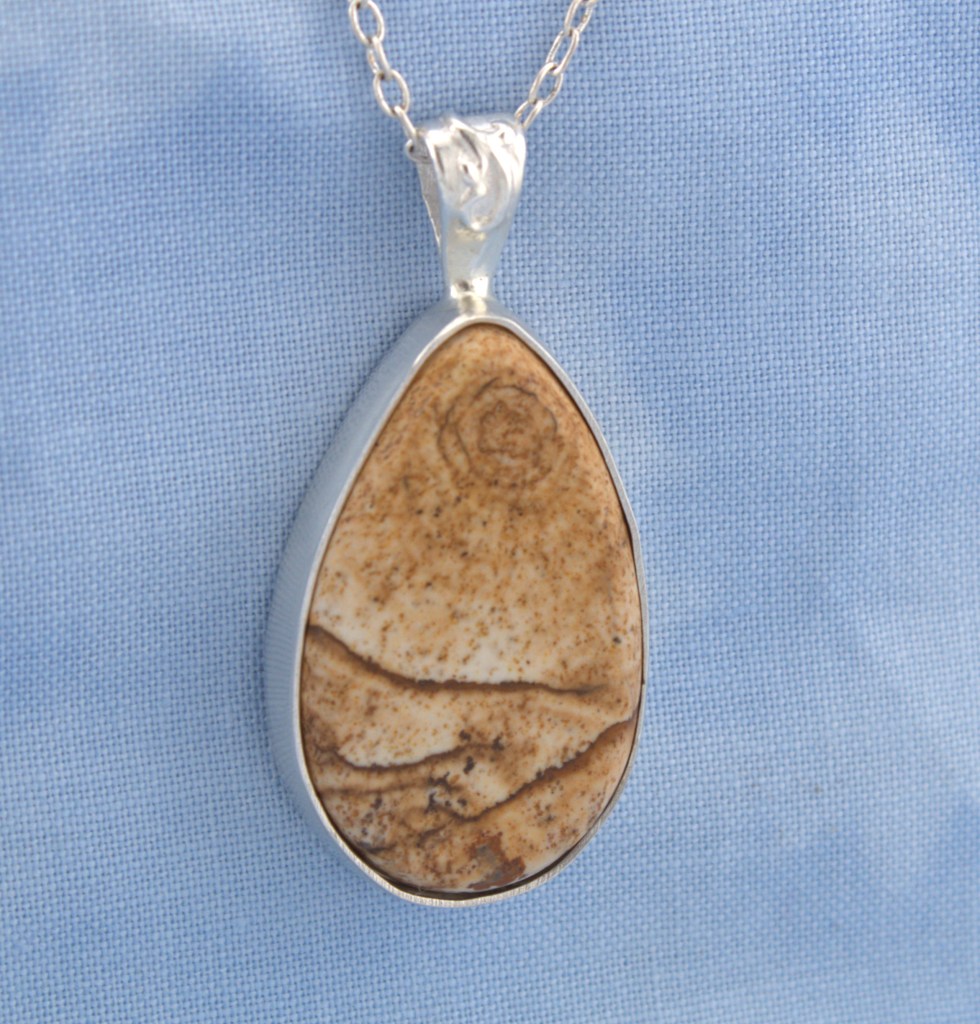
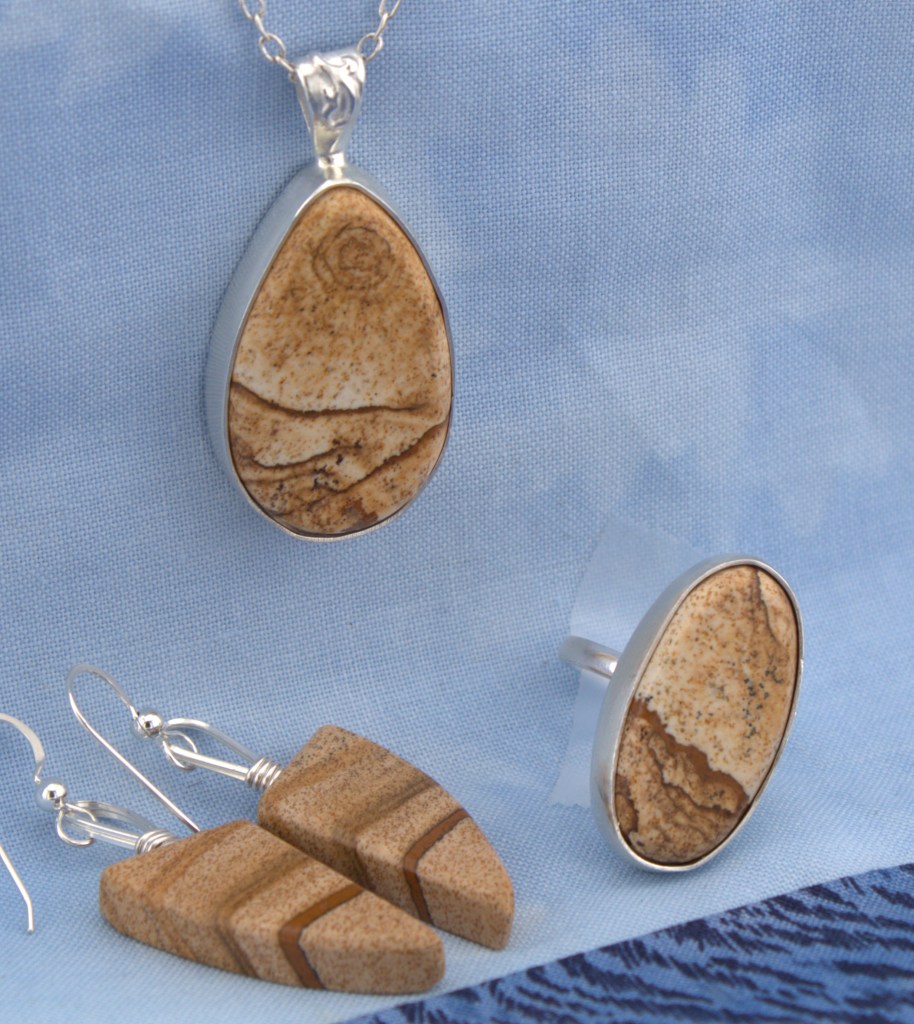
African Queen Picture Jasper

African Queen Picture Jasper originates from Namibia. It is a very solid jasper known for its desert coloring and landscape/ scenic patterning. Set in Sterling Silver.

African Queen Picture Jasper is a variety of picture jasper originating from the Kalahari Desert in Namibia. Its name comes from the striking, layered patterns within the tan, brown, and black mineral, which resemble natural desert landscapes. This opaque, microcrystalline quartz is used by lapidaries for cabochons, appreciated for its intricate scenic artistry, and is also associated with metaphysical properties like protection and enhancing psychic abilities.  

eological Characteristics

  • Type: A form of landscape jasper, which is a type of sedimentary rock that has been metamorphosed through heat and pressure. 
  • Composition: It is an opaque, microcrystalline variety of quartz. 
  • Appearance: Characterized by flowing bands of tan, brown, and black, creating intricate, scenic patterns that often look like desert landscapes. 
  • Source: Mined from the Kalahari Desert in Namibia, southern Africa. 

Lapidary Uses

  • Lapidary Material: The material is well-suited for lapidary work, meaning it can be cut, shaped, and polished by gem cutters. 
  • Cabochons: It is frequently cut into cabochons, which are smooth, dome-shaped pieces often used in jewelry. 
  • Display Specimens: Rough pieces are also collected and displayed by enthusiasts and lapidaries. 

African Queen Picture Jasper – Life is a Gift Shop

Posted on Leave a comment

Art in the Barn

The 50th annual Art in the Barn is this coming weekend Please join us for this wonderful celebration of art!

Art in the Barn was started in 1974 when a group of ten women and local artists met to develop a quality art event for the Barrington community.  

What began as an art show with 30 artists and 1,500 attendees has grown to be one of the most iconic and highest quality art festivals in the Chicagoland area with up to 180 juried artists exhibiting their work. With more than 49 years of momentum, this beautiful event draws returning art lovers and new visitors from the surrounding area where they enjoy not only the exhibition and sale of fine art, but also music and entertainment, food from a variety of vendors, and children’s art. 

Art in the Barn is one of the major fund-raisers for Advocate Good Shepherd Hospital which has donated millions to the hospital. It is sponsored by the Auxiliary of Good Shepherd Hospital.

The Art of Custom Handmade Jewelry