
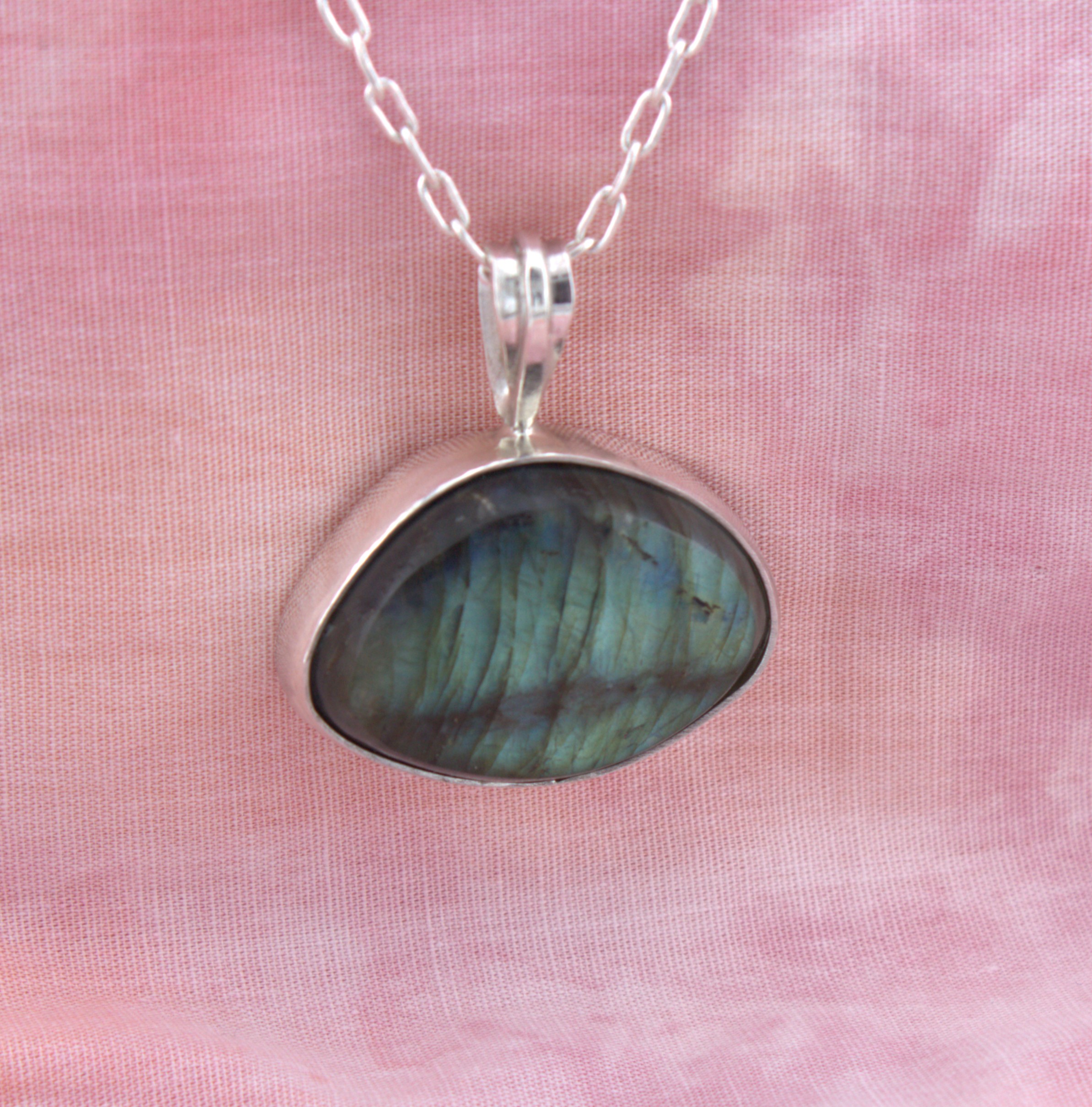
Labradorite pendants set in sterling silver. According to an Inuit legend, the Northern Lights were once imprisoned in the rocks along the coast of Labrador, and then a wandering Inuit warrior found them and freed most of the lights with a mighty blow of his spear. Labradorite pendants are popular because of the stone’s unique history and magical appearance. It was first discovered in 1770 on the Isle of Paul, near the town of Nain in Labrador, Canada. The local Inuit people were already familiar with the stone, using it in various tools and ornamental items. However, it was the Moravian missionaries who first documented and named the mineral, recognizing its unique and beautiful iridescence. Interestingly, labradorite pendants often showcase this stunning labradorescence. The name is derived from the Labrador region, cementing its connection to this rugged and remote area.


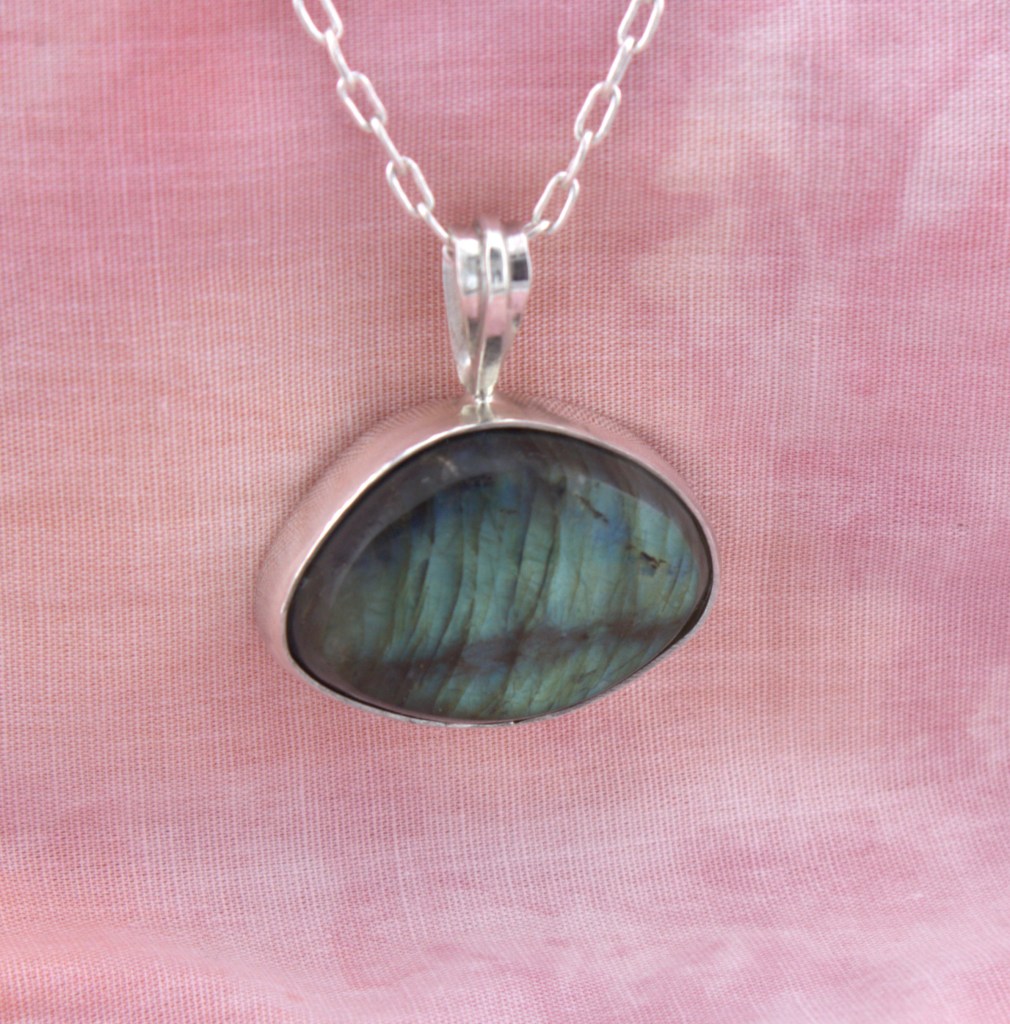
Labradorite, a feldspar mineral known for its iridescent “labradorescence,” was discovered on St. Paul Island in Labrador, Canada, in 1770 by Moravian missionaries. Inuit lore connects the stone to the Aurora Borealis, believing it to be “frozen fire” released from rocks by a warrior’s spear. Labradorite pendants can be found in many jewellery collections, valued for their mystical qualities. It was formally named in the late 18th century after its place of origin. In summary, labradorite pendants highlight the beauty and folklore associated with this remarkable stone.
Labradorite Carving | Smithsonian National Museum of Natural History