
Labradorite in Sterling Silver pendants, ring and earrings! Labradorite’s beauty makes it a popular choice for jewelry. Whether set into rings, necklaces, or earrings, the stone’s vibrant play of color offers a unique aesthetic. This aesthetic is both earthy and ethereal.


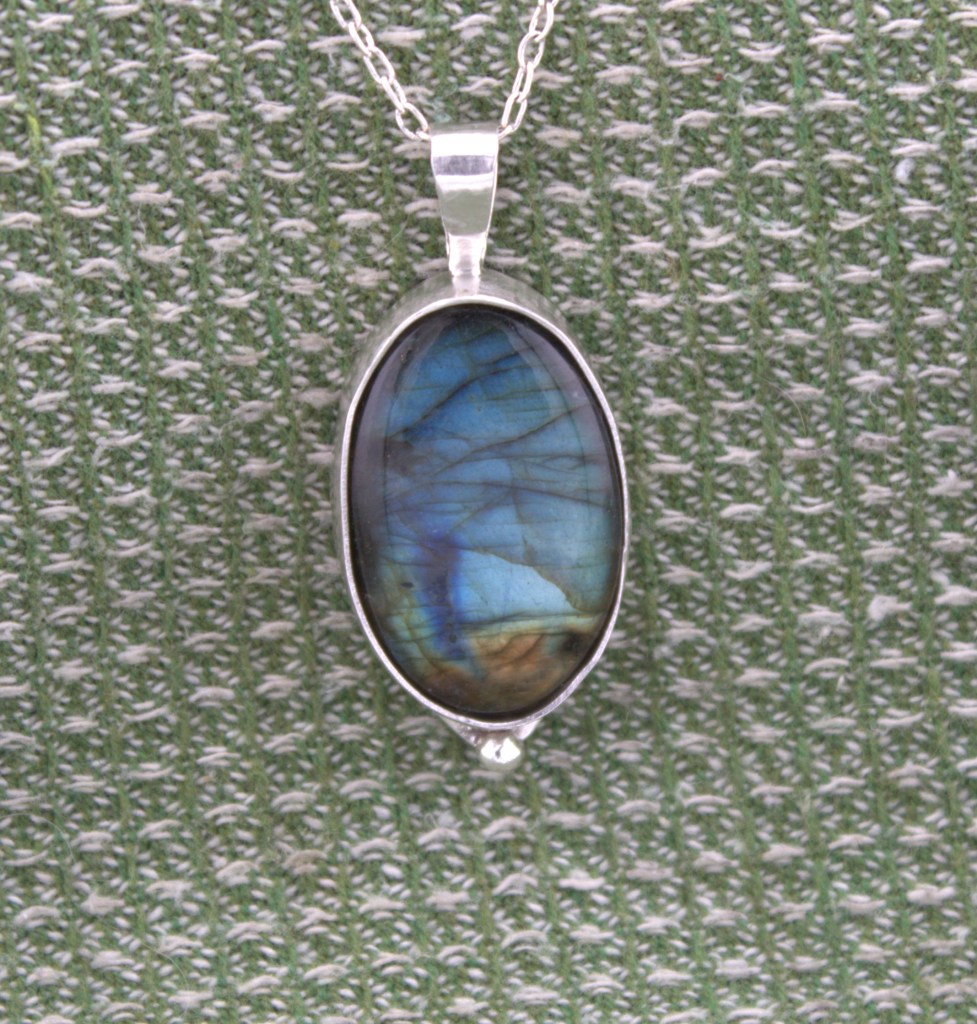
Labradorite was first discovered in 1770 on the Isle of Paul, near the town of Nain in Labrador, Canada. The local Inuit people were already familiar with the stone, using it in various tools and ornamental items. However, it was the Moravian missionaries who first documented and named the mineral, recognizing its unique and beautiful iridescence. The name “Labradorite” is derived from the Labrador region, cementing its connection to this rugged and remote area.
The Inuit people have a rich folklore surrounding labradorite. According to one legend, the Northern Lights were once trapped within the rocks along the coast of Labrador. A brave Inuit warrior struck the stones with his spear, releasing most of the lights into the sky. However, some remained trapped within the stone, giving labradorite its characteristic glow. This connection to the Northern Lights is fitting. The fantastic colors of labradorite are definitely reminiscent of the aurora borealis that often decorate the Arctic skies.
Labradorite is a member of the feldspar group, which is the most abundant group of minerals in the Earth’s crust. It forms in igneous rocks, such as basalt and gabbro, through the cooling and solidification of magma. The unique optical phenomenon known as labradorescence causes its gorgeous array of colours. This is caused by the interference of light within the crystal’s internal structure.
This iridescence occurs due to thin layers within the stone that reflect light back and forth. Consequently, this creates a spectrum of colors. These layers result from exsolution, a process where different mineral phases separate out at a microscopic level as the rock cools.
Labradorite Carving | Smithsonian National Museum of Natural History