Posted on — Leave a comment

Laguna Lace Agate

Laguna Lace Agate

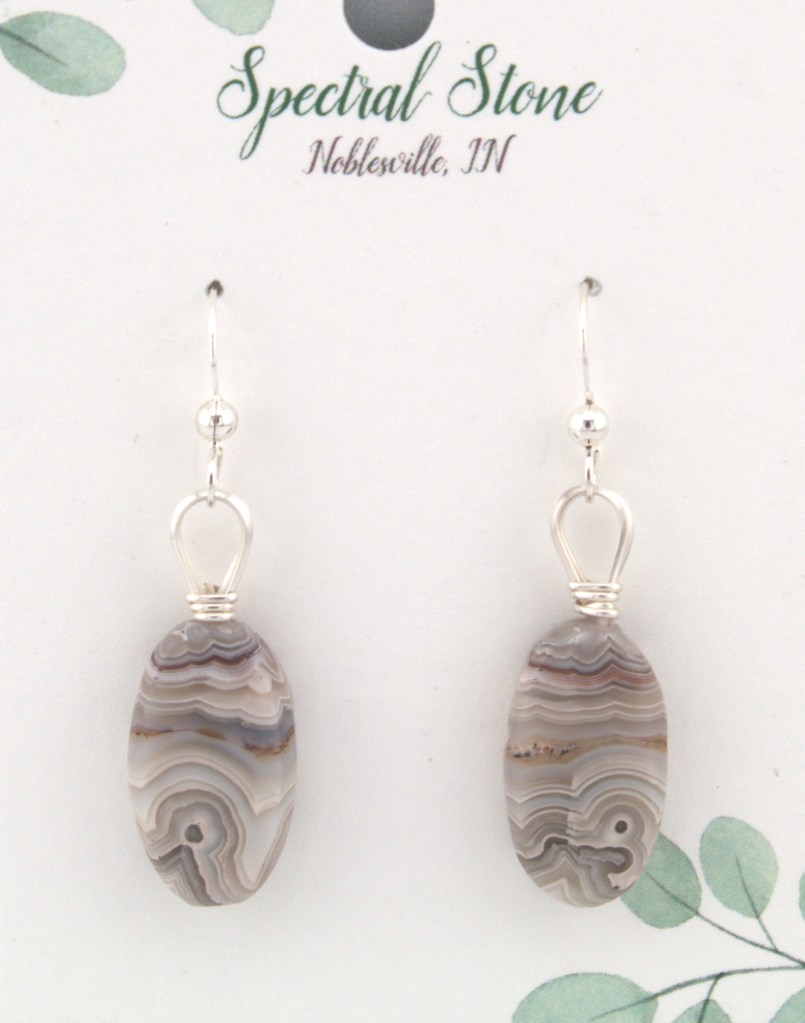
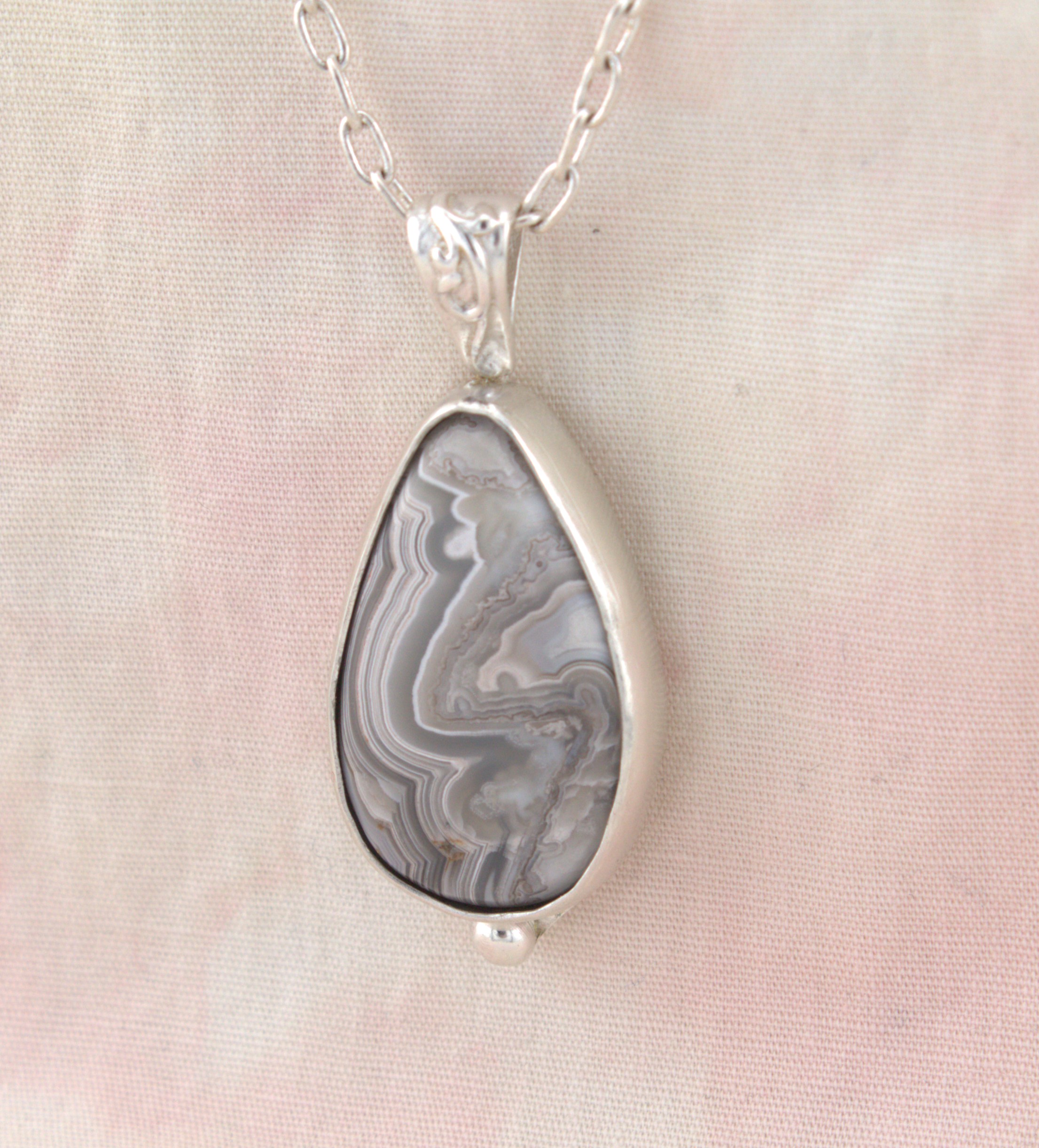
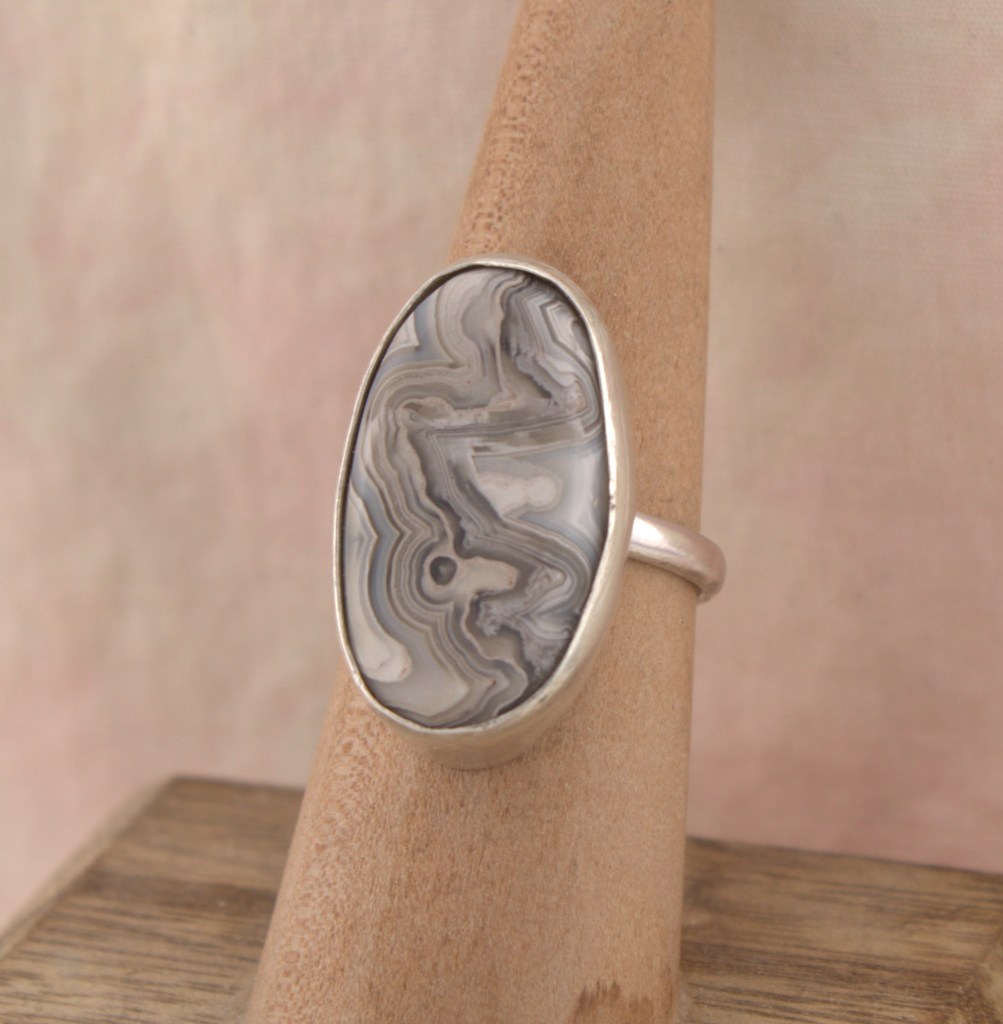
Laguna lace agate is an exotic, highly sought-after variety of banded chalcedony (quartz). Renowned for intricate, tight banding, it features vibrant hues of red, scarlet, orange, pink, and milky white. It is mined exclusively in a small, remote mountainous area of Chihuahua, Mexico

Origin: Mined from the famous Noriega Claim in Chihuahua, Mexico, encompassing an area of roughly four square miles.
Patterns: It features fine, swirly lace-like patterns, distinct concentric banding, and occasionally druzy pockets

Laguna lace agate is popular among lapidary artists for cabochons, wire-wrapped pendants, and beads. In crystal healing and metaphysical practices, it is valued as a grounding stone. Many believe it stimulates life force energy, stabilizes the aura, and enhances creativity and mental function

Bands of Beauty: Agate Properties, History, and Varieties

Posted on — Leave a comment

heART in the Park

Spectral Stone will be at heART in the Park this weekend in Ft. Wayne, IN.

As we head into our second year hosting HeART in the Park across the full park, we’re excited to continue growing something that has always been about creatives supporting creatives. While this is our second year expanding into the entire park, our artist community has been coming together through this event since 2017.

This event has always been artist-led, and every part of it is made possible by volunteers from our local creative community who believe in creating opportunities for artists to connect, share their work, and support one another.

HeART in the Park creates a space for local artists to showcase their work, connect with each other, and engage with the community in the beautiful setting of Freimann Square. It also happens the same weekend as the Chalk Walk with the Fort Wayne Museum of Art, making for a full weekend celebrating creativity in downtown Fort Wayne.

The Art of Custom Handmade Jewelry

Posted on — Leave a comment

Geode Earrings

Geode earrings

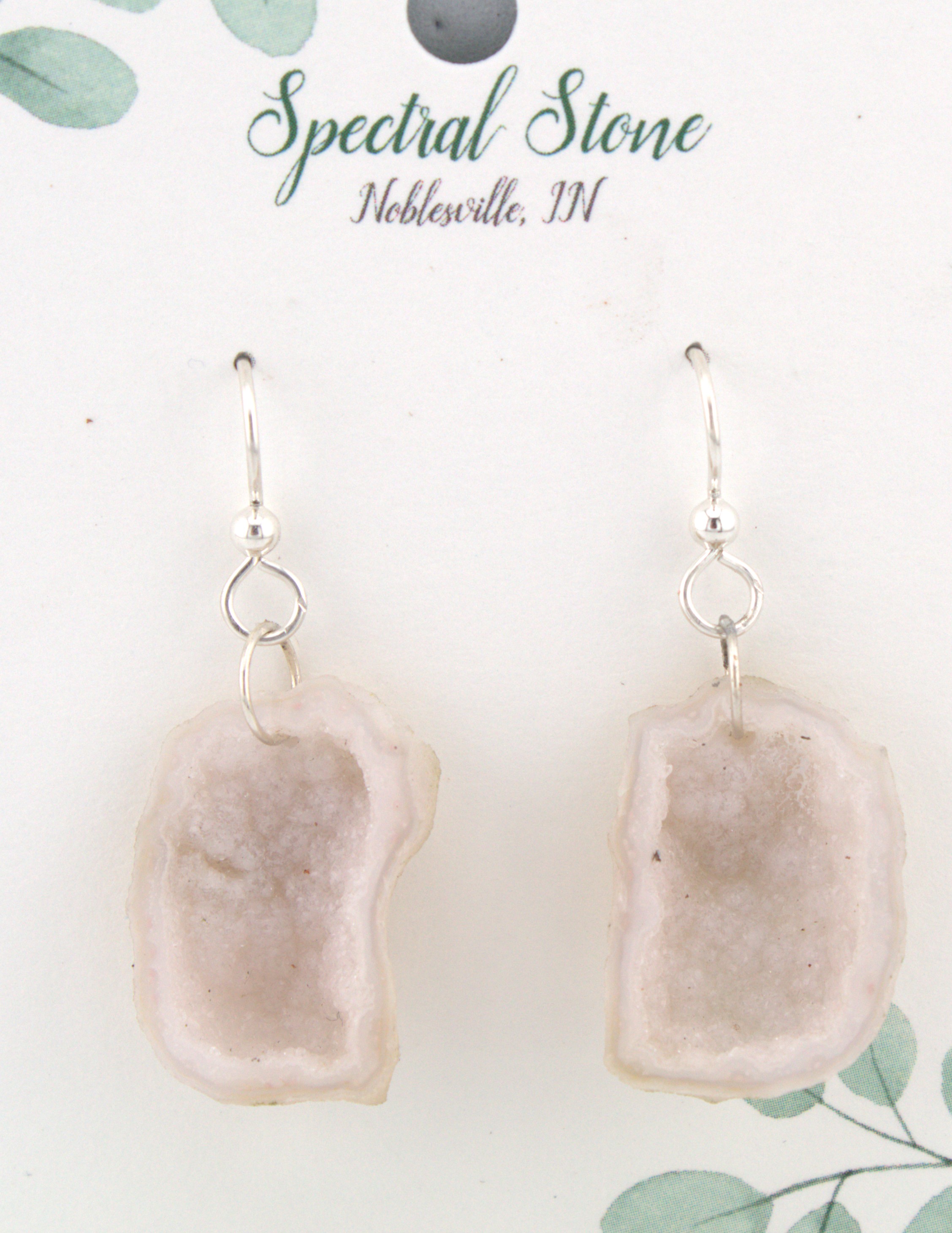
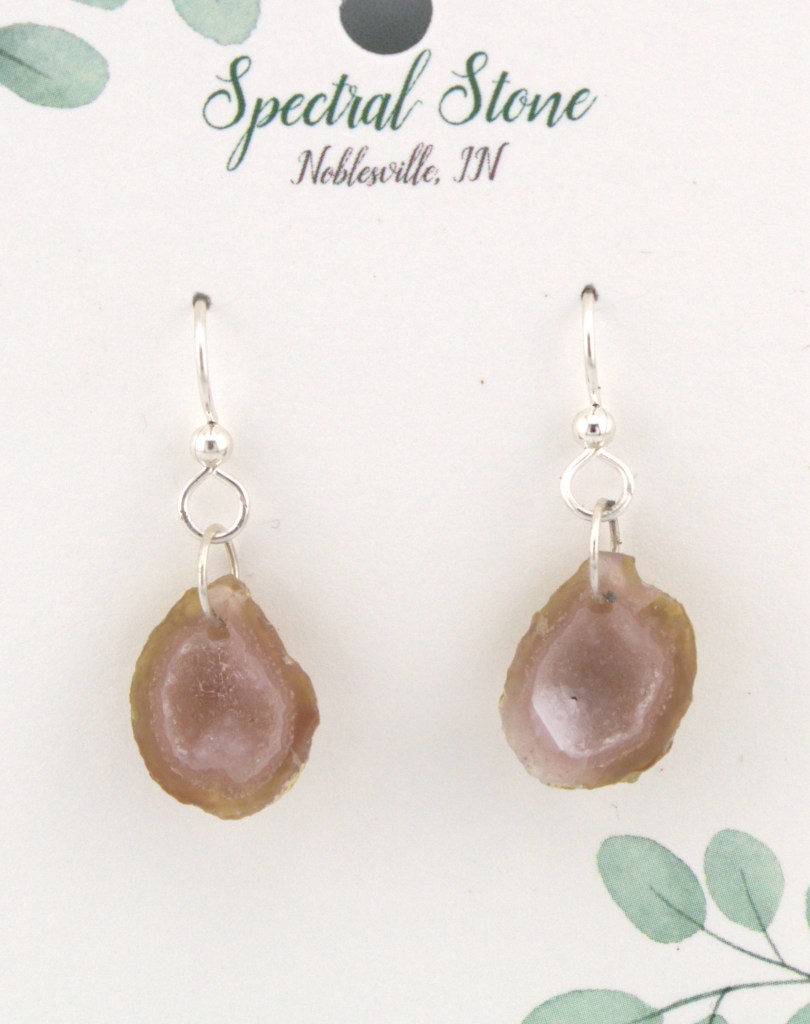
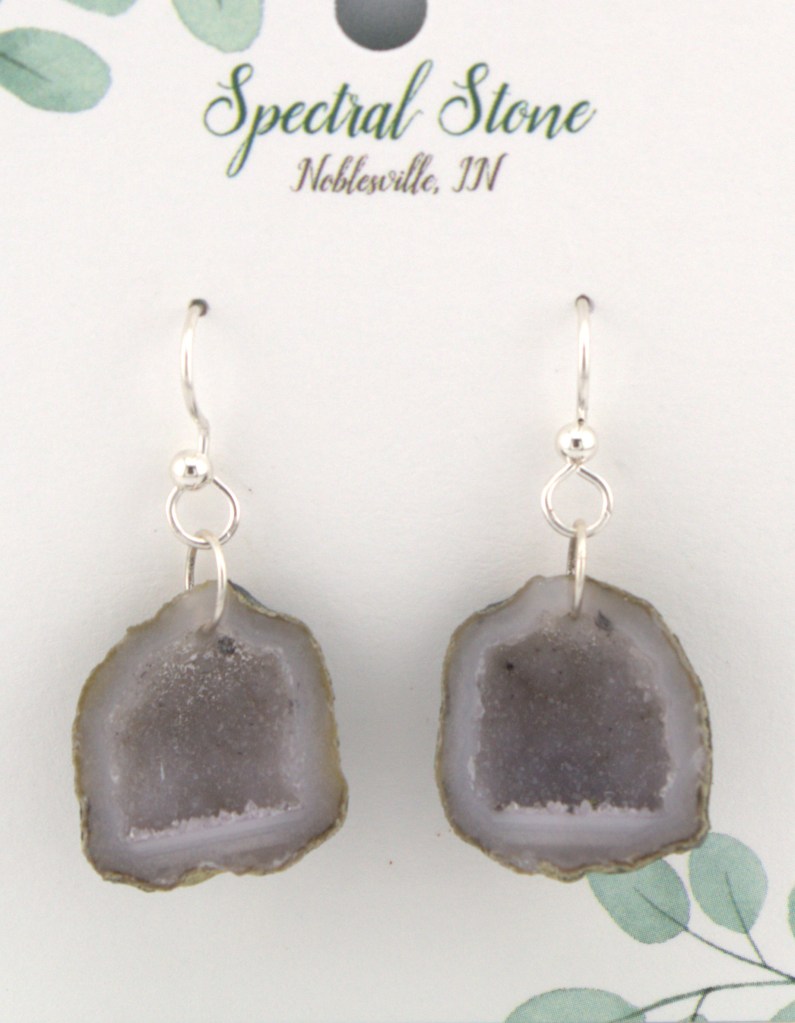
Tabasco geodes are the world’s smallest commercially viable geodes, typically measuring between 1/4 inch and 1 inch in diameter. They are mined exclusively in basalt flows near the town of Tabasco in Zacatecas, Mexico. These tiny treasures are known as “Illianites.” Usually, they feature a thin agate rind with sparkling druzy quartz or chalcedony centers.

Formation: Tabasco geodes were formed millions of years ago in tiny gas bubbles within cooling basaltic lava flows. Groundwater slowly seeped through the cavities, depositing quartz particles that crystallized into beautiful, microscopic geodes.


1970s Popularity: During the 1970s, these miniature geodes became highly sought after by lapidarists and jewelry makers. Often, they were fashioned into unique pendants and earrings.


Market Disappearance: Because the geodes are firmly embedded in incredibly hard volcanic basalt, manual extraction was difficult. As a result, supply naturally dwindled. Following the depletion of the original deposits, they largely disappeared from the gemstone market.

Modern Rediscovery: After a near 50-year absence, new deposits were discovered, reintroducing these rare specimens to rockhounds and collectors

Geode – Wikipedia

Posted on — Leave a comment

Sterling Silver/Copper Earrings

Sterling Silver/Copper earrings

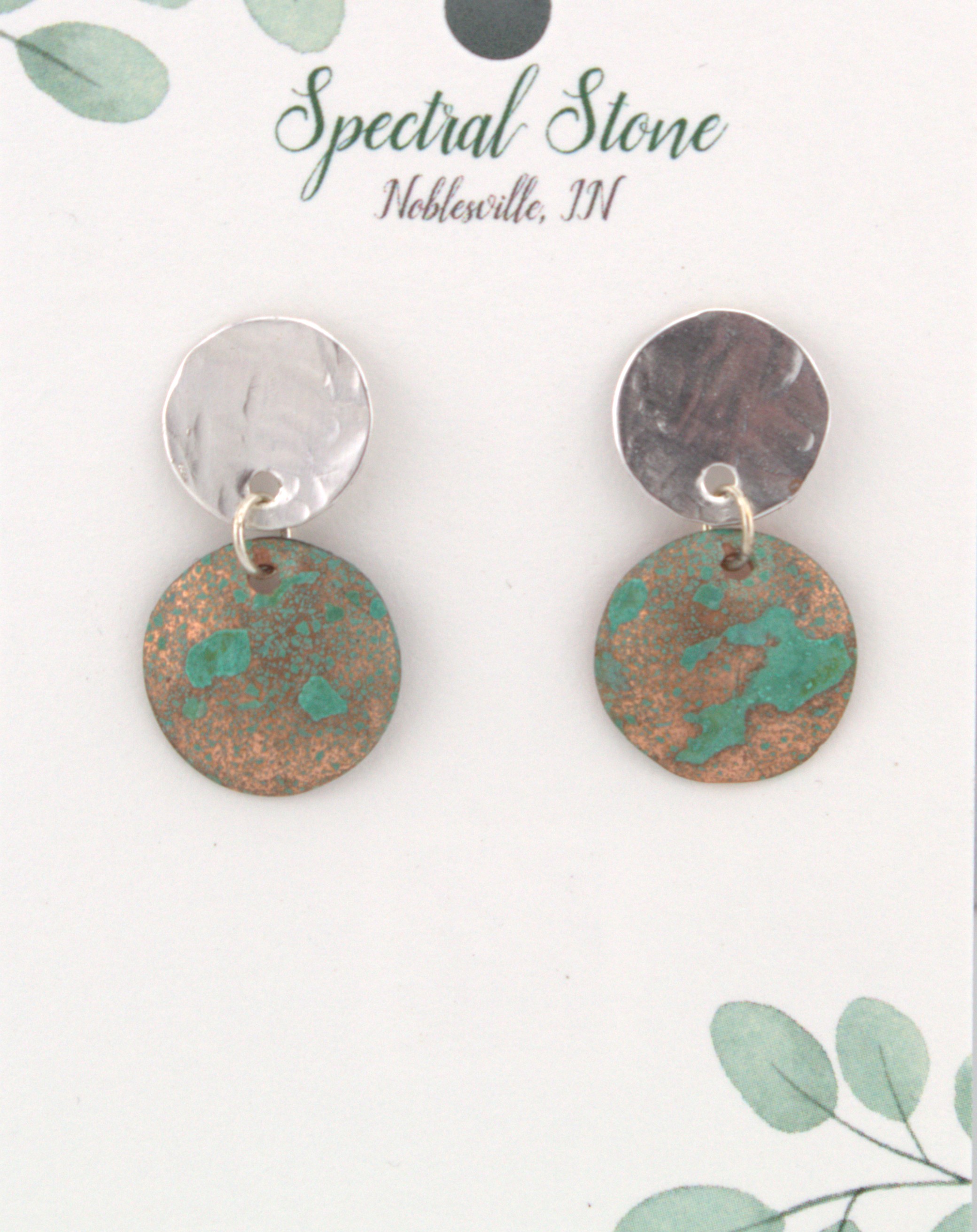
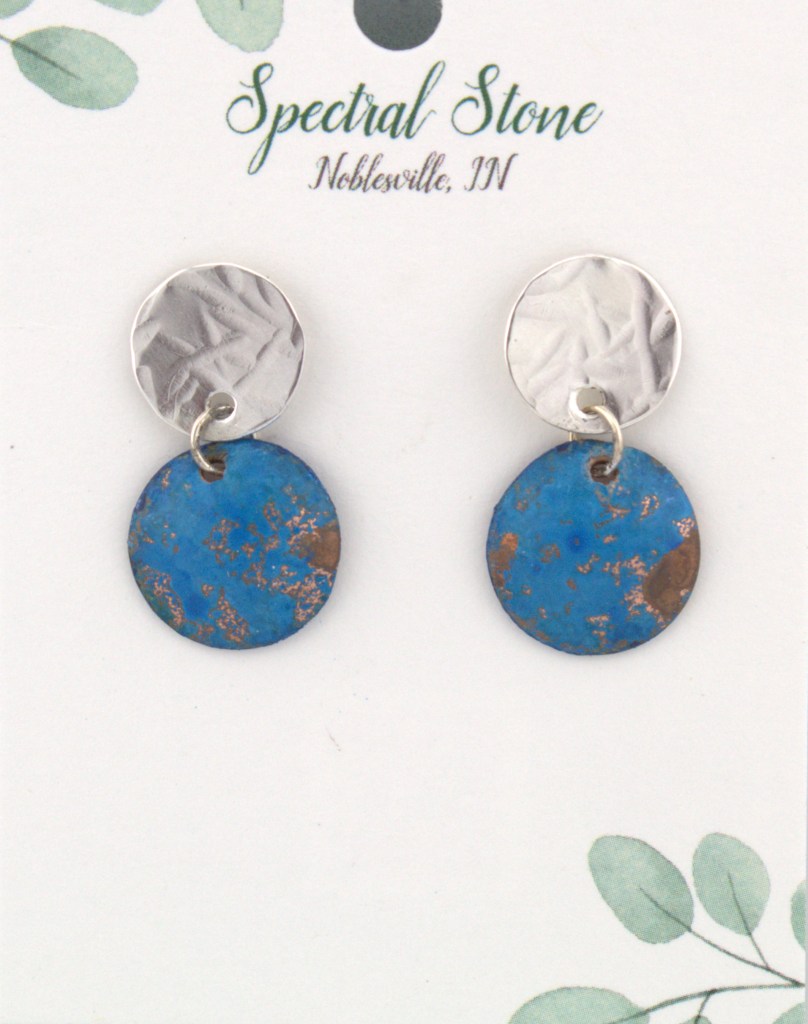
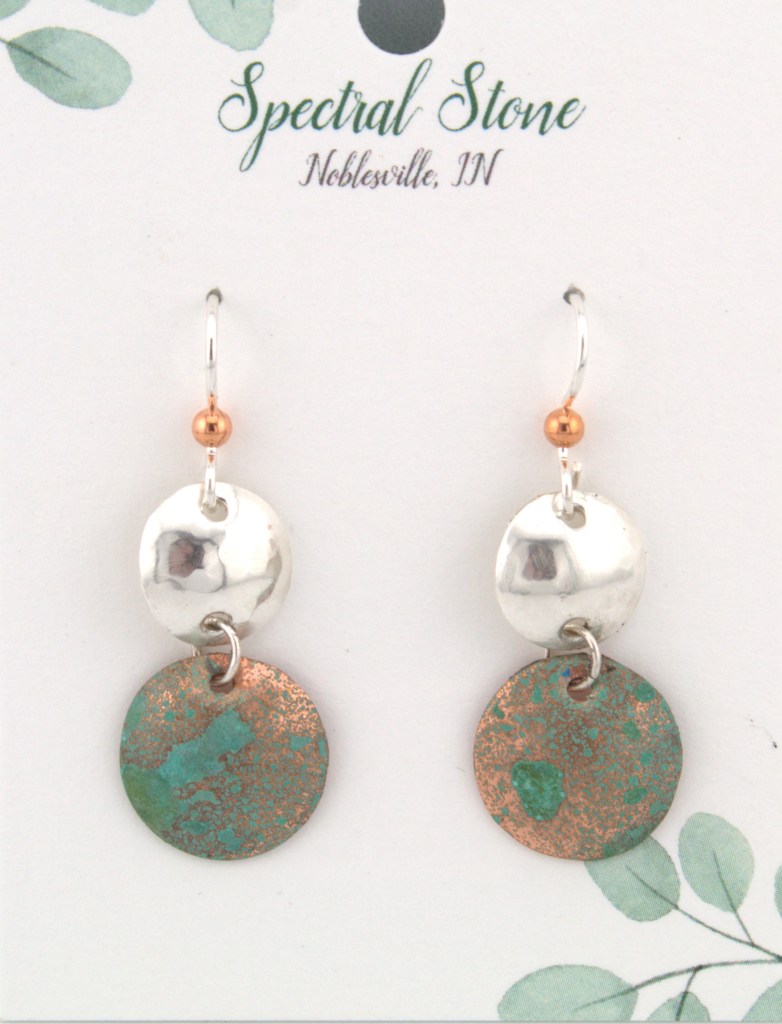
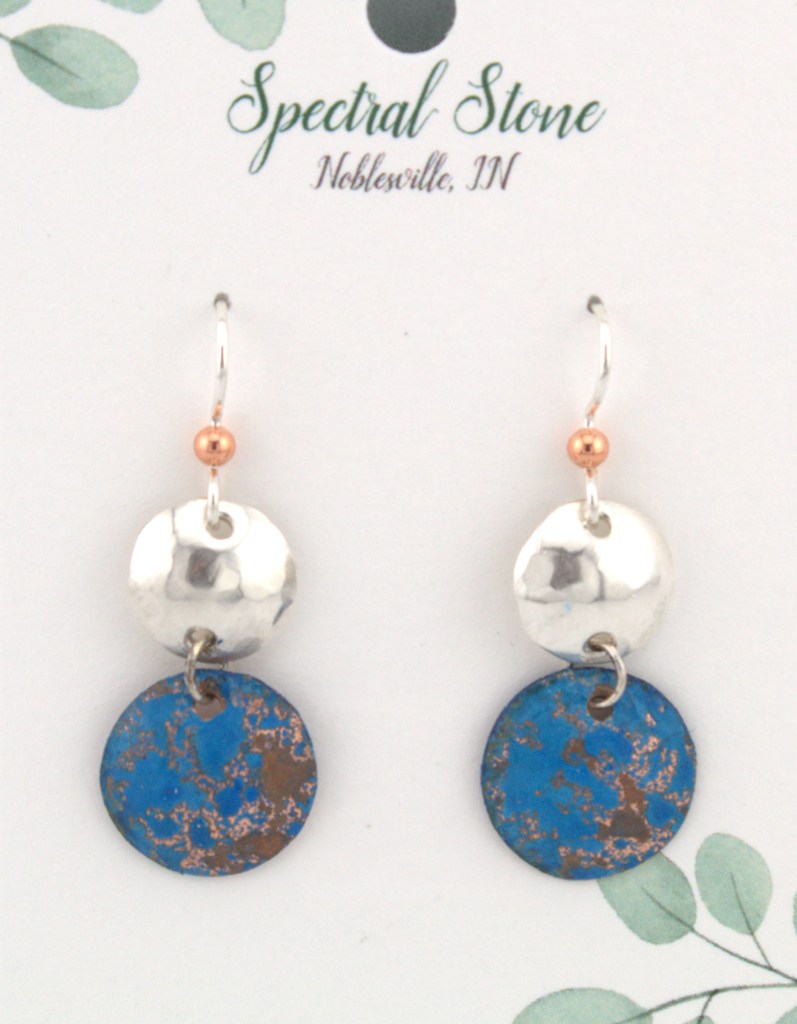
Sterling Silver and Copper with patina earrings on Sterling Silver ear wire or post.

Sterling silver is an alloy made of 92.5% pure silver and 7.5% other metals (usually copper) to improve its durability. The standard was established to solve pure silver’s natural softness. Its rich history spans from medieval European coinage to global luxury goods

The 12th Century: The term “sterling” is thought to derive from the “Easterlings,” a group of medieval German merchants. These merchants were known for reliable, high-purity silver coins.


The “Pound Sterling”: The link between silver and money was so fundamental that the British currency, the pound sterling, originally referred to the weight of one pound of sterling silver.


The 1275 Standard: King Edward I of England enacted a statute legally defining the alloy. He required 12 troy ounces of silver to contain exactly 11 ounces and \(2\frac{1}{4}\) pennyweights of pure silver (approximately 92.5%). The rest of the weight was alloy.

Sterling silver – Wikipedia

Posted on — Leave a comment

Larimar from the Caribbean

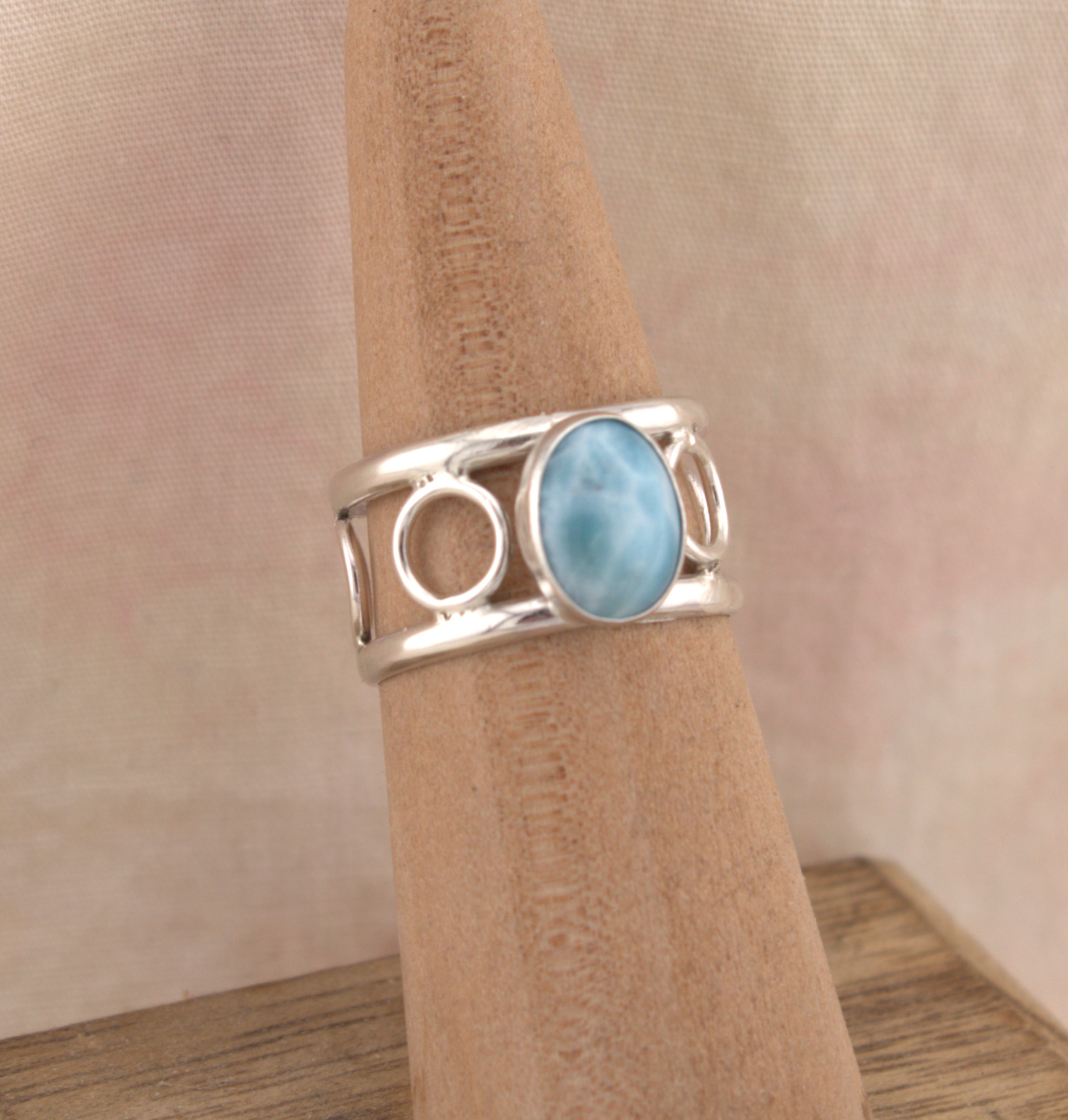
Larimar ring

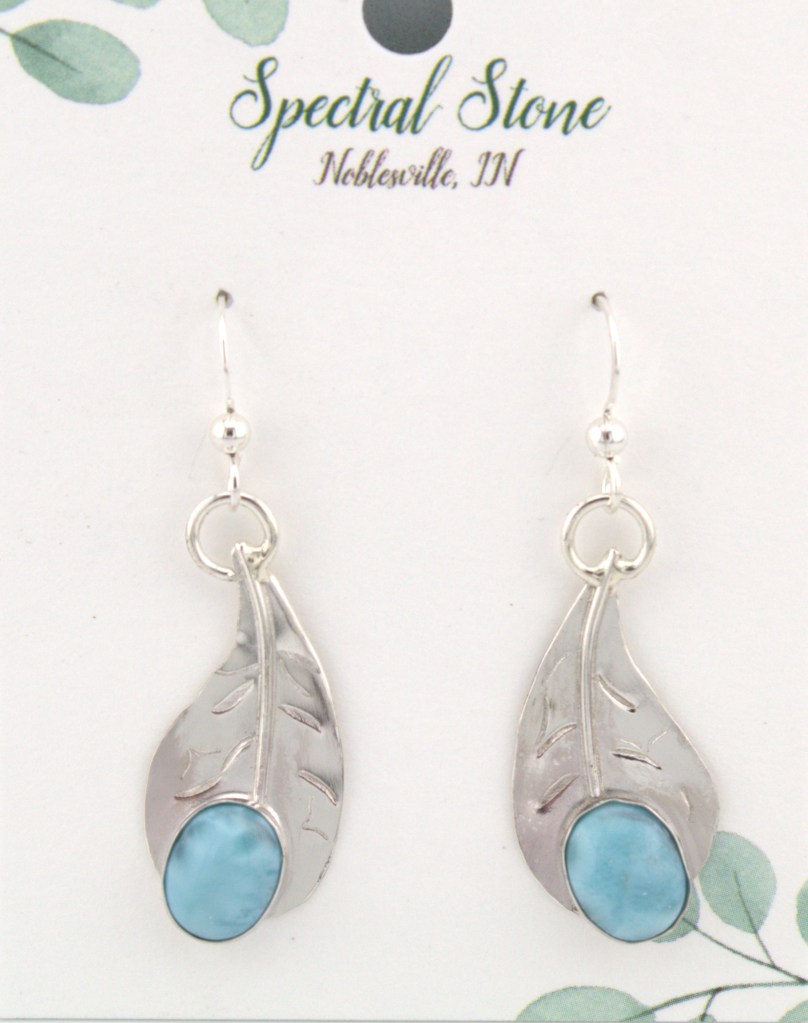
Lovely Larimar from the Caribbean, only found in the Dominican Republic. Rings, pendants or earrings available individually or in a set.

Larimar is a rare blue pectolite found exclusively in the Barahona province of the Dominican Republic. Though initially noted in 1916, it was officially rediscovered in 1974 by artisan Miguel Méndez. It was named after his daughter Larissa and the Spanish word for the sea (mar)

1916: Spanish priest Father Miguel Domingo Fuertes de Loren discovered the first samples and requested mining rights. However, the request was denied as the stone’s nature was unknown.


1957: Local inhabitants in a small fishing village began finding blue fragments washing up on the beaches. Initially, they believed these fragments originated from the ocean.


1974: Dominican artisan Miguel Méndez and American Peace Corps volunteer Norman Rilling traced the washed-up stones up the Bahoruco River. They found that the stones came from a mountain source.


1979: The Smithsonian Institution analyzed samples, officially classifying the stone as a unique blue variety of pectolite

Home – Dominican-Larimar.com