Posted on — Leave a comment

Happy Mother’s Day!

Sterling Silver Heart

This Mother’s Day give a handmade beautiful Sterling Silver heart.

Hearts Archives | Spectral Stone Lapidary Arts

Mother’s Day was officially established in the U.S. by Anna Jarvis in 1908 to honor her mother’s legacy of community activism and to celebrate the sacrifices mothers make for their children. Following a campaign by Jarvis, President Woodrow Wilson signed a proclamation in 1914 designating the second Sunday in May as a national holiday.

The History of Mother’s Day: From Global Peace to Greeting Cards  | Smithsonian American Women’s History Museum

The First Celebration: The first official Mother’s Day service was held at Andrews Methodist Episcopal Church in Grafton, West Virginia, on May 10, 1908.
Official Recognition: By 1912, many states, towns, and churches adopted the holiday, and in 1914, Congress passed the legislation officially designating the second Sunday in May as Mother’s Day.
Commercialization and Conflict: Anna Jarvis, who meant for the day to be observed through handwritten letters of gratitude and wearing white carnations, spent her later years fighting against the holiday’s commercialization by florists and card manufacturers.
International Influence: While the U.S. holiday is often associated with the second Sunday in May, other countries have different traditions, such as the UK’s “Mothering Sunday” (rooted in religious tradition) or Mexico’s May 10th date.

Posted on — Leave a comment

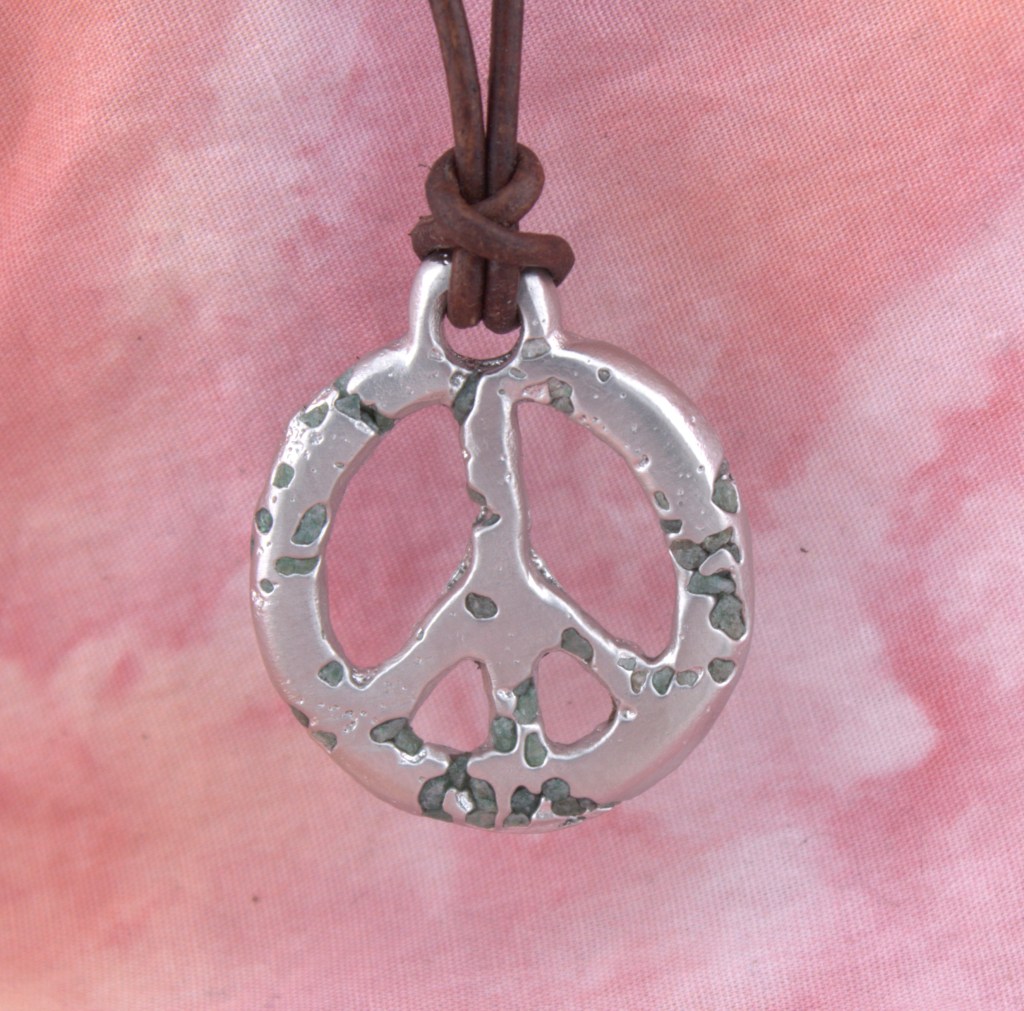
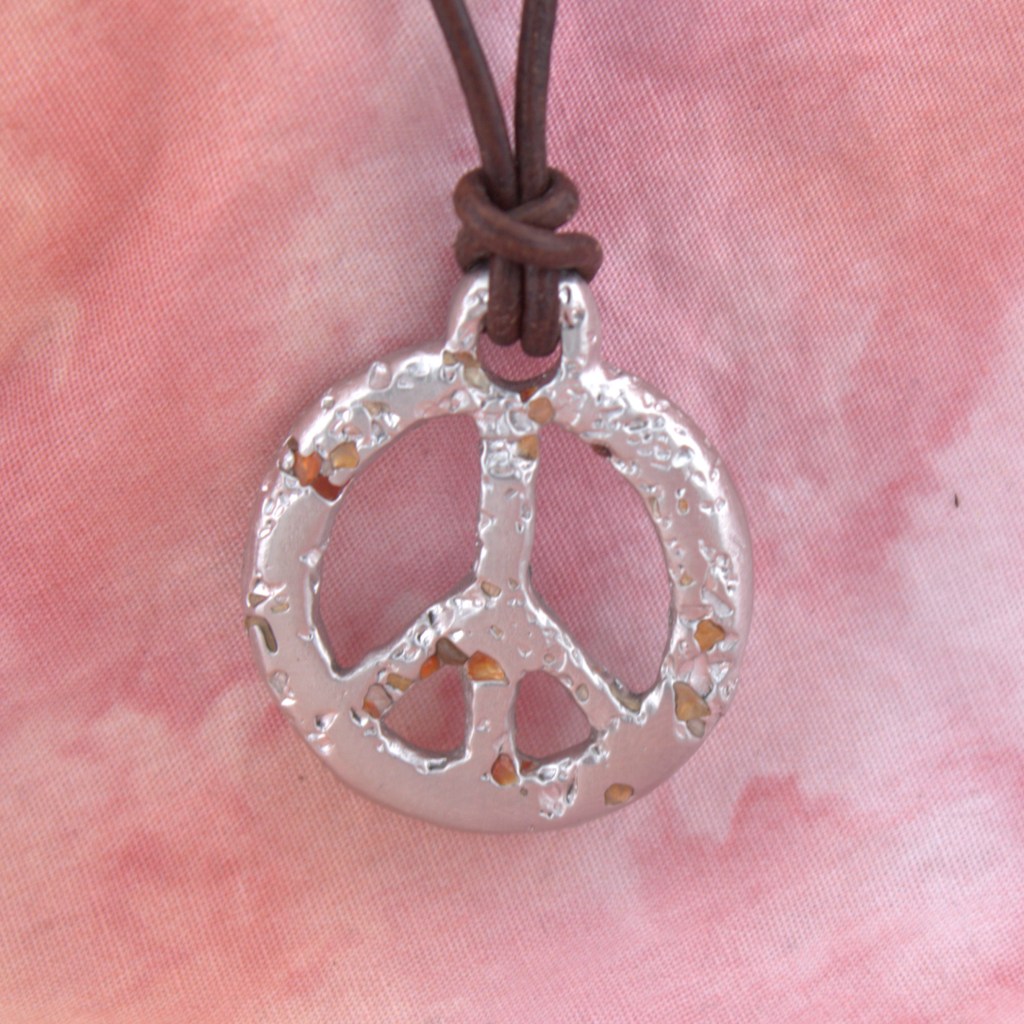
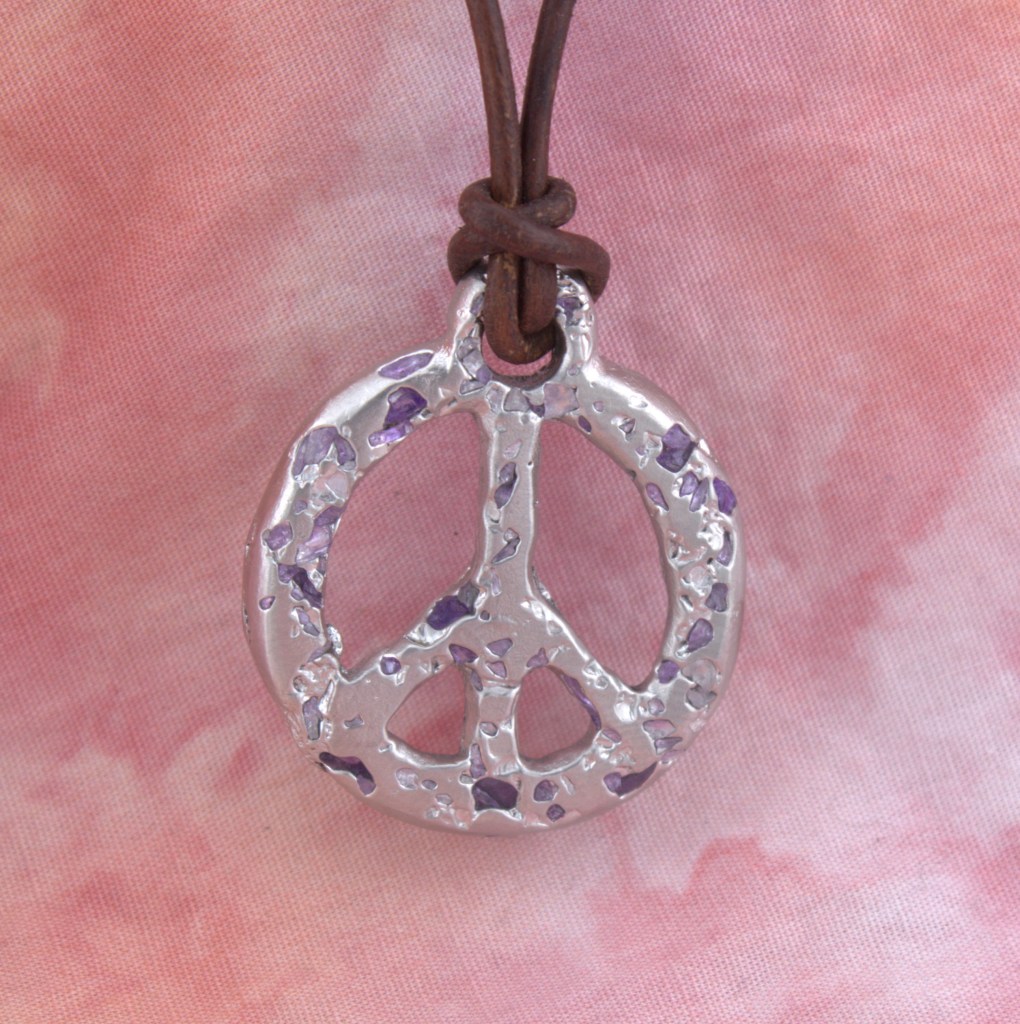
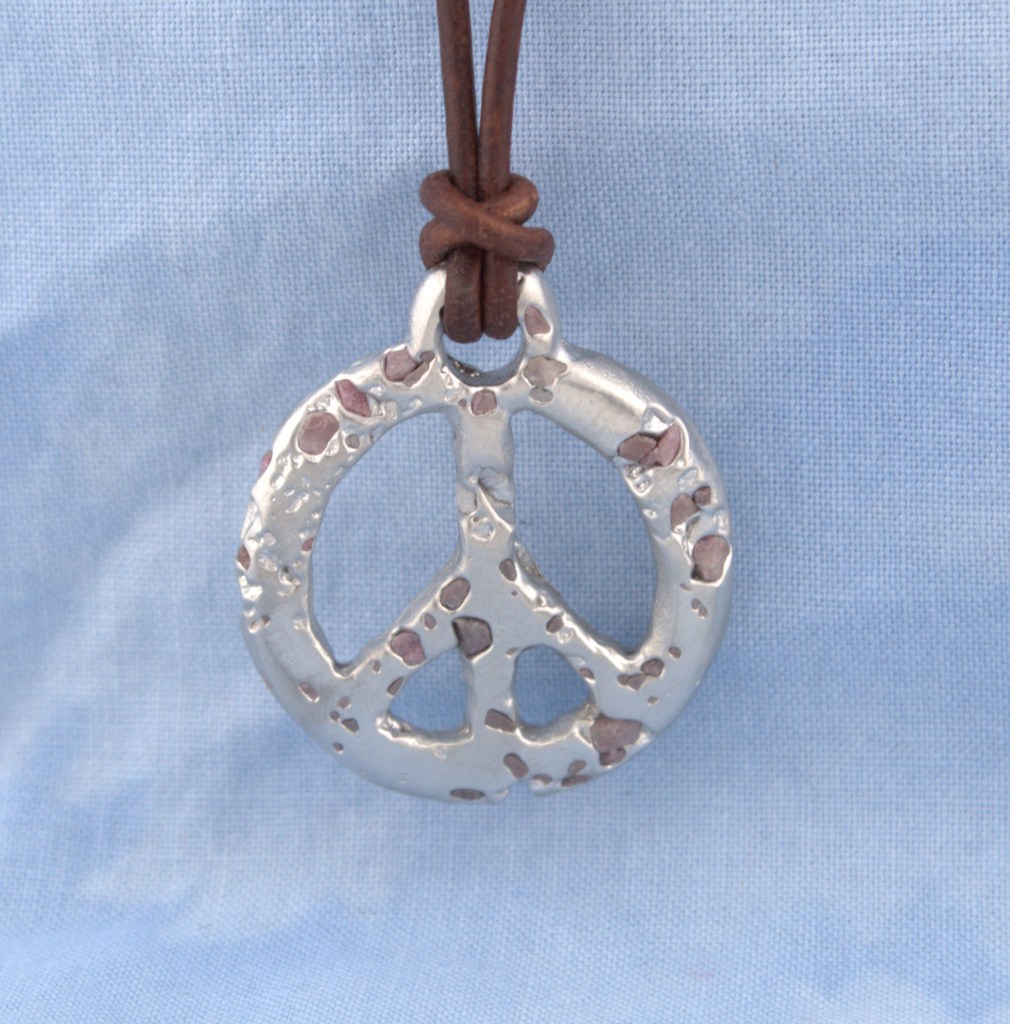
Pewter Peace Pendants

Pewter Peace Pendant Ruby

Pewter Peace Pendants with Amethyst, Carnelian, Ruby, Rose Quartz and Emerald. Pewter Archives | Spectral Stone Lapidary Arts

The peace sign (☮) was designed by British artist Gerald Holtom in 1958 for the Campaign for Nuclear Disarmament (CND) to protest nuclear weapons, debuting at a London-to-Aldermaston march. It represents semaphore signals for “N” (Nuclear) and “D” (Disarmament) inside a circle, with the design later adopted in the 1960s as a global anti-war and counterculture symbol.

Origins and Design

  • Creator: Gerald Holtom, a professional designer and artist, designed the symbol in February 1958.
  • Purpose: It was commissioned by the Direct Action Committee Against Nuclear War for Britain’s first major “Ban the Bomb” march.
  • Symbolism: The design combines semaphore flag signals for ‘N’ (two flags held down at 45-degree angles) and ‘D’ (one flag held straight up, one straight down).
  • The Circle: The surrounding circle represents the earth.
  • Initial Inspiration: Holtom described the central figure as a person in “deep despair,” with hands outstretched outwardly and downwards, resembling Goya’s peasant before a firing squad.
  • Color Choices: Initial badges were black on white or white on green, meant to symbolize the shift “from Winter to Spring, from Death to Life,” with white clay badges designed to survive a nuclear inferno. [1, 2, 3, 4, 5, 6]

Evolution and Usage

  • 1960s/Vietnam War: The symbol was adopted by American student activists (such as Philip Altbach) and became a universal symbol for anti-war protest, particularly against the Vietnam War.
  • Global Adoption: It moved from a specific anti-nuclear symbol (CND) to a general emblem for peace, hippie ideals, and social change.
  • Evolution: In the 1970s, it was often used by environmental movements, representing peace and harmony with nature.

Where did the Peace Symbol come from? | Nobel Peace Center

Pewter Peace Pendants!

Posted on — Leave a comment

Copper Earrings and Bracelets

Copper earrings and bracelets with Sterling Silver ear wires. Copper jewelry is a popular, affordable, and durable accessory known for its warm, reddish-brown hue and potential, though scientifically debated, health benefits. It often develops a natural green or brown patina over time. Importantly, this patina can be cleaned with acidic solutions like lemon juice. Additionally, it may leave green skin stains, which are harmless.

Copper jewelry, one of humanity’s oldest adornments, dates back over 10,000 years, with early usage in Mesopotamia and Egypt for both aesthetic and believed healing properties. Furthermore, copper is renowned for its malleability. It was cold-hammered by indigenous North American cultures. Similarly, it was used for spiritual adornment in Celtic and African traditions. 

Ancient History

Earliest Use: Copper was likely the first metal used by humans, with beads dating back to 9000 B.C. found in modern-day Iraq.

Ancient Egypt & Near East: As early as 3900-2500 B.C., Egyptians used copper for crowns, headdresses, and jewelry. It was believed to have healing, anti-inflammatory properties, and to improve circulation.

The Americas: Indigenous cultures in the Great Lakes region used “native copper” (pure, unsmelted metal) as far back as 9500 B.C., creating jewelry and tools through cold hammering. Additionally, Mesoamerican civilizations like the Aztecs and Maya also used copper.

About Copper – International Copper Association

Posted on — Leave a comment

Pink Imperial Jasper

Pink Imperial Jasper ring

Pink Imperial Jasper and copper earrings with pink patina. Pink Imperial Jasper is found in deposits in canyons north of Guadalajara, Mexico. Set in Sterling Silver.

Discovery Location: This stone is found in a limited, mountainous region in Mexico, often referred to as being in the state of Jalisco or near Zacatecas.

Rarity & Naming: It is considered one of the rarest forms of jasper in the world. It is often called “Imperial Jasper” or “Regal Jasper” due to its high-quality, fine appearance, though it is not inherently tied to ancient, documented royal usage.

Distinction from Royal Imperial: While Pink Imperial Jasper can be found in large veins and pieces, the specific “Royal Imperial” variety is often characterized by small nodules with a chalky, white outer skin found in a very specific, secluded canyon.

The Twelve Foundation Stones of the Holy City — Jasper – Nature’s Treasures

Posted on — Leave a comment

New Polychrome Jasper

Polychrome Jasper earrings

New Polychrome Jasper pendant, ring and earrings. Polychrome jasper is only found on the Northern Coast of Madagascar. This jasper is typically multicolored, with pastel hues of purples, tans and pinks. However, teal or blue polychrome jasper is rarer and more sought after. Set in Sterling Silver.

Polychrome Jasper, also known as Desert Jasper, is a vibrant, multi-colored variety of chalcedony discovered in Madagascar in 2006. Renowned for its rich swirling patterns of red, brown, yellow, and green, it is considered a rare, grounding stone that symbolizes energy, creativity, and vitality. It is ideal for decor, jewelry, and energy work.

Discovery: Identified in 2008 in the deserts of Madagascar, it was initially referred to as “Desert Jasper” due to its warm, earthy tones.

Geology: It is a, orbicular, multi-colored form of chalcedony formed through the cementing of fine sand by hydrothermal silica, often containing volcanic ash.

Alternative Names: Frequently called Desert Jasper or Royal Savannah Jasper.

Rarity: Considered rare, with its primary, and largely only, source being the remote regions of Madagascar.

Polychrome Jasper (Polychrome Jasper) – Rock Identifier