Snowy shop this morning. A crisp, quiet coolness in the air. Yes, the shop is heated so I may work through the winter months.
The Holiday sale is going through December 25th. Order soon to get a timely delivery or stop by in person to pick up. Use code holiday25 to save 10% off everything in your cart. Happy Holidays!
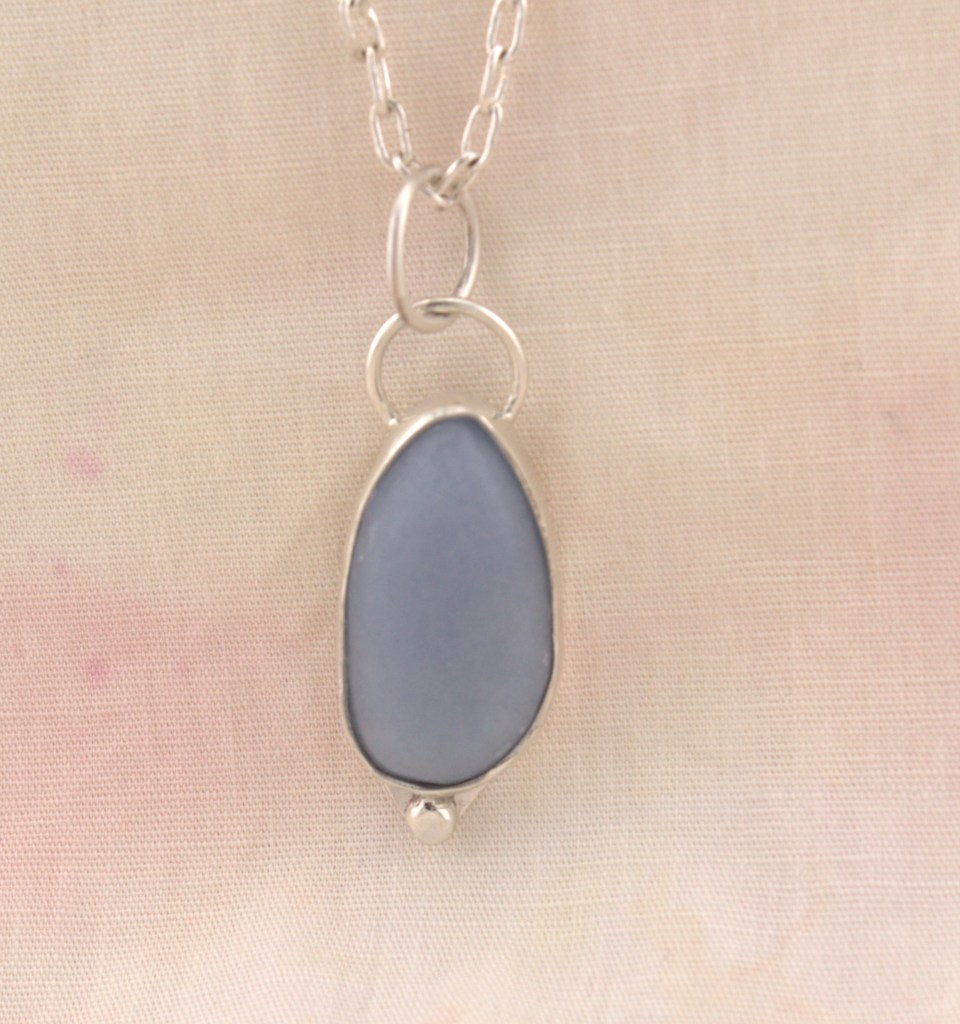
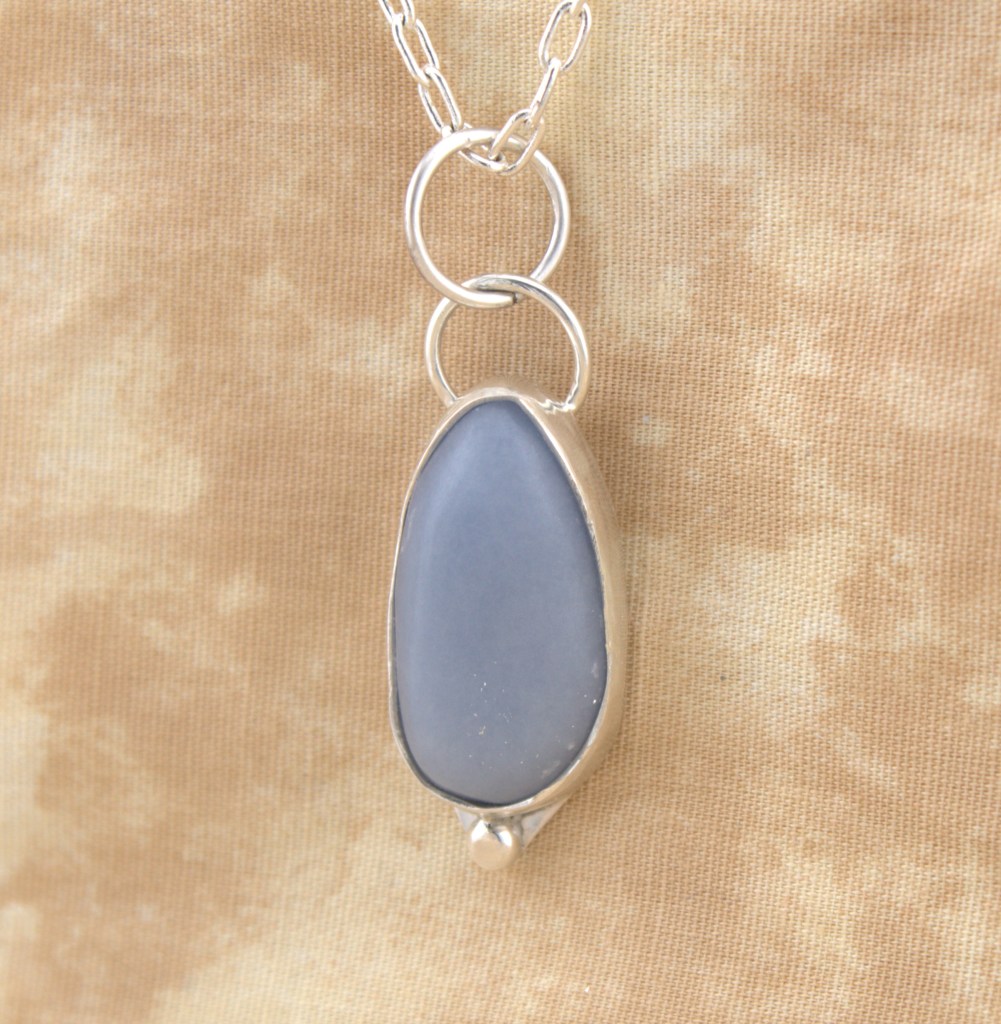
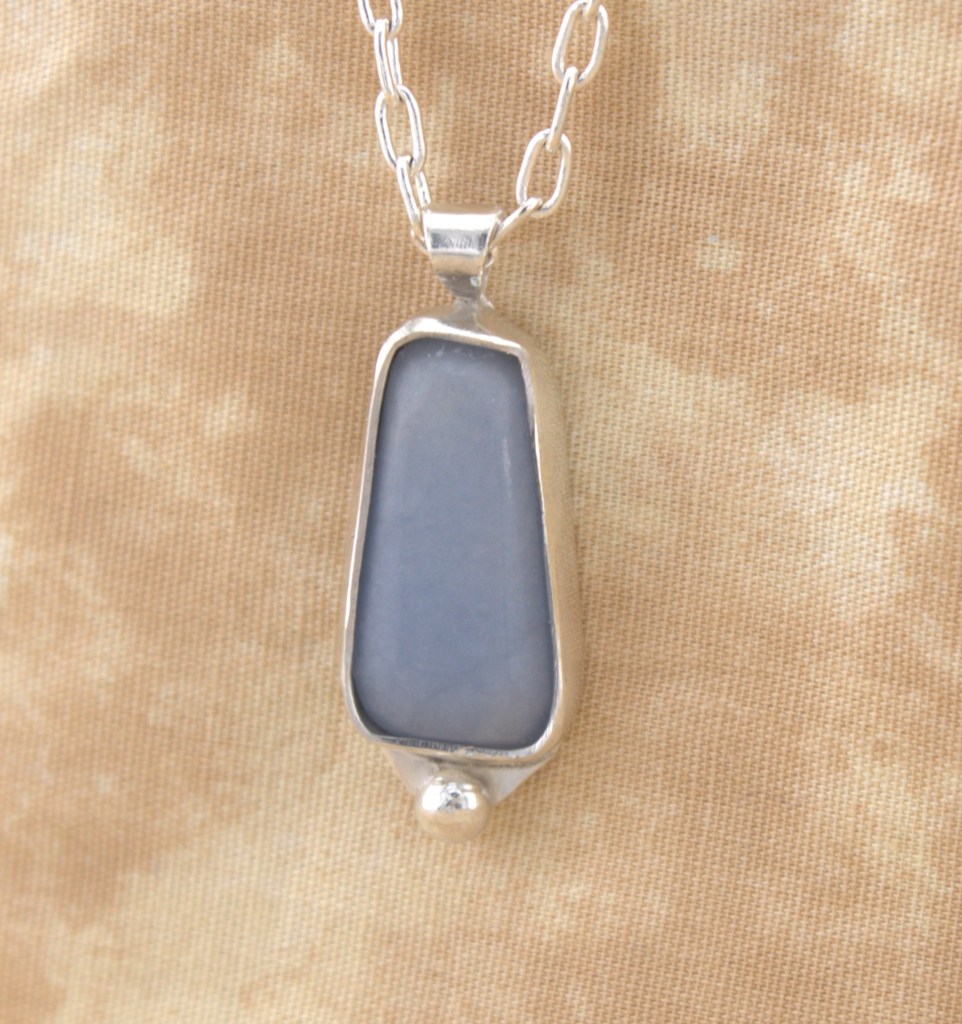
Angelite pendants in Sterling Silver. It is the bluish gray translucent variety of anhydrite from Lima, Peru that was discovered in 1987. It was introduced to the gem market at the 1989 Tucson shows. Since it is soft it can be carved or shaped into decorative objects like eggs or spheres and is polished into cabochons and beads for jewelry. Anhydrite is a sedimentary mineral that occurs after large volumes of sea water evaporates.
Metaphysical Properties & Uses
Spiritual Connection: Enhances communication with angels, spirit guides, and the divine.
Peace & Calm: Promotes tranquility, inner peace, and stress relief.
Chakra Focus: Throat (communication), Third Eye, Crown (awareness).
Healing: Aids emotional balance, self-expression, and overcoming anxiety/depression.
Care & Handling
Storage: Store in a soft pouch to protect from scratches.
Avoid Water: Do not wear in water (shower, swim); it converts to gypsum.
Gentle Cleaning: Wipe with a soft, dry cloth.
Sunlight: Avoid prolonged direct sunlight to prevent fading.
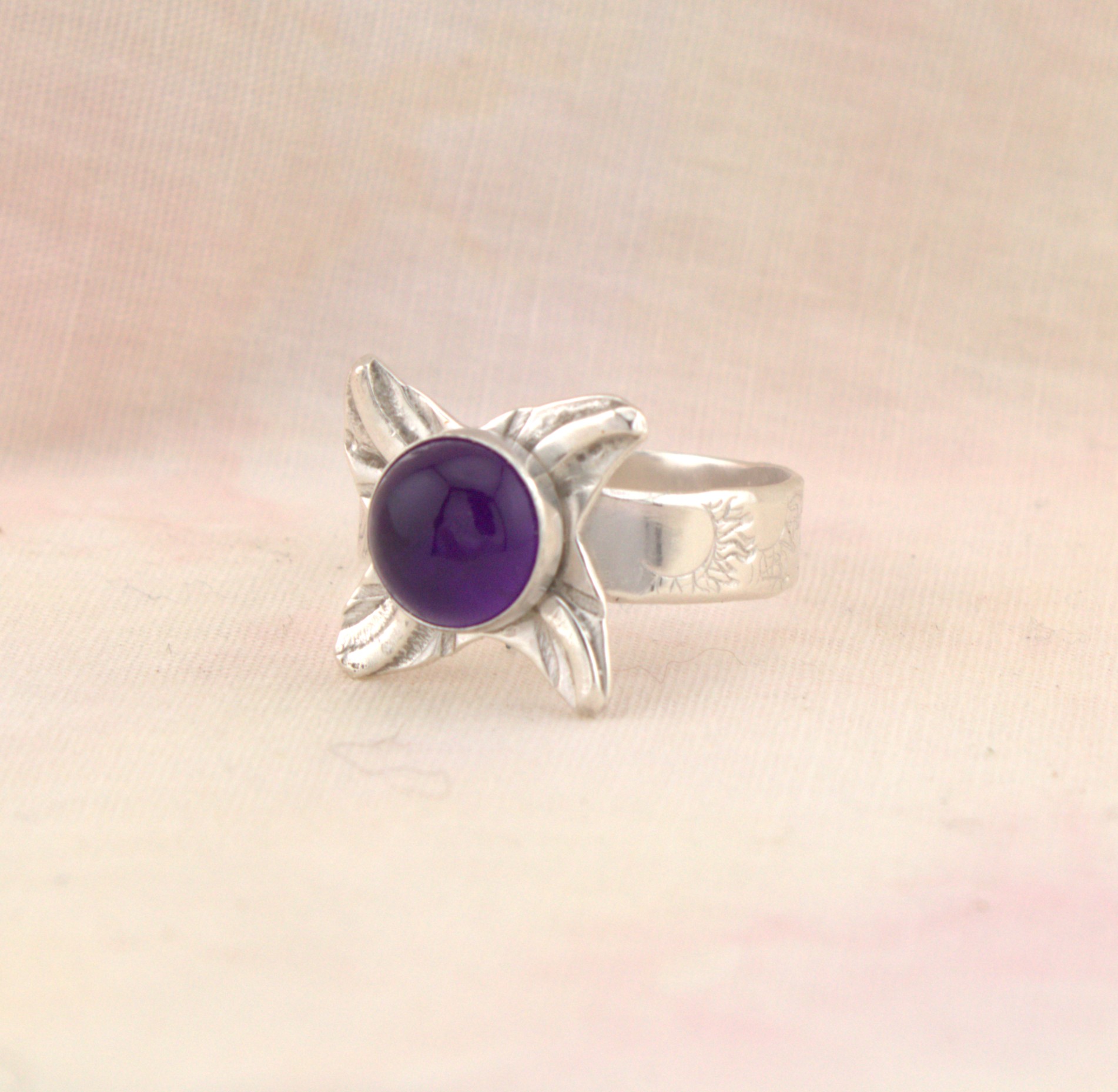
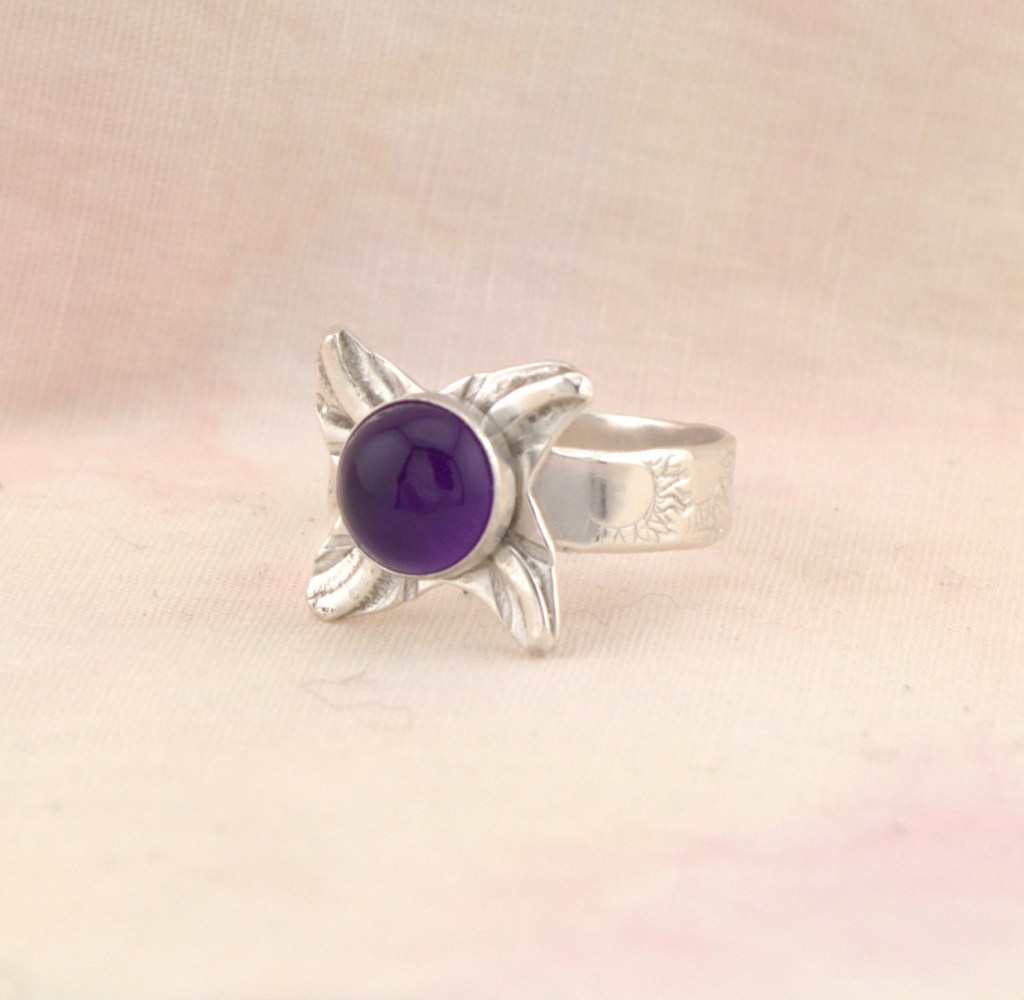
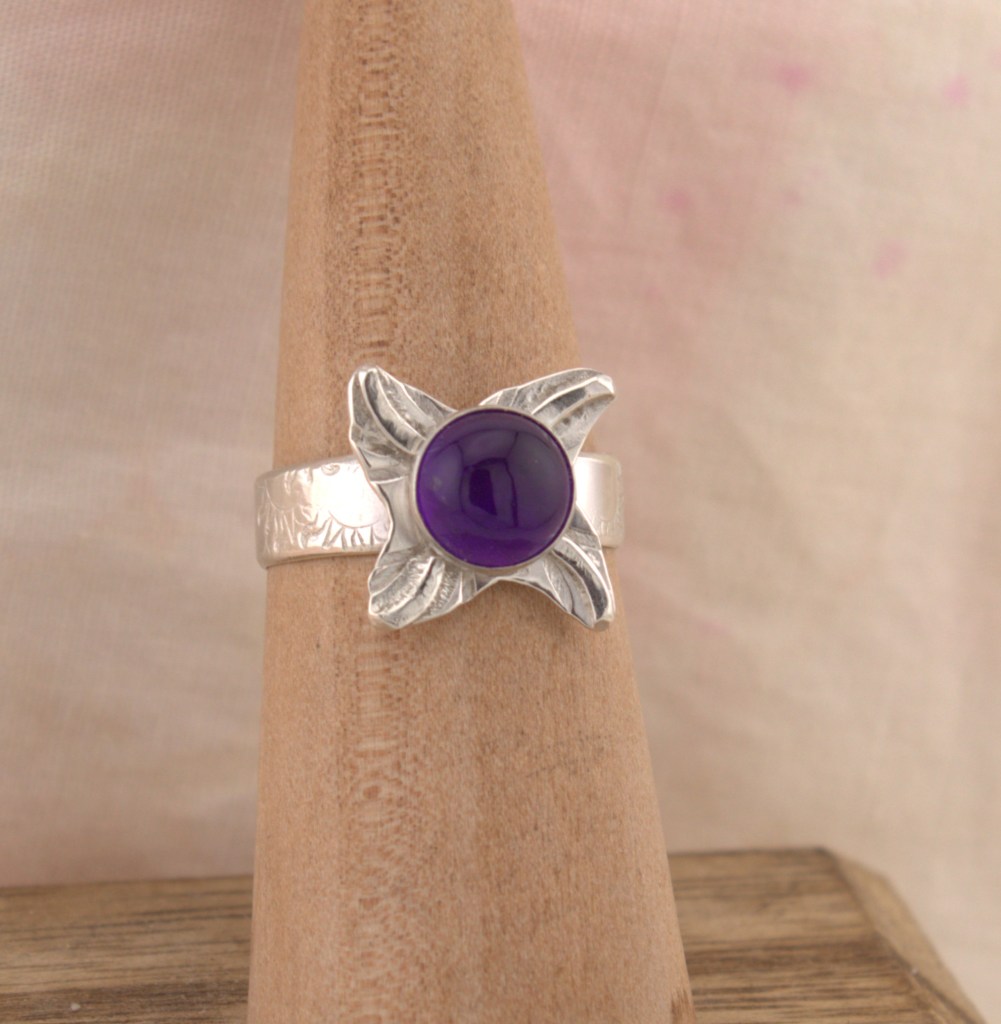
Throughout history, amethyst has been associated with many myths, legends, religions, and numerous cultures. Ancient Greeks and Romans believed this gemstone could ward off the intoxicating powers of Bacchus and keep the wearer clear-headed and quick-witted. English regalia were decorated with amethysts during the Middle Ages to symbolize royalty. Amethyst jewelry has been found and dated as early as 2000 BC.
Some historical accounts say that Saint Valentine had an amethyst ring carved with an image of Cupid. For those familiar with Old Testament history, amethyst was one of the twelve gemstones that represented the twelve tribes of Israel.
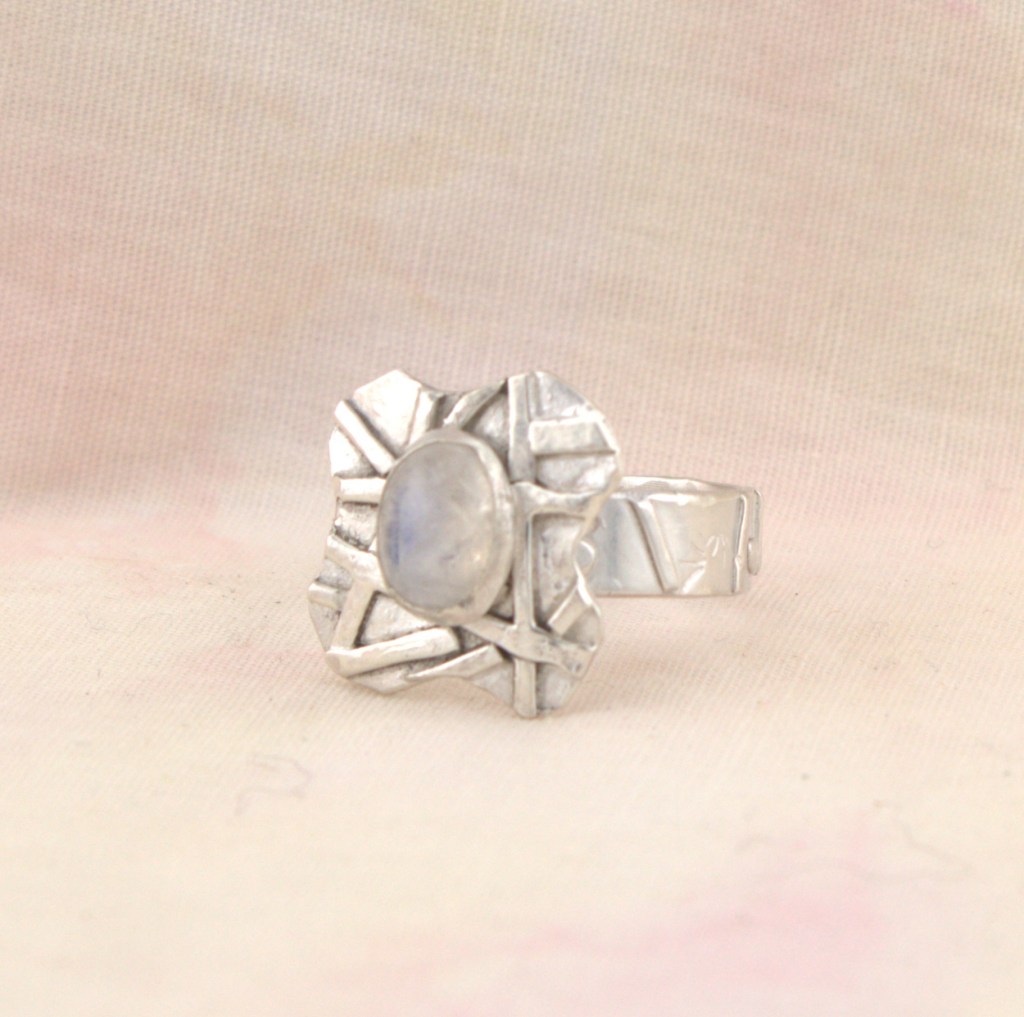
Moonstone has a rich history dating back to ancient Rome and India, where it was associated with lunar deities and thought to be made of solidified moonlight. It was used as a talisman for good luck, love, and protection, with legends claiming it could enhance prophecy and clear the mind. The gem’s popularity resurged during the Art Nouveau era, with designers like Louis Comfort Tiffany and Rene Lalique using it in their jewelry, and it was embraced by the “flower child” and New Age movements in later decades.
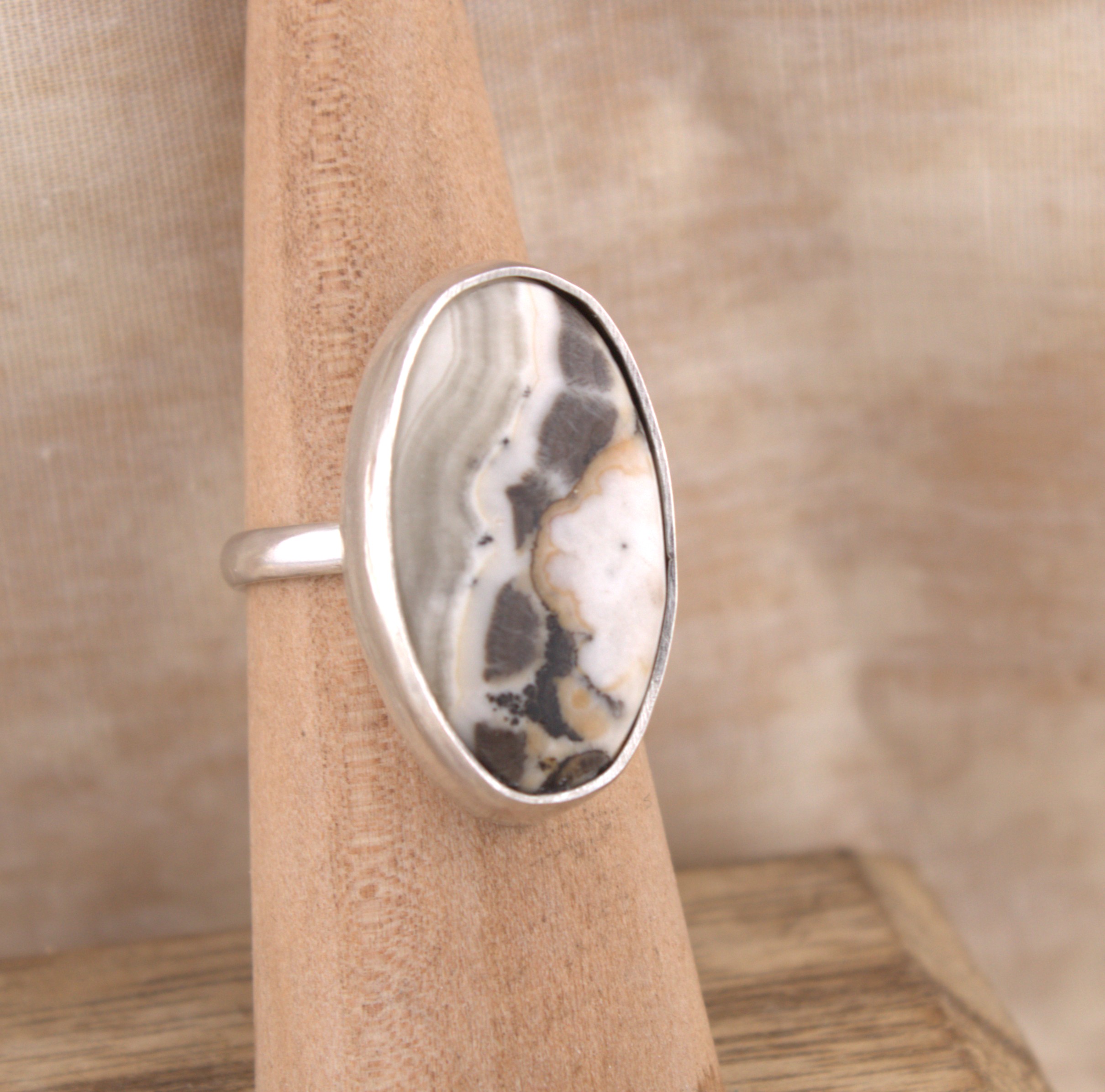
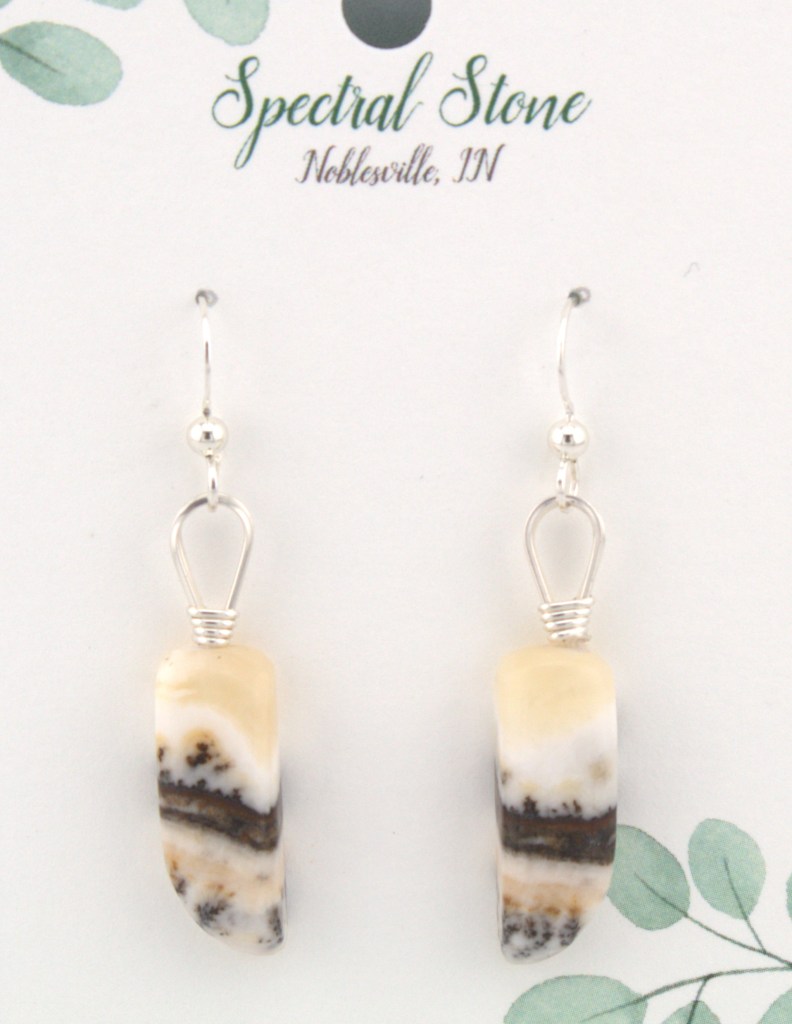
Silver Lace Onyx pendants, earrings and ring set in Sterling Silver. It is found only in the Calico Mountains of California and is rare due to the location’s difficult accessibility.
Silver Lace Onyx is a unique & rare stone. It is only found in the Calico Mountains outside of Yermo, California.
Silver Lace Onyx is a type of onyx (chalcedony) that can contain minute amounts of silver. Usually white and/or gray in color, it also comes with honey-colored inclusions known as honey onyx. It is considered a semi-precious gemstone and is popular amongst rockhounds and jewelers because of it’s lace patterns containing manganese dendrites which when cut and polished make beautiful cabochons.
The material was deposited at its location about 10 million years ago during a volcanic period. The volcanism pushed up hot fluids containing various minerals including silver & gold. The Calico Mountain range was famous in California for being one of the largest silver producers in the 1880’s. The mountainss also contain fantastic agates, jaspers, calcite and ulexite, TV rock.
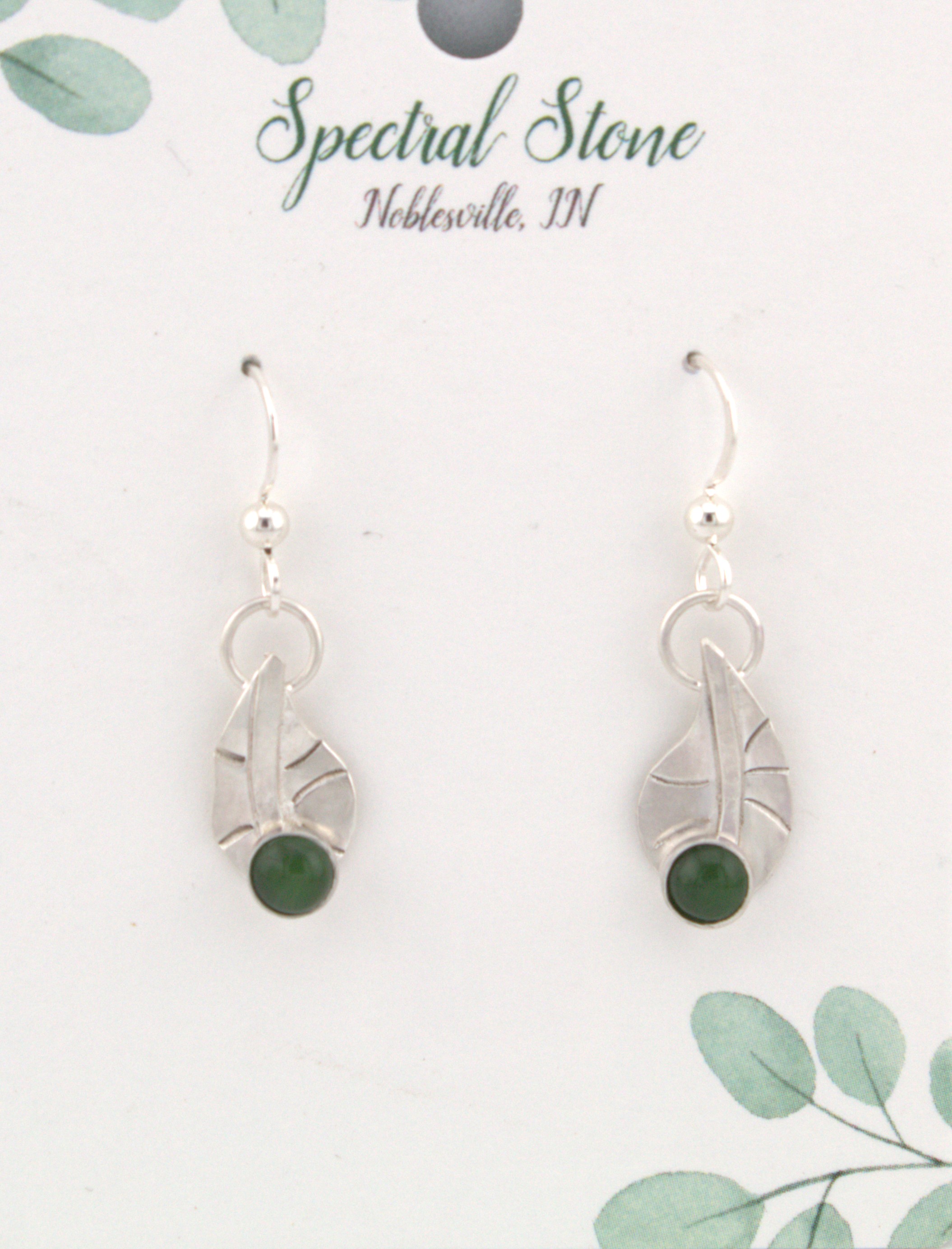
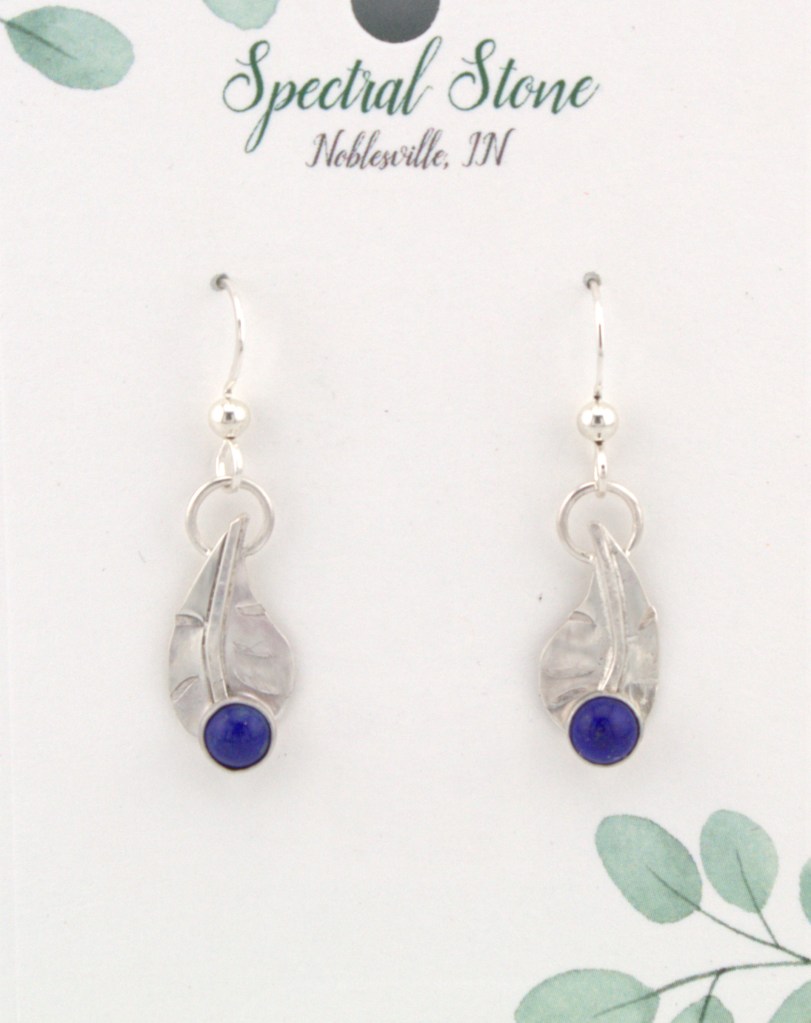
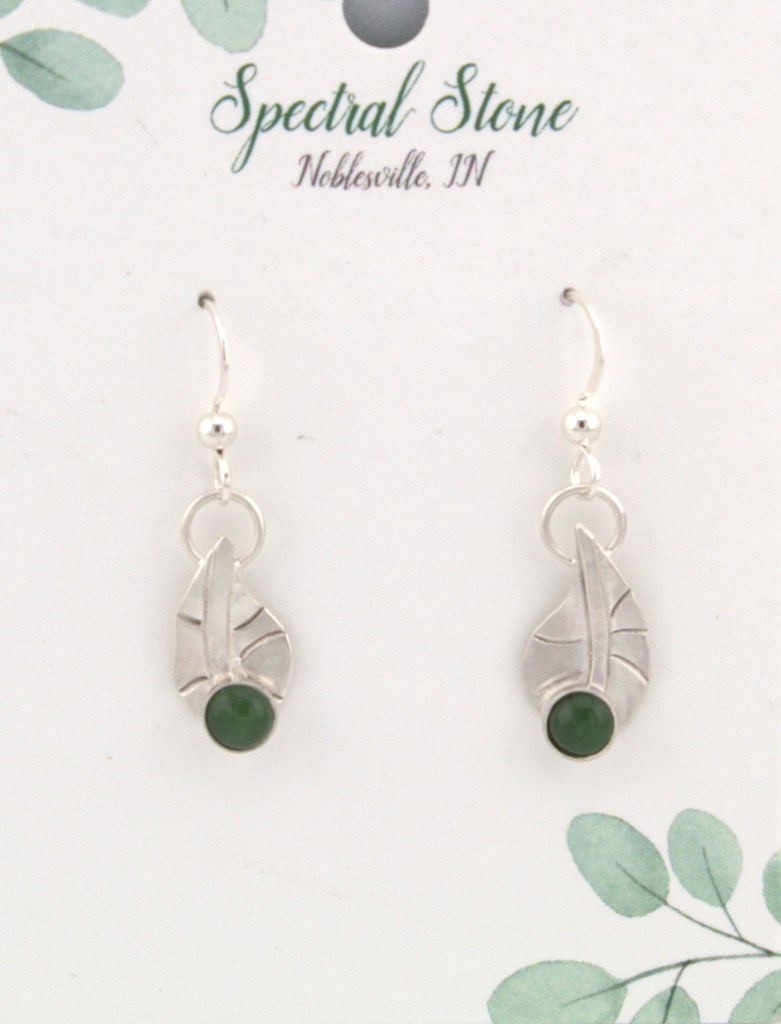
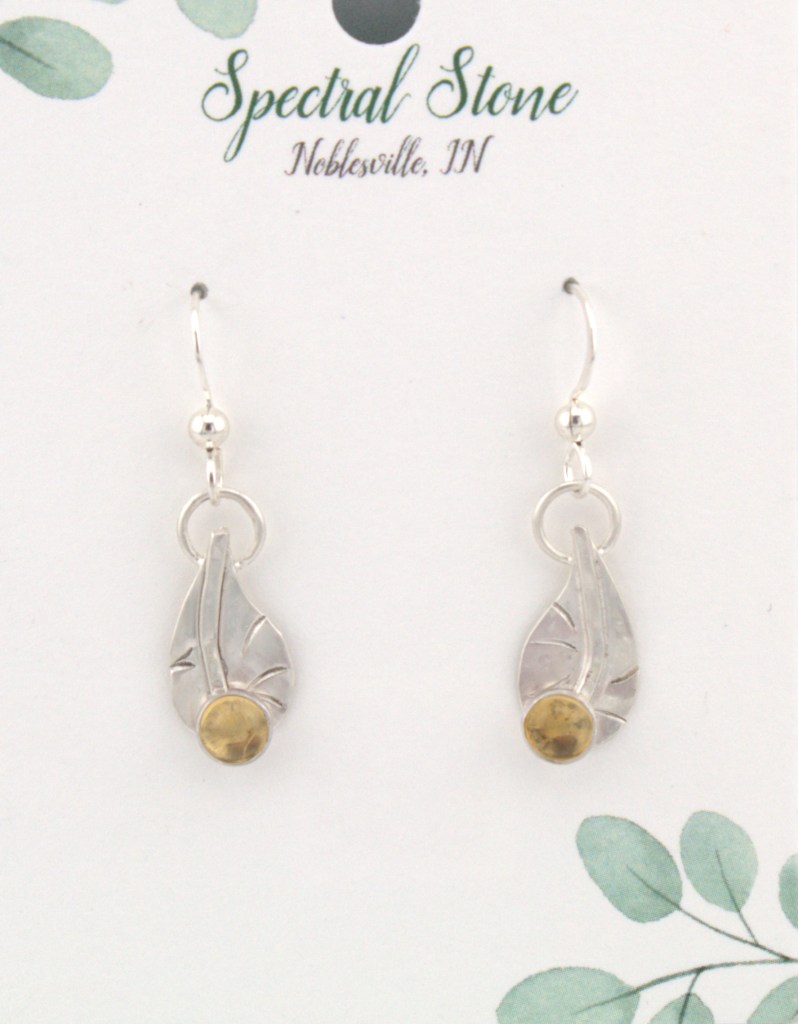
New Leaf Earrings in Lapis Lazuli, Jade and Citrine. Set in Sterling Silver.
Lapis lazuli has a long history, valued since at least the 7th millennium BCE in ancient Afghanistan, which remains the primary source of high-quality stone today. Ancient civilizations like the Egyptians, Mesopotamians, and Greeks revered it for royalty, religion, and art, using it for jewelry, amulets, and pigment
Jade has a rich history spanning millennia, used by prehistoric peoples for tools and weapons before becoming a material of immense cultural and artistic value in ancient civilizations, particularly in China and Mesoamerica
Citrine’s history spans millennia, used by ancient Greeks and Romans as a decorative and protective stone against evil thoughts and snakes. It saw a resurgence in the 17th century with its use in Scottish jewelry and weaponry, and gained modern global popularity during the Art Deco period in the 1920s and 30s